Children all in a square approx 20ft by 10 ft. The kids will be split into bibs and nonbibs. ball on the edge of the square.
stage 1: coach shout the following commands children need to obey:
jog - run slow
sprint - run fast
space - find space and jog on the spot
freeze - hold still
shoulders - look over shoulders
count - how many poeple on the opposite team are around you.
number - what is the number on the board.
Ball - get ball start driblling
side - return the ball to the side
Stage 2.
non-bibs in the middle, bibs on the side. 1 ball for each child in the middle, player on side folllow the command on the side. extra commands
1-2 pass the play to someone on the outside, one ouch pass back into space.
pass - pass the ball to someone on the outside and swap.
in more ways than one
 sportplan_netball


in more ways than one
sportplan_football
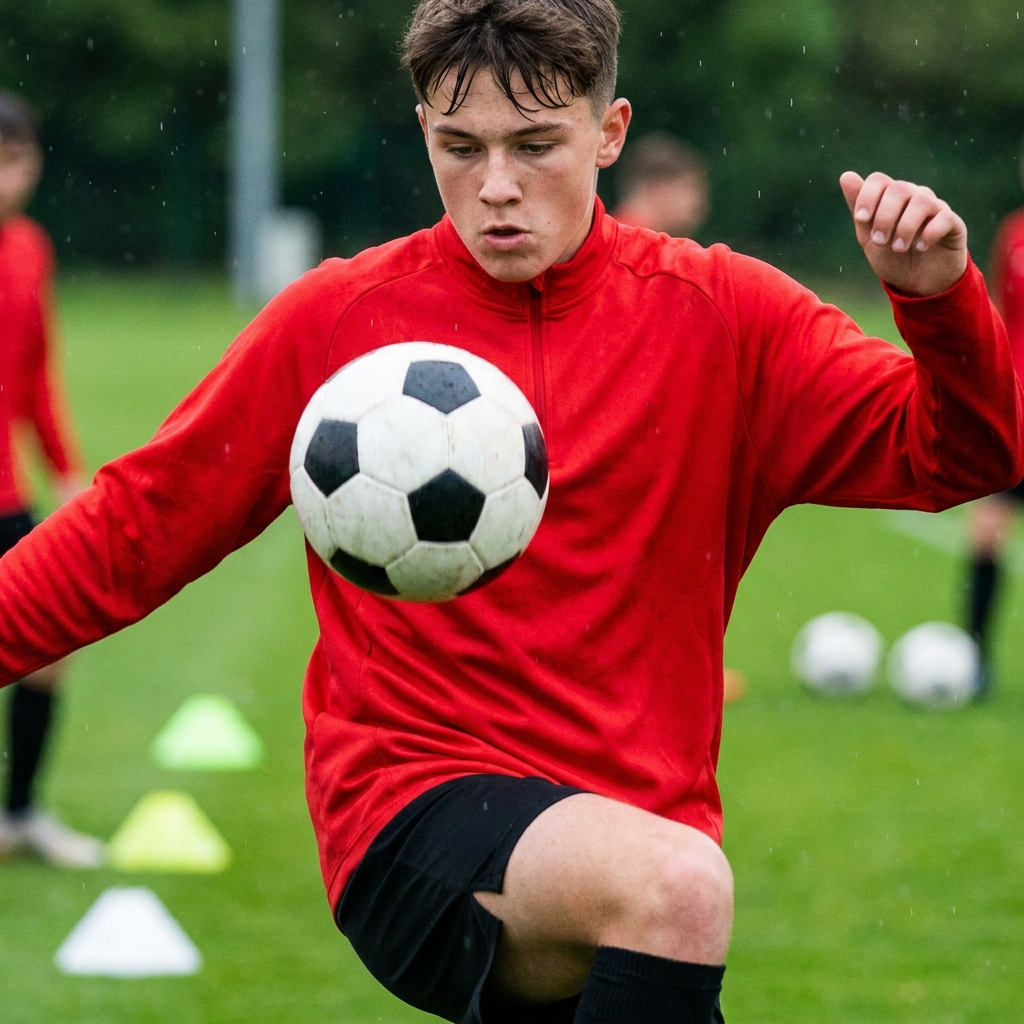
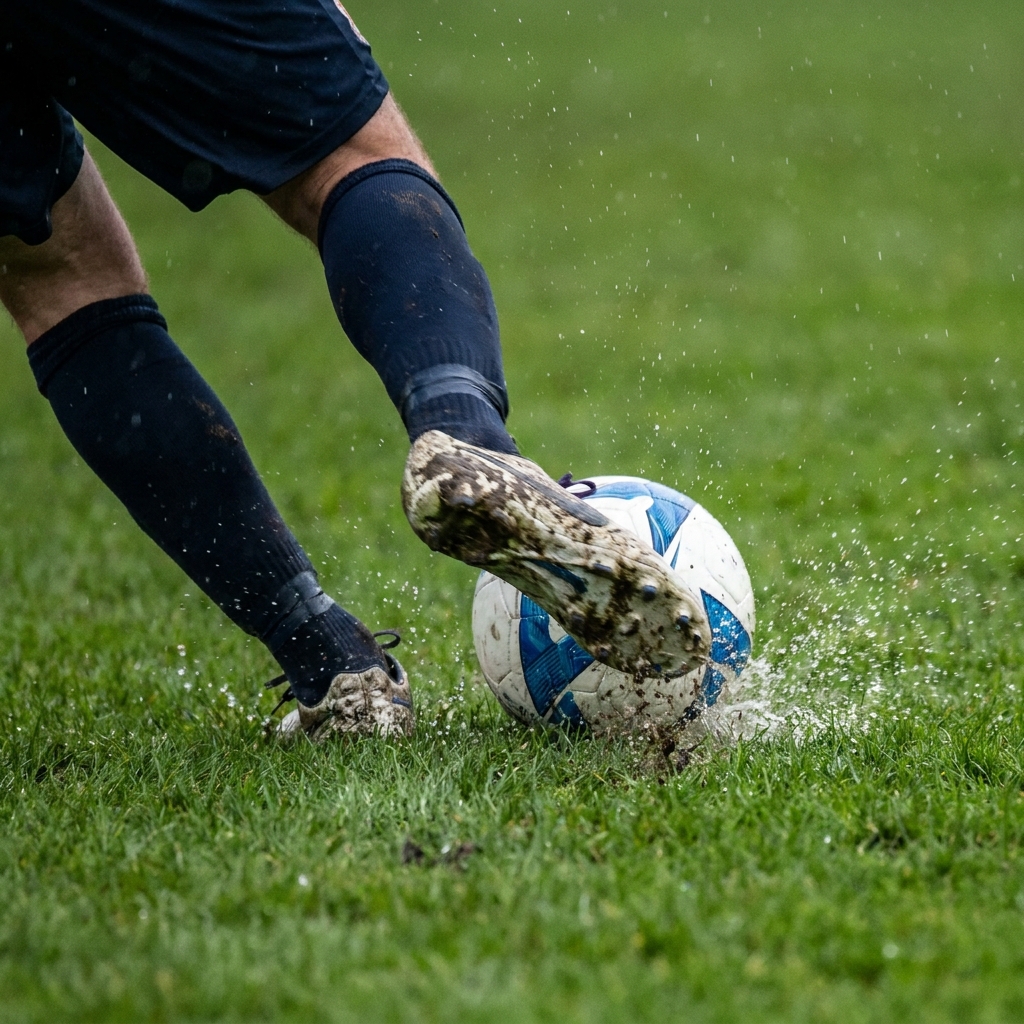
Deliberate heading is now out of U11 grassroots matches. Here is how to coach chest, thigh and foot control so your players still win the ball in the air.
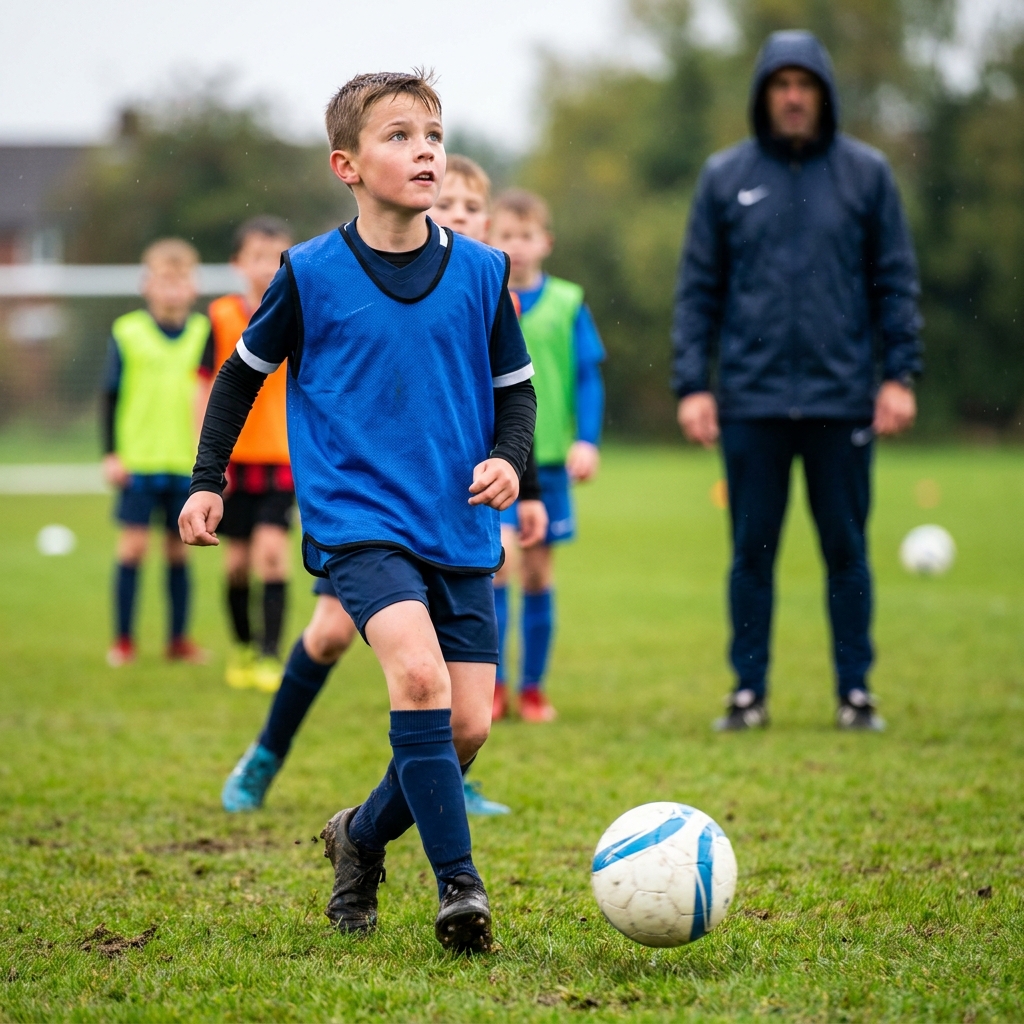
Long-range goals doubled at the 2026 World Cup as teams sat deep. Here is how to coach when to shoot from distance, the technique, and the follow-up.
Under FutureFit, your Under-9s stay at 5v5, your Under-11s stay at 7v7 and your Under-13s stay at 9v9. Same pitch, same numbers, one more year. Here is how to make sure that year feels like a step forward rather than a repeat.