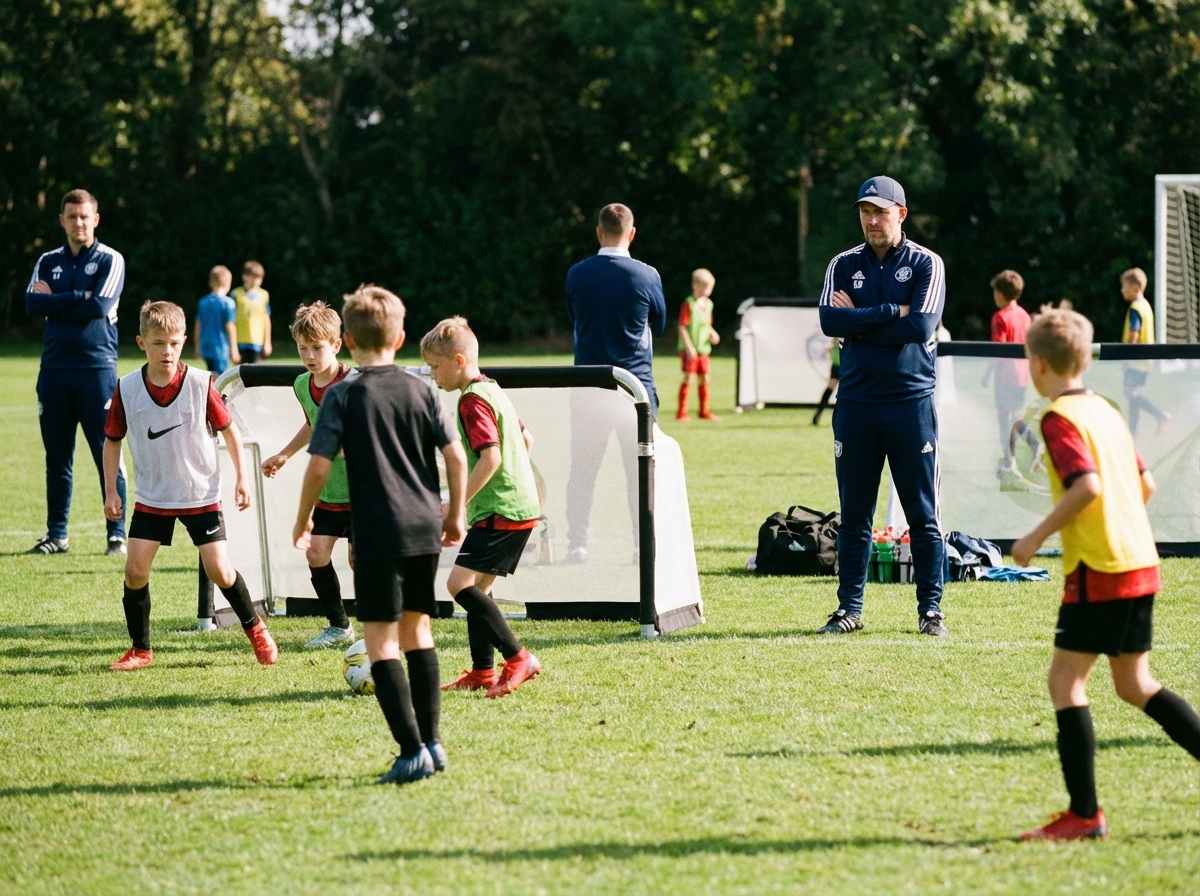
Set up two small pitches (no bigger than 25x20 yards), and split the group into four teams of three, with two players left out of the teams acting as the 'impartial players' (e.g. the two players in black). These players can be passed to by both teams, but their passes must be played back to the team who has passed to them (e.g. if a yellow player passes to the impartial player, the impartial player must play it back to a yellow player).
Play it as if it were a mini-tournament. Make the games nice and short, no longer than 5 minutes, before changing the teams so that by the end all teams have played each other.
Game: Each team has to try to score as many goals/points as possible in the allocated 5 minutes, but they can only try and score in the goal once all their team mates have touched the ball. If they lose the ball, the sequence is broken and they have to start again.
Progression 1: Merge all four teams and both pitches together to create a bigger version of the same drill, with two teams playing against each other on a bigger pitch, but keep two impartial players in use.
Tactical: Each team has to work together to try to score as many goals/points as possible, so must learn how to defend against/break down different teams.
Technical: By playing in a small area, players have to ensure their ball control, passing and accuracy are of a high level.
Physical: Players should be encouraged to play at a high tempo and press with strong intensity, and must be strong enough to shield the ball and hold off challenges from opponents.
Physcological: Players have to remain fully concentrated on what they're doing at all times and must be aware of their surroundings; knowing where their team mates, opponents and the goals are.
in more ways than one
 sportplan_netball


in more ways than one
sportplan_football
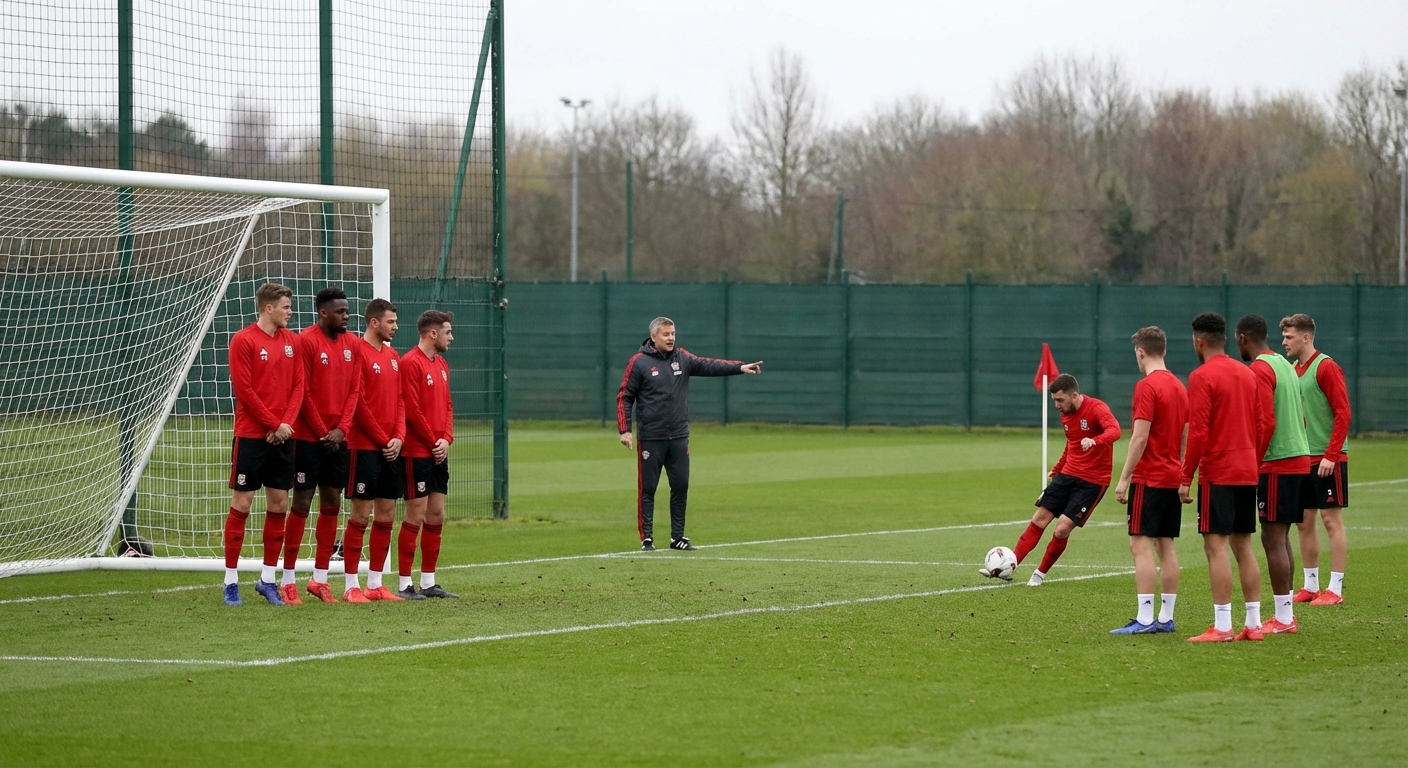
Set pieces account for roughly a third of all goals in football, yet many coaches spend surprisingly little time coaching defensive organisation at corners and free kicks. This article compares zonal and man marking systems, explores hybrid approaches, and provides a practical session structure for building set piece resilience into your team.
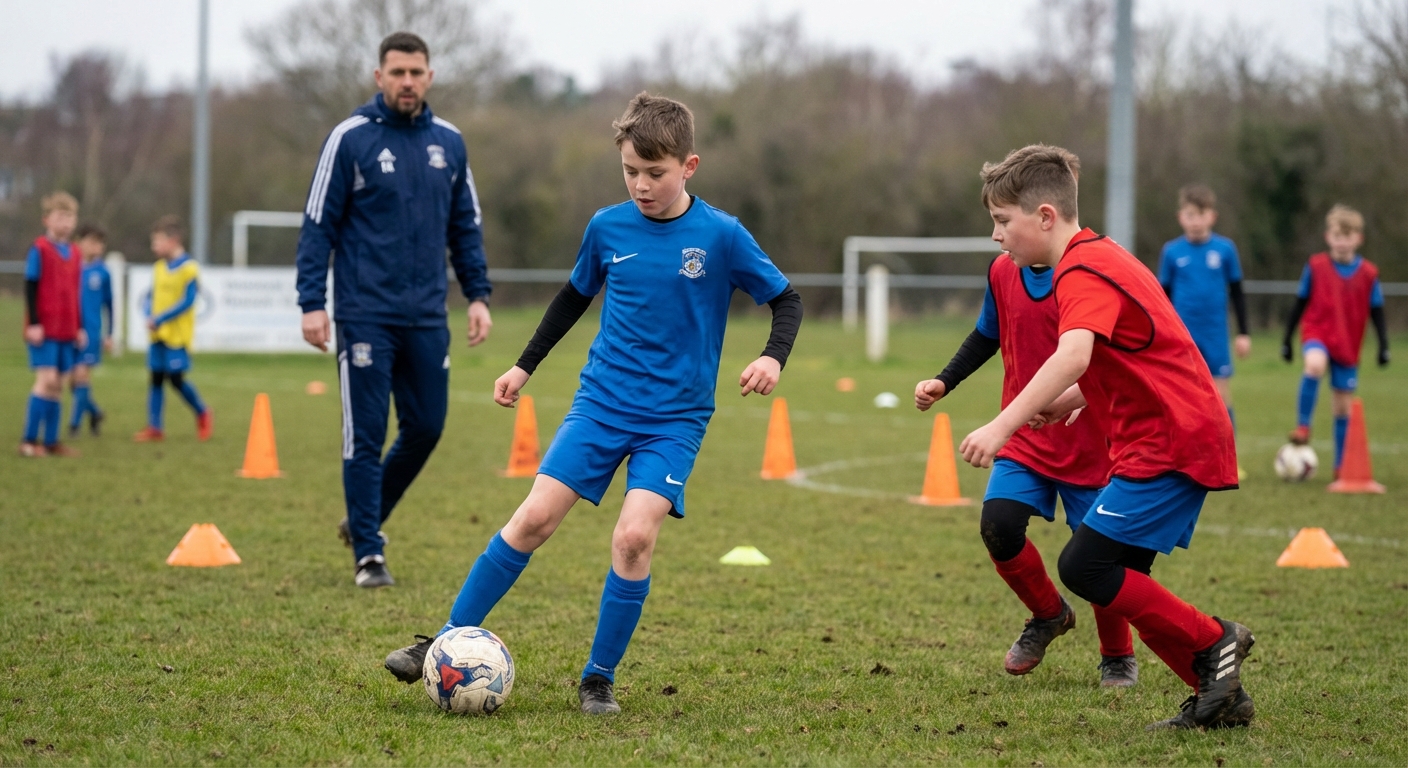
A player's first touch determines everything that follows: whether they can play forward, turn, or simply retain the ball. This article explores why training first touch in isolation is not enough, and how to design sessions that develop this critical skill under realistic game pressure.
The coaching methodology revolution sweeping grassroots football - and how to implement it at your club this season.