Teaching the keepers correct jumping technique while composing themelves for catching.
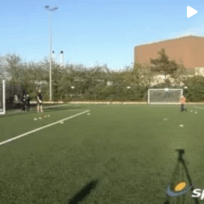
Drill 1 - (Red cones left of page)
4 Sets.
First set fast feet through the cones, coach throws ball up keeper catches and returns back of the line. 4 Reps.
2nd set
Fast feet through the cones - Coach throws the ball in the air to their left ensuring their left knee goes up. once caught the keeper will go back to position and recieve a ball to their right and their right knee goes up.
3rd set.
fast feet through the cones
Volley, left knee up jump, back to shape, right knee up jump
4th set
fast feet, volley, left knee up jump, back to shape, right knee up jump and volley.
Second drill (Right of screen)
Keeper laying down hands touching cone/post - Coach on opposite side.
Upon call the coach will bounce the ball keeper has to get up and catch it at the highest point. 3 sets 4 reps (two each side).
2nd set.
After the keeper collects the first ball coach will release another ball in the air on the other side ensuring they change direction quickly.
last set.
keeper laying down, coach calls and keeper reaches the ball at the highest point. once caught another ball is released in the air on the opposite side, once keeper catches that, back to shape for a volley.
Finish with shooting or any creative drill.

in more ways than one
 sportplan_netball


in more ways than one
sportplan_football
Under FutureFit, your Under-9s stay at 5v5, your Under-11s stay at 7v7 and your Under-13s stay at 9v9. Same pitch, same numbers, one more year. Here is how to make sure that year feels like a step forward rather than a repeat.
Most 1v1s are lost in the first second, when the defender rushes in and dives. Teach your players to slow the attacker down, take away the dangerous option and pick the right moment, and they will win far more of them.

The FA's FutureFit framework lands this season, bringing a 3v3 entry format at Under-7s. Here is what actually changes on a Saturday morning, and how to coach it well.