• Half pitch with an additional 10yd channel inside opposing half
with goal at one end, as illustrated.
• 19 players (incl. GK) organised 8v8 plus GK, with
2 Target players beyond half way line in 10yd channel, supply of
balls in centre circle, with coach.
• Practice starts with: ball fed into practice area by coach to Attackers
or T who then feeds into A’s.
• A’s objective: build play & create goal-scoring opportunities.
• If Defenders gain possession: they try to play to feed T’s.
• Process continues for 5 minutes non-stop & is
then repeated.
• If ball goes dead: coach immediately feeds another into
practice area.
• Throw-ins are taken by either team as appropriate.
Detail
• Continuous un-interrupted defending for 5 minute period includes
defending when organised & when dis-organised.
• If possession is conceded as team plays towards
T’s & is intercepted: quick reorganisation is necessary.
• Concentration & communication between team mates in
defensive situation.
• Simple progressions for this practice are:
- On receiving possession: T may quickly carry ball forward as an
extra attacker & contribute to attacking build-up.
- A’s may use T’s as support from behind as outlet passes, to relieve
opponent’s defensive pressure.
• Movement & positioning of D’s in relation to location
& movement of ball.
• Distances between players, units & GK.
• Pressing & forcing opponents to play in a chosen direction.
• Tracking & marking opponents.
• Continuous positioning & changing defending roles &
responsibilities, whilst regaining & maintaining defensive
compactness.

in more ways than one
 sportplan_netball


in more ways than one
sportplan_football

Under FutureFit, your Under-9s stay at 5v5, your Under-11s stay at 7v7 and your Under-13s stay at 9v9. Same pitch, same numbers, one more year. Here is how to make sure that year feels like a step forward rather than a repeat.
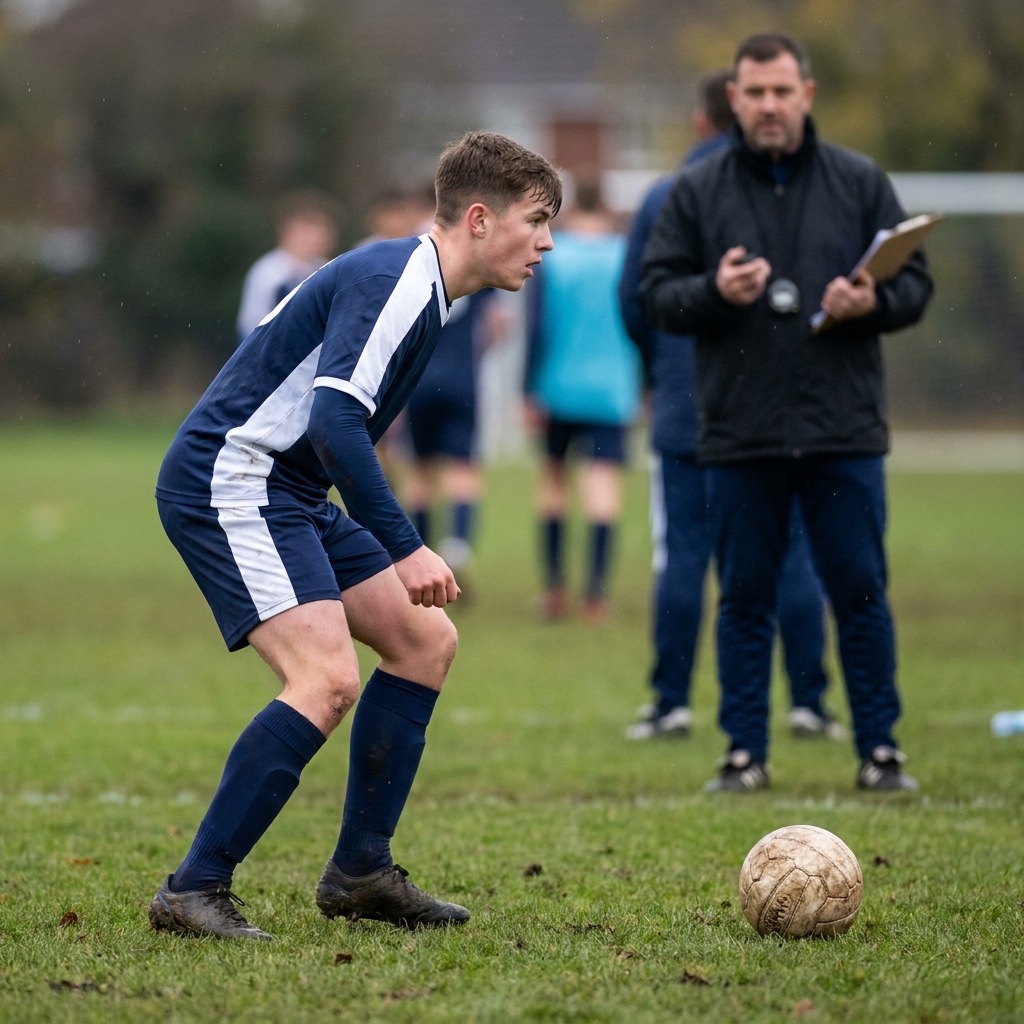
Most 1v1s are lost in the first second, when the defender rushes in and dives. Teach your players to slow the attacker down, take away the dangerous option and pick the right moment, and they will win far more of them.

The FA's FutureFit framework lands this season, bringing a 3v3 entry format at Under-7s. Here is what actually changes on a Saturday morning, and how to coach it well.