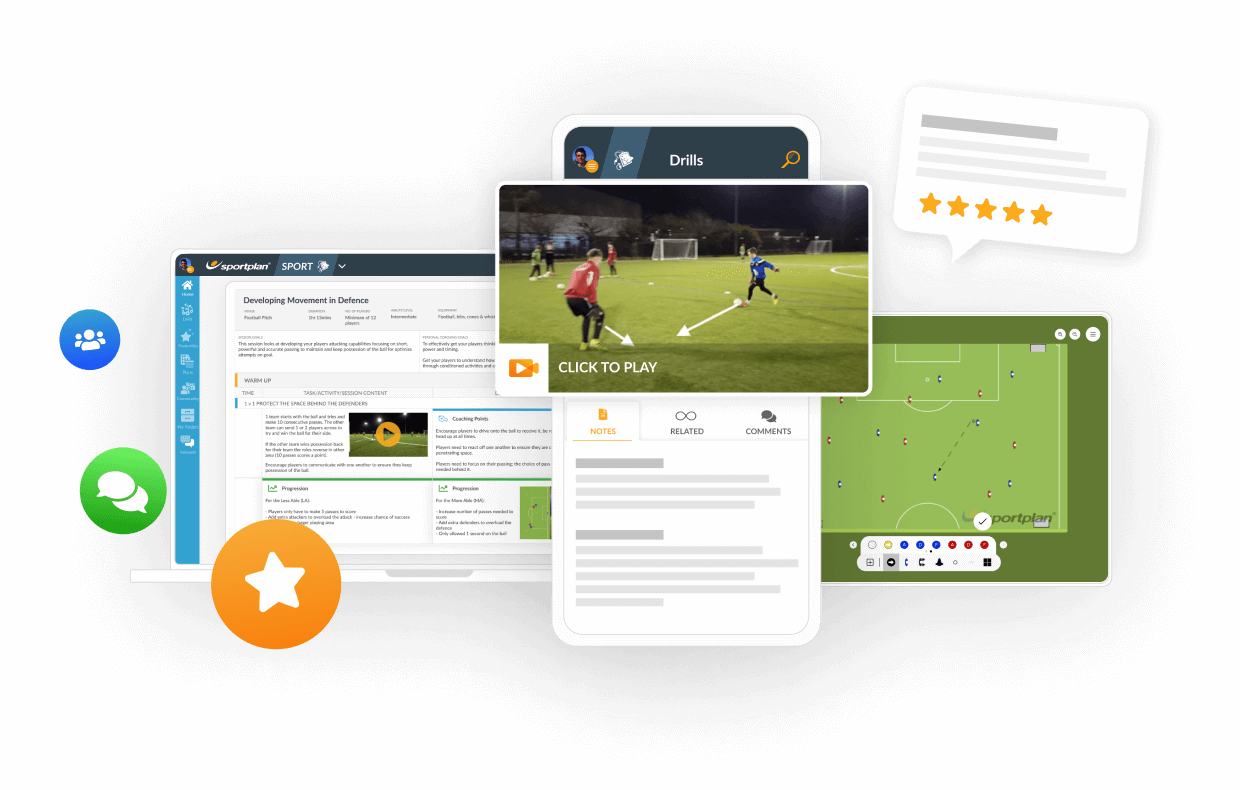
Set out 4 squares with all players having a ball each. Split the players equally around the squares.
Players are to dribble their ball from one square to any other square but there must be no more than 3 players in a square at one time.
Players to make their own choices which square they would like to dribble to next.
Progressions
Introduce defenders. Attackers must now use a turn of pace to beat a defender. Defenders attempt to score a goal into 1 of 4 pug goals in the corners of the area.
Review dribbling skills to beat a defender from previous weeks and demonstrate these against a defender.
Introduce a points scoring system with 1 point for every successful dribble to another square and 2 points for dribbling past a defender.
Dribble with close ball control using various sides of both feet.
Dribble with head up to look out for other players and to make the choice of the next square to dribble to.
Show confidence to try dribbling skills against an opponent (or when in space).
in more ways than one
 sportplan_netball


in more ways than one
sportplan_football
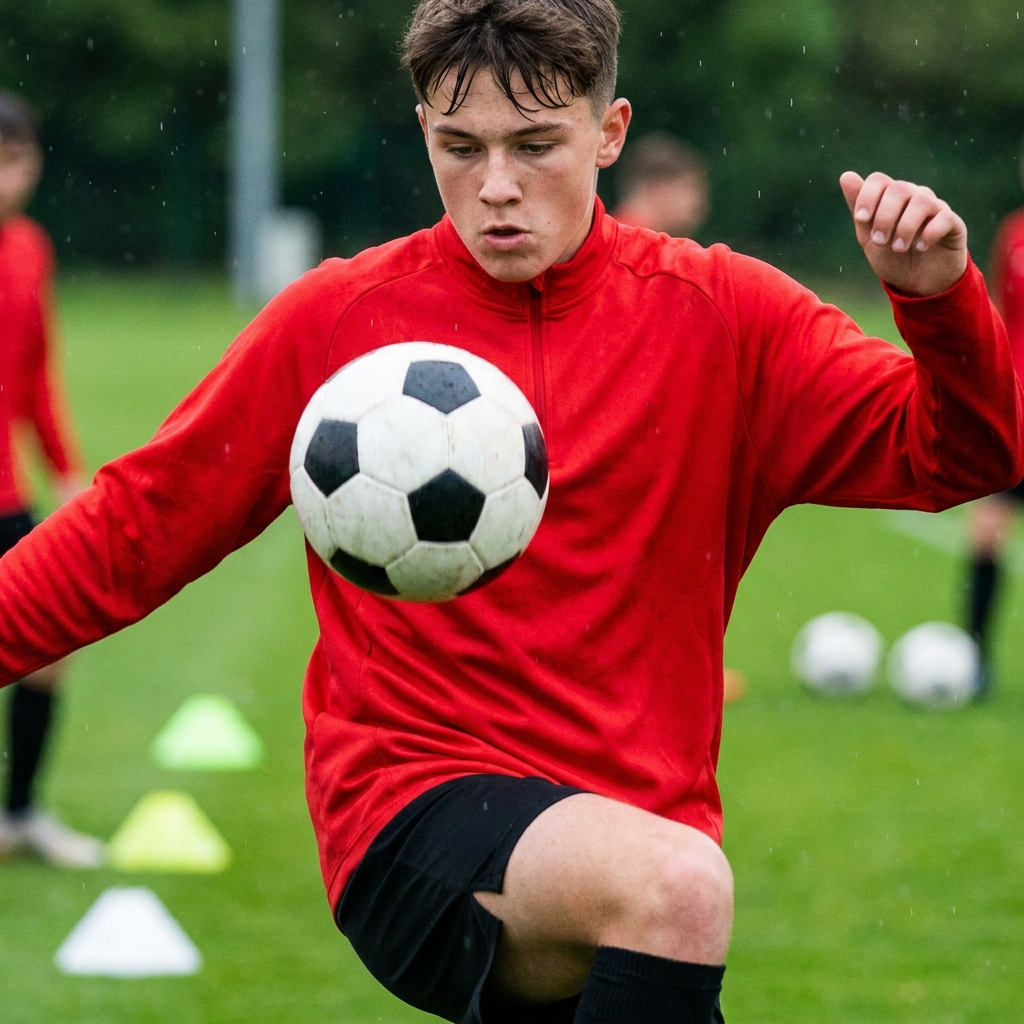
Deliberate heading is now out of U11 grassroots matches. Here is how to coach chest, thigh and foot control so your players still win the ball in the air.
Long-range goals doubled at the 2026 World Cup as teams sat deep. Here is how to coach when to shoot from distance, the technique, and the follow-up.
Under FutureFit, your Under-9s stay at 5v5, your Under-11s stay at 7v7 and your Under-13s stay at 9v9. Same pitch, same numbers, one more year. Here is how to make sure that year feels like a step forward rather than a repeat.