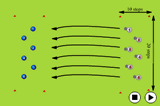
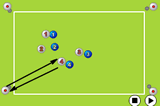
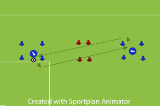
Group in pairs. One ball between the pair. Repeat in 5 other areas for a total of 12 players.
Player 2 passes the ball across the area to player 1. Player 2 then runs immediately around the cone and back to his starting position. Player 1 must control the ball, then pass it back using the inside of his foot, attempting to pass the ball over the far end line before player 2 gets back into position. A goal is scored if the ball goes over the end line travelling along the ground. Repeat and rotate.
Move into line with the ball as early as possible.
Select the controlling surface, e.g. right or left foot.
Your pass should always start your run.
Be in a position ready to pass back first time.
Move the cones in 3 yards. Now the receiving player is allowed to pass it back through the cones first time.
in more ways than one
 sportplan_netball


in more ways than one
sportplan_football
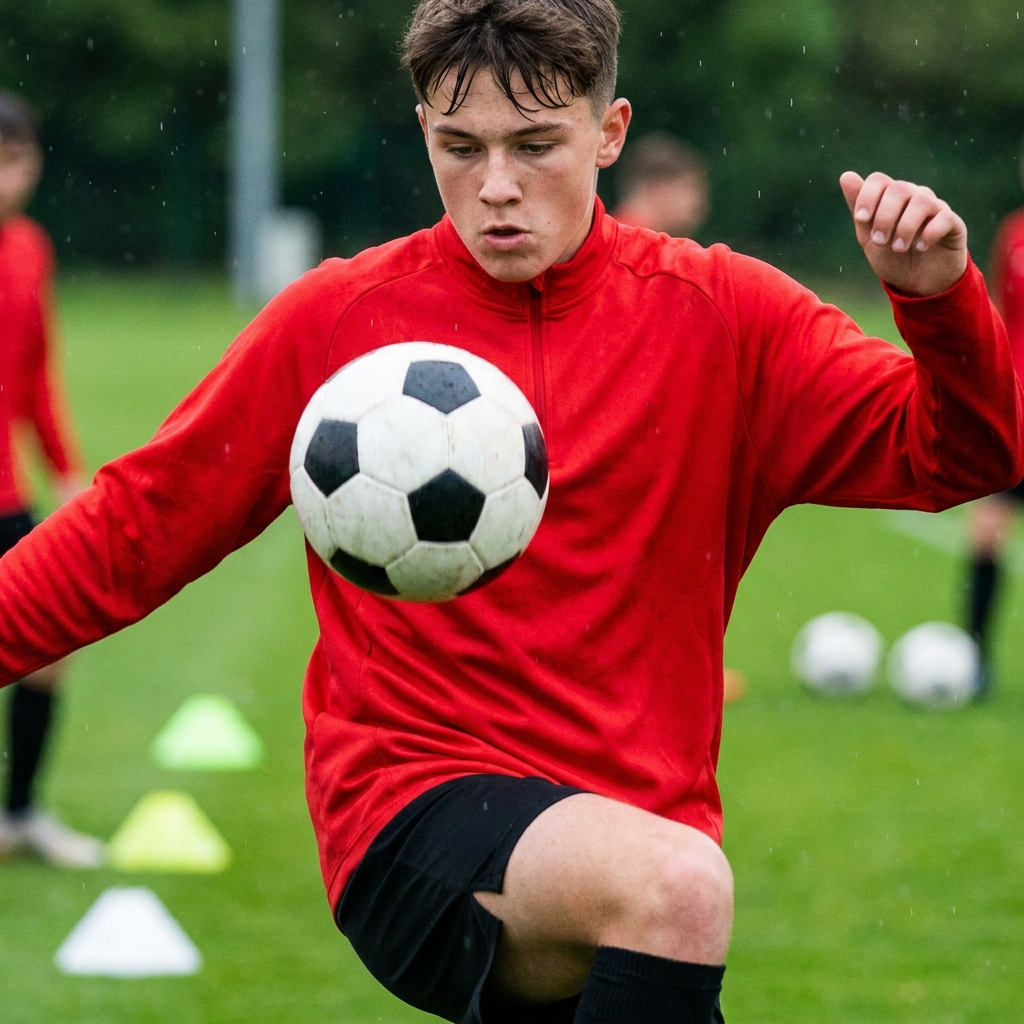
Deliberate heading is now out of U11 grassroots matches. Here is how to coach chest, thigh and foot control so your players still win the ball in the air.
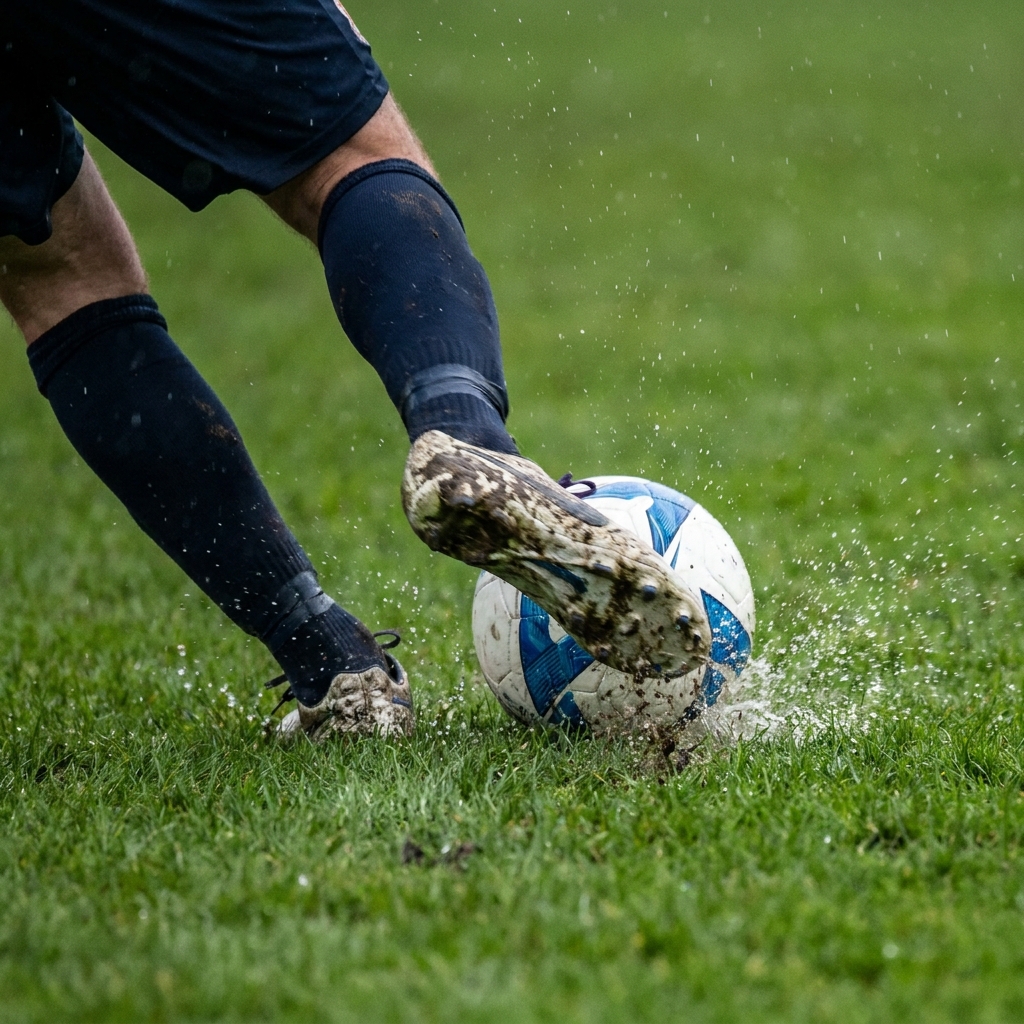
Long-range goals doubled at the 2026 World Cup as teams sat deep. Here is how to coach when to shoot from distance, the technique, and the follow-up.
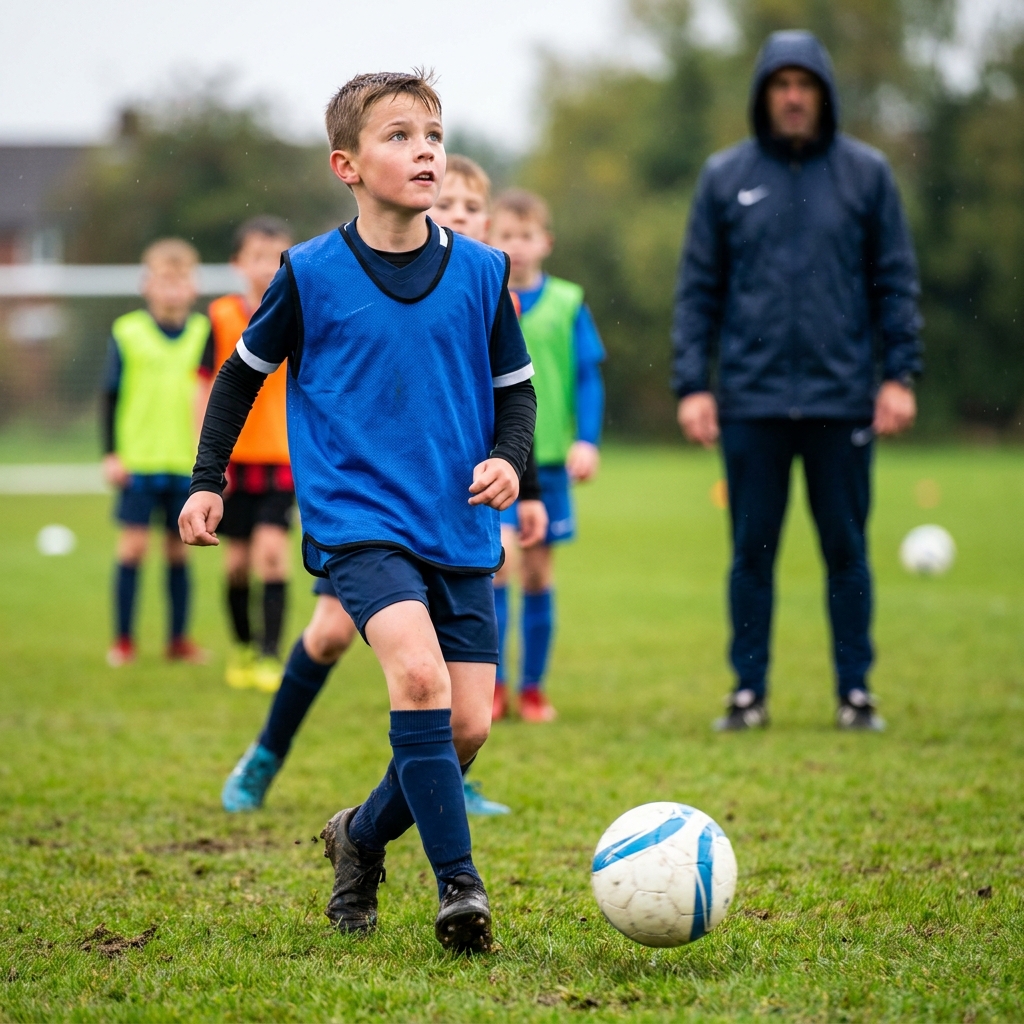
Under FutureFit, your Under-9s stay at 5v5, your Under-11s stay at 7v7 and your Under-13s stay at 9v9. Same pitch, same numbers, one more year. Here is how to make sure that year feels like a step forward rather than a repeat.