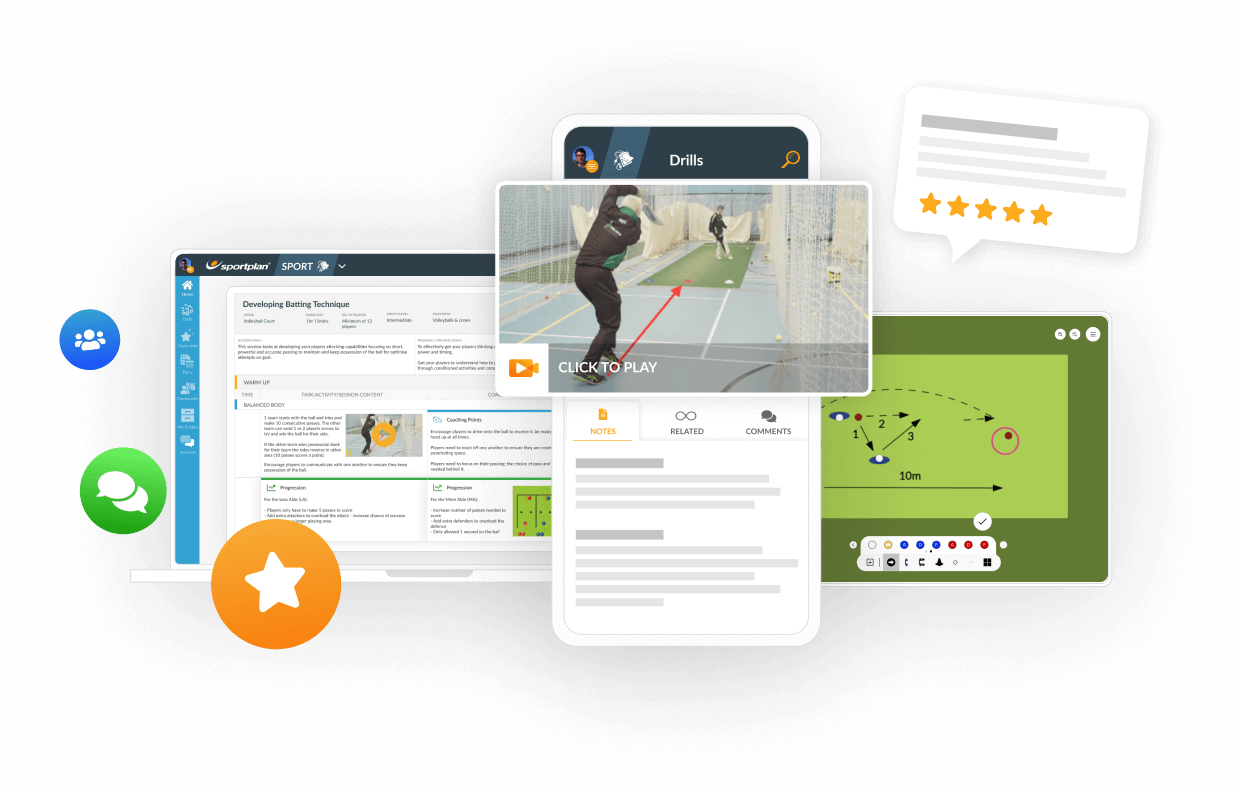
Can be done in pairs/ groups of three.
Feeder drops ball in front of batter (with arm out horizontally, standing on the off side of the batsman for safety purposes).
Batter steps towards the ball, and aim to drive the ball on the second bounce/half volley, driving the ball on the ground through the target zones.
Each group needs 6 tennis balls. 6 feeds per batter rotate clockwise.
Drill is best done in nets (2 grounds per net in opposite directions) .Encourage players to wear at least batting gloves when doing this drill.
Focus needs to be on getting ball between cones along the ground.
This is achieved by a strong top had on the bat, shoulder dipping into the ball, playing the ball late, and getting a big stride towards the ball, encouraging player's weight to be over the ball on contact
PROGRESSION: Player can hit ball by already being in the finished drive position, just moving hands upon impact. This helps if struggling with stepping into shot.
Increase speed of drops to make player work harder, with less recovery between shots.
Make target zones smaller, and/or alternate sequence/ introduce points system.
Pre-season is the best time to rebuild and refine batting technique without the pressure of match results. This article covers the fundamental batting positions that underpin consistent run-scoring, provides a progressive session framework from shadow batting to live bowling, and highlights the common pre-season mistakes that coaches should avoid.
Fielding placement in limited overs cricket is a tactical chess match that changes with every phase of the innings. This article breaks down how captains should set fields during the powerplay, middle overs, and death overs, and provides practical coaching sessions for developing game-aware fielders who anticipate rather than react.
With IPL 2026 starting this month, we break down the art of powerplay bowling - field placement, line and length, and how to turn the fielding restrictions to your advantage.