Today, handball is sport in which anaerobic endurance and start stop type of movement play dominant role during the match because of the game tempo nowdays. According to Croatian researches, modern handball player runs cca. 3.5 kilometars(depends on position) during the game and 1300 meters of that is in maximal or submaximal tempo. The specific defending movement is not included in these numbers. Players are devided in 4 (approximately homogenous) groups in 4 corners. Player runs as fast as he can to his 7 meters line and back to the corner, then to center-back to the corner, opposite 7m line-back to the corner, crossing of oposite 6m line and basic line-back to the corner, and finaly corner-corner, and it gives total 280 meter. All 4 groups are working in the same time. 8 series total, 2240 meters. I recommend 2x4 series and the break of 5-6 minutes betwen them in which you will do some easy mobility or coordination drills. Rest between series is 1:30.
This practice has no coaching points
This practice has no progressions
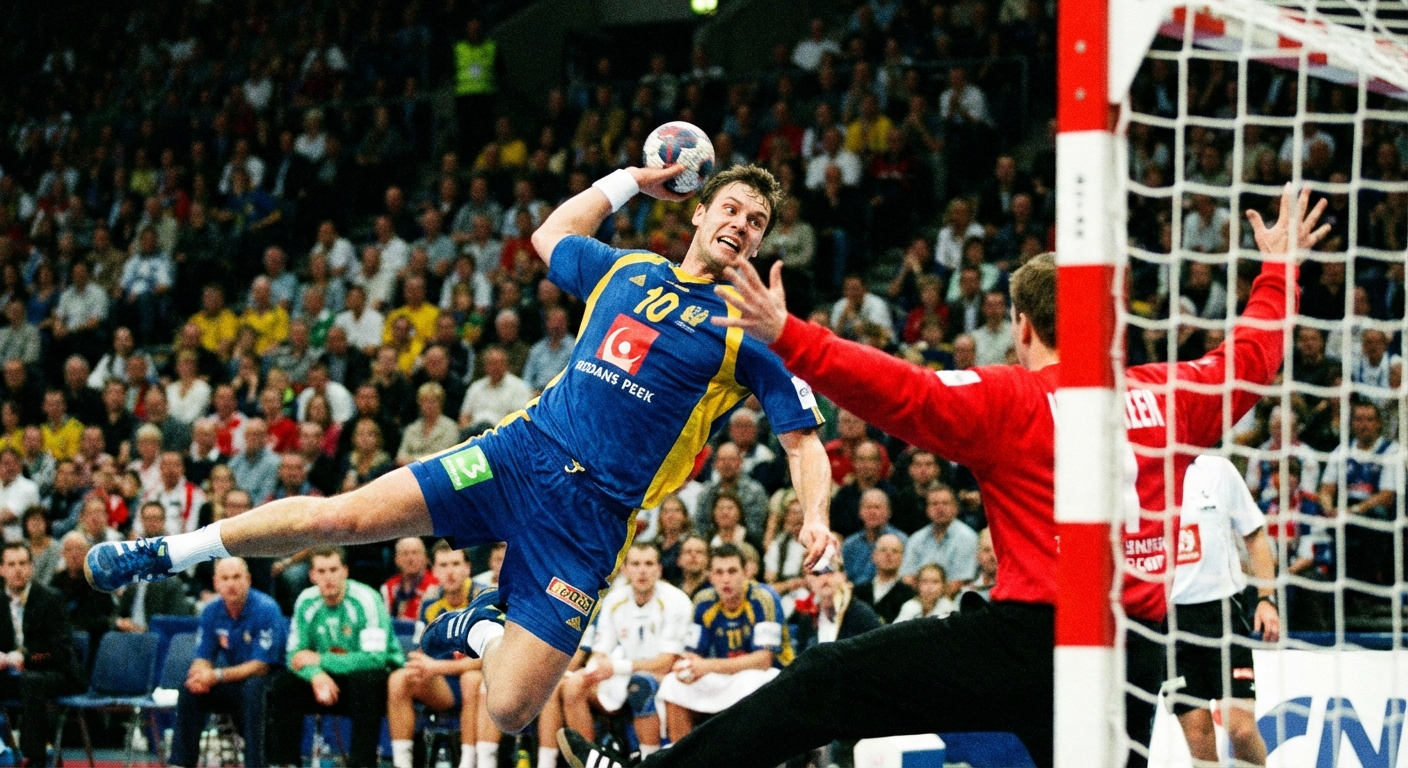
Wing players operate in the most demanding shooting position on a handball court, where acute angles and a close goalkeeper make finishing a specialist skill. This article breaks down the technique, decision-making, and training progressions that coaches need to develop elite wing finishing.
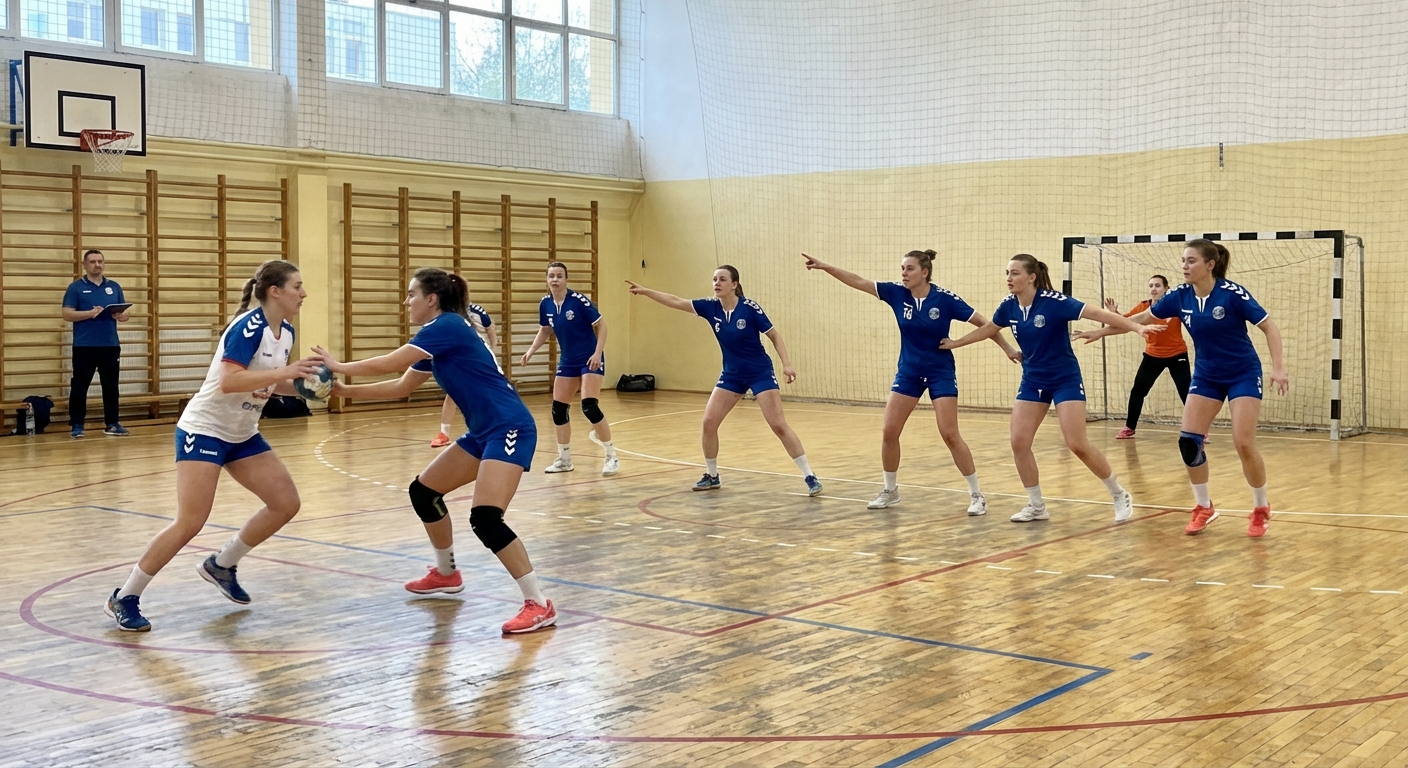
The transition from attack to defence is the most vulnerable moment in handball. This article examines the 3-second recovery principle, the specific roles players must adopt during transition, and the training scenarios that build a team's ability to recover defensive shape under pressure.
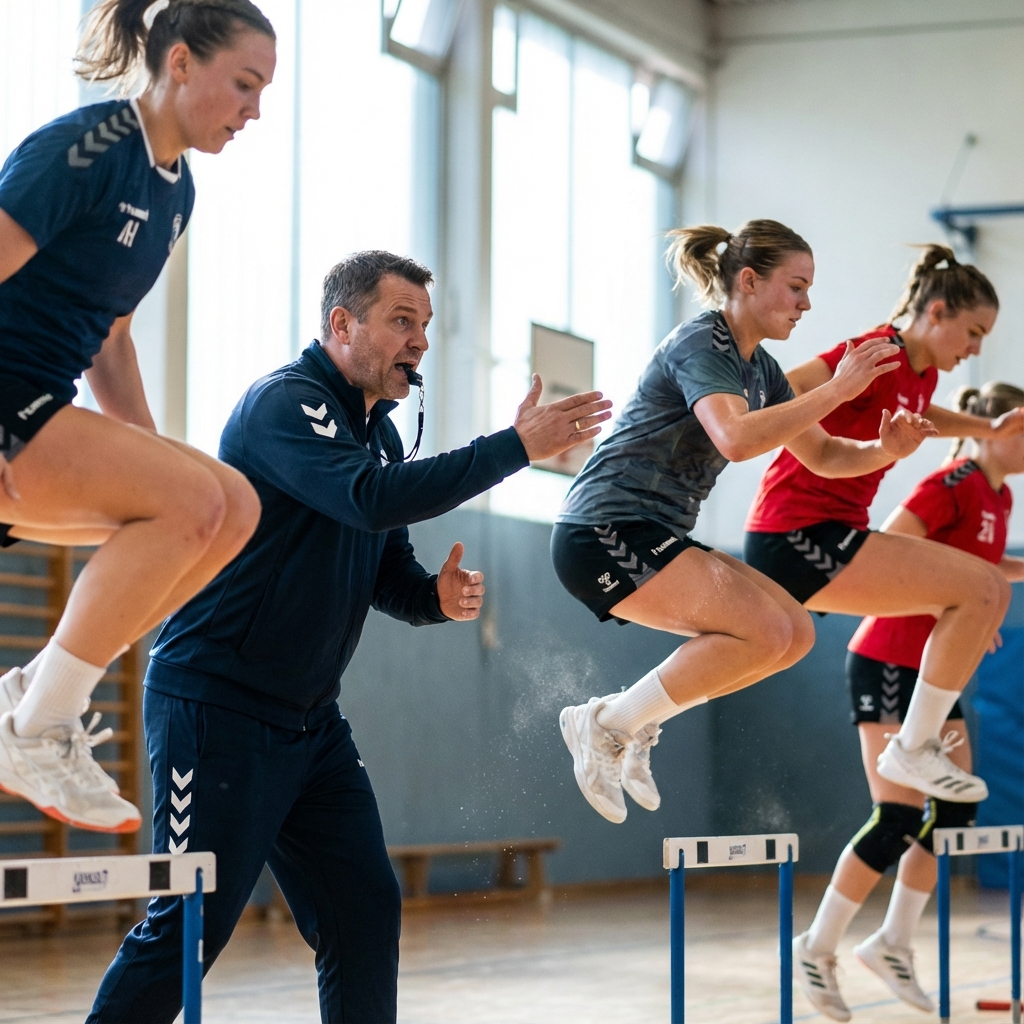
Handball demands explosive power, repeated sprint ability, and the strength to compete physically for 60 minutes. Sport-specific conditioning develops the athletic qualities that underpin elite performance.


Register for FREE and get coaching tips, top drills, session and more every week!