The Most Overworked Joint in the Game
Every handball coach spends hours on footwork, defensive shape and finishing technique. Far fewer spend any time at all on the one joint that every single attacking action in the sport runs through: the throwing shoulder. A backcourt player can rack up well over a hundred throwing actions in a single training session once shooting drills, passing exercises and game play are added together, and across a full week of training plus a match, that number multiplies quickly.
November is exactly the point in the season where this becomes a real risk. Indoor leagues are back to a full fixture rhythm, training has moved fully indoors, and most squads are throwing more often and with more intensity than they were in the quieter pre-season weeks. A shoulder that coped fine with light September sessions can start to complain under a sudden jump in November load. The good news is that overuse shoulder problems are largely preventable, and the prevention takes minutes, not hours, if it is built into the regular warm-up rather than treated as optional extra work.
Why the Handball Shoulder Is at Risk
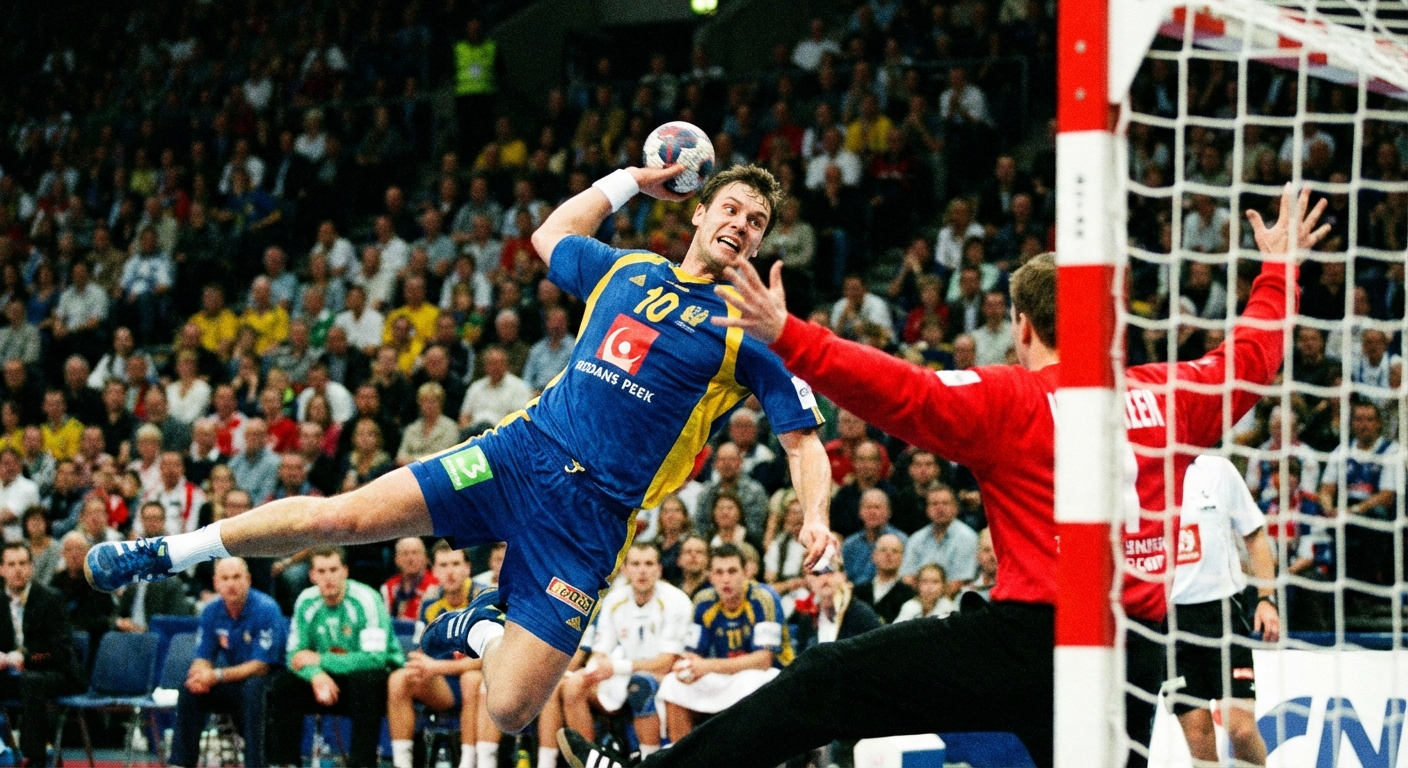
Throwing a handball at pace is one of the most demanding actions the shoulder performs in any sport. The joint has to generate huge rotational speed on the way into the throw and then decelerate that same arm safely in a fraction of a second once the ball has left the hand. That deceleration phase, not the throw itself, is where most of the strain lands, and it happens the same way whether the player is taking a controlled technical shot or an all out jump shot in a match.
Research into throwing athletes consistently points to the same risk factors: reduced rotation range in the shoulder joint, weak external rotators relative to the much stronger internal rotators used in the throw, and poor control of the shoulder blade, known as scapular control. None of these develop overnight. They build up over months of repeated throwing without any balancing strength work, which is exactly why a player can go from fine in September to struggling by December without a single dramatic incident along the way.
What the Research Actually Shows
It is worth being precise here, because not every shoulder programme works, and the evidence shows why. A cluster randomised trial of 660 elite handball players tested a structured shoulder programme built around rotator cuff strengthening and scapular control, delivered consistently within the warm-up several times a week. Players in the programme group had a noticeably lower rate of shoulder problems than the control group over the course of the study.
A later trial with 579 players tested a different approach: light resistance band work and stretching, without the same strengthening focus. That trial found no significant difference in shoulder injury rates between the players who did the programme and those who did not. The authors suggested the likely explanation was that the exercises simply did not provide enough of a training stimulus to build real strength and control. The lesson for coaches is simple: a shoulder warm-up has to do genuine strengthening work, not just gentle stretching, and it has to happen regularly rather than occasionally.
A Five-Step Framework for Healthy Shoulders
Step One: Raise the temperature first. Before any throwing or resistance work, get players moving generally for five minutes, light jogging, lateral steps and arm swings, so the whole body including the shoulder joint is warm before anything more targeted begins.
Step Two: Mobilise the thoracic spine and shoulder blade. A stiff upper back forces the shoulder joint to compensate for movement it is not built to provide. Simple rotation and reach drills through the mid back, done in pairs or individually, free up the shoulder blade to move properly.
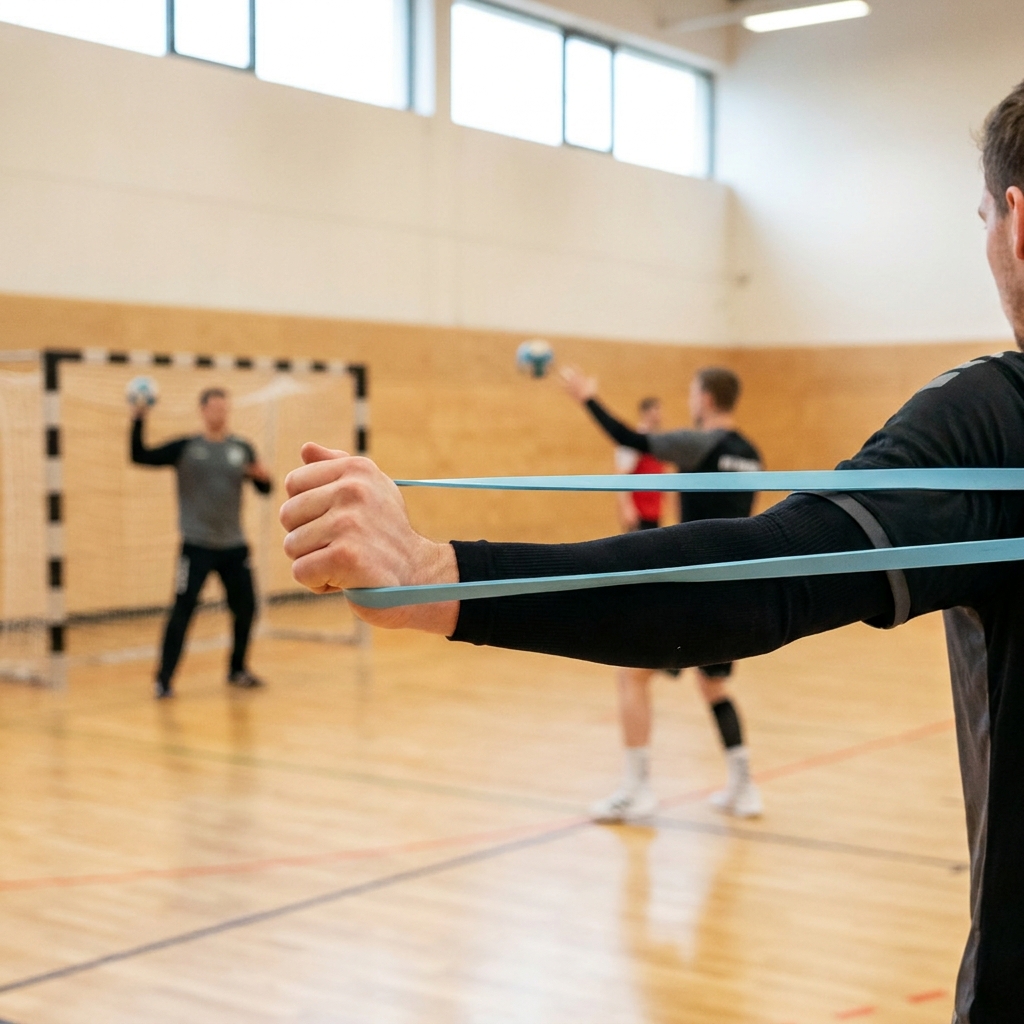
Step Three: Activate the rotator cuff. Light resistance band work, external and internal rotation with the elbow tucked in, wakes up the small muscles that control and protect the joint. This takes two or three minutes and should happen before the ball comes out.
Step Four: Progress throwing technique before power. Start close range and controlled, with a clear focus on technique, before building up to full distance and full pace shooting. Technique first means the shoulder is working efficiently before it is asked to work hard.
Step Five: Manage the weekly total. Keep a rough sense of how much throwing a squad is doing across the week, and avoid sudden jumps after a break, a holiday fixture gap or a period of reduced training. Build volume back up over one to two weeks rather than in one session.

Session Structure: Building Shoulder Care Into Training
Sample Session Plan (60 minutes)
Warm-Up: General Movement and Shoulder Activation (10 min)
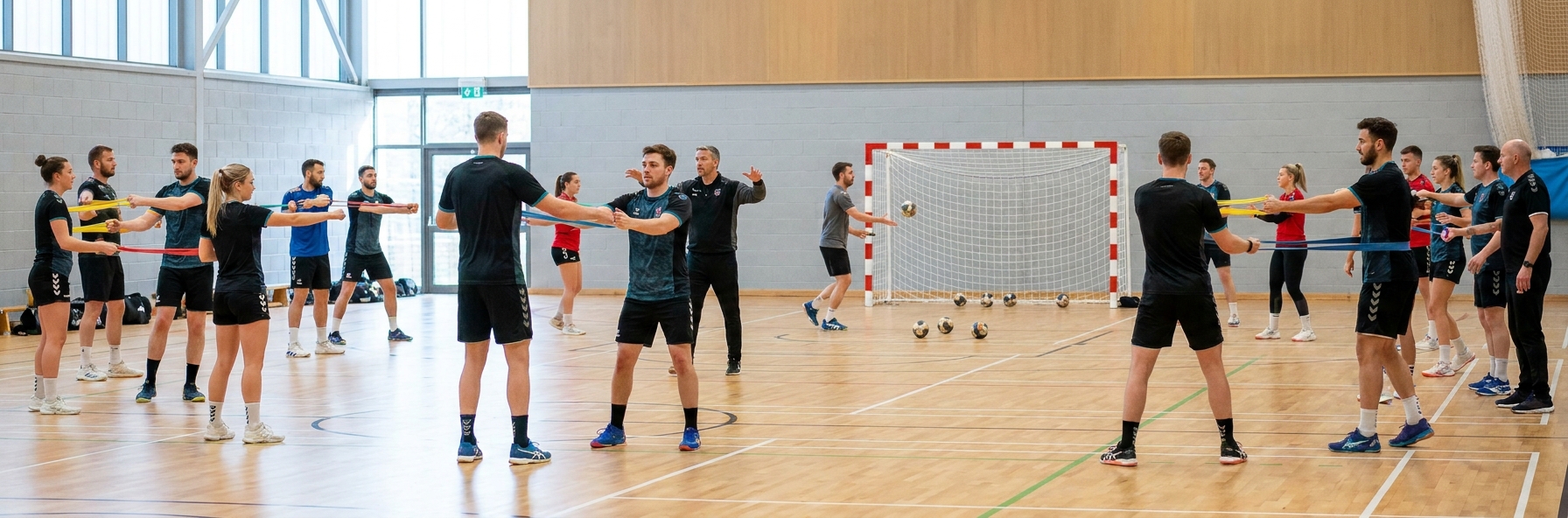
Light jogging and lateral movement, followed by thoracic mobility work and two to three minutes of light resistance band rotation for the rotator cuff. No ball is needed for this block.
Technical: Isolating the Throwing Arm (15 min)
Players work in pairs on a seated passing drill, deliberately removing the legs and back from the throw so the arm has to do the work on its own. This sharpens awareness of arm mechanics and shows players exactly how much their legs and trunk normally contribute to a safe, powerful throw.
Decision-Making: Passing Under Movement (15 min)
Move into a flowing passing exercise where players throw and run onto the return pass in sequence. This reintroduces full body mechanics at a controlled pace and builds the habit of using the legs and trunk, not just the arm, once players are moving.
Game: Capped Shooting Series (20 min)
Finish with a backcourt shooting series at full pace, but cap the repetitions per player per series so nobody quietly racks up far more throws than their teammates. Rotate players through regularly.


Key Coaching Points
- Build a short shoulder activation block into every single warm-up, not just on heavy training days.
- Favour genuine strengthening work over gentle stretching alone; the evidence favours real training stimulus.
- Teach technique before power, especially early in the indoor season when volume is climbing.
- Increase weekly throwing load gradually after any break, holiday gap or reduced training period.
- Cap repetitions in shooting series so no single player quietly accumulates far more throws than teammates.
- Treat an early change in a player's throwing pattern, power or comfort as a signal worth acting on, not ignoring.
Frequently Asked Questions
How many throws should a handball player do in training each week?
There is no single safe number because it depends on age, experience and match schedule, but the principle that matters most is steady progression rather than a fixed count. Research into throwing athletes links sudden jumps in weekly load, in the region of a 20 to 60 percent increase in a short space of time, with a higher risk of shoulder problems. Build throwing volume up gradually after any break, including the return from the off season or a holiday fixture gap, rather than returning straight to full training intensity.
Can young handball players do rotator cuff exercises safely?
Yes, with light resistance and good supervision. Band based rotation and scapular control exercises are low impact and are commonly used with junior squads as part of a standard warm-up. The priority at a young age is teaching correct movement patterns and body awareness rather than adding heavy load, so keep resistance light, focus on control through the full range of movement, and build intensity only as the player matures.
What are the first signs of a throwing shoulder problem in a player?
Common early signs include a player dropping their arm earlier in warm-up throws than usual, a dull ache that appears during or after training rather than a sharp pain, and a gradual loss of throwing power or accuracy that the player cannot explain. None of these should be ignored. Overuse shoulder problems tend to build slowly, so a coach who notices a change in a player's throwing pattern and acts on it early will usually prevent a minor niggle from becoming a lost block of the season.