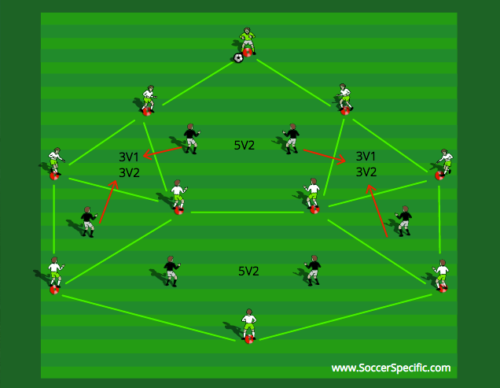

The white players must stay close to their respective cones and maintain possession while the black team presses. The movement arrows and positions show the areas they are restricted to moving (the two black central midfielders must stay in the designated midfield area while the wide midfielders can push up on the white outside backs #2 and #3. The green lines give a visual of the proper distance and spacing of the white team while building from the GK. The pace of the activity and the point of attack can be dictated by the GK or coach each time a new ball is started. Play for a designated period of time.
Progressions include changing the formation of the defending black team to change the numbers within the rondo. Add multiple balls to raise player awareness on both sides of the ball. Add two small goals for the attacking team to possess and build towards. Can also add a touch limitation in the back and/or the midfield.
This practice has no coaching points
This practice has no progressions

in more ways than one
 sportplan_football

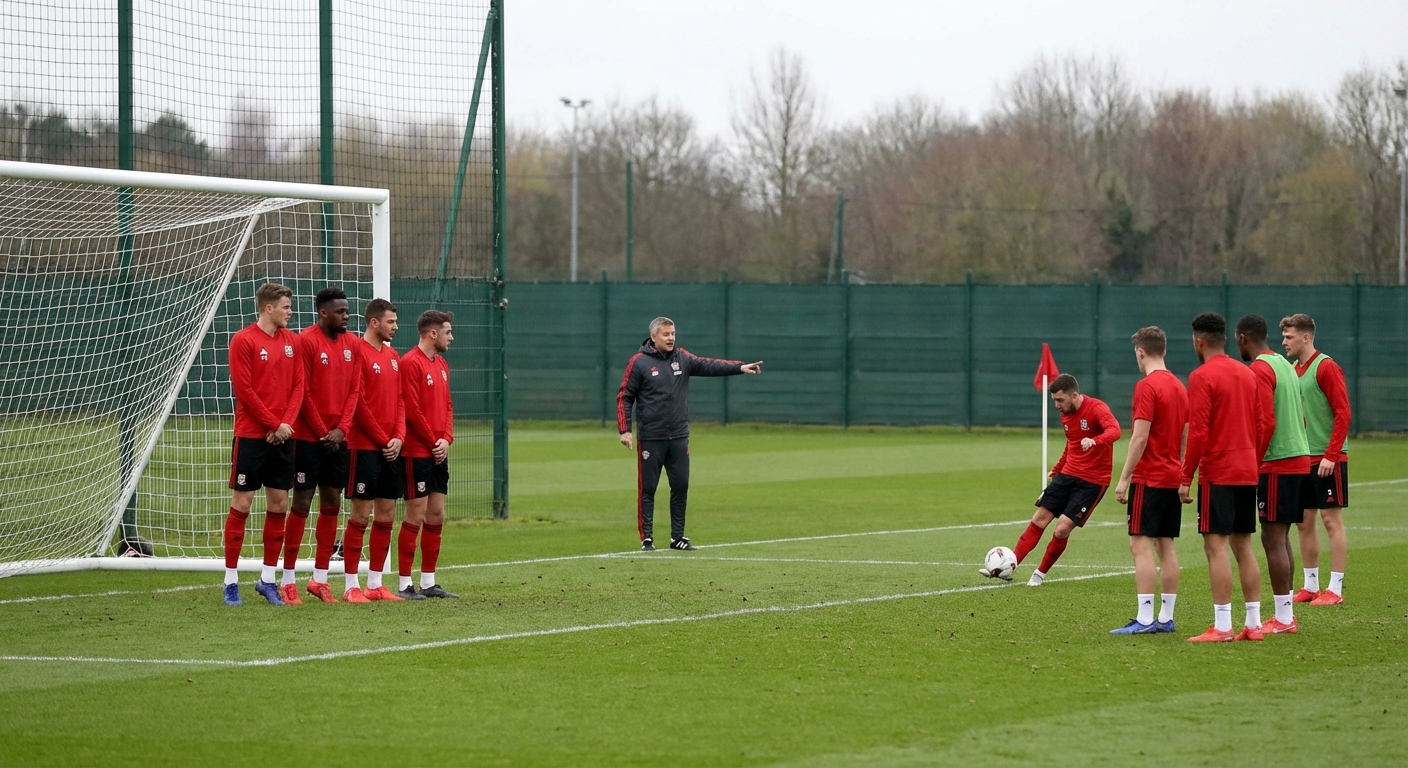
Set pieces account for roughly a third of all goals in football, yet many coaches spend surprisingly little time coaching defensive organisation at corners and free kicks. This article compares zonal and man marking systems, explores hybrid approaches, and provides a practical session structure for building set piece resilience into your team.
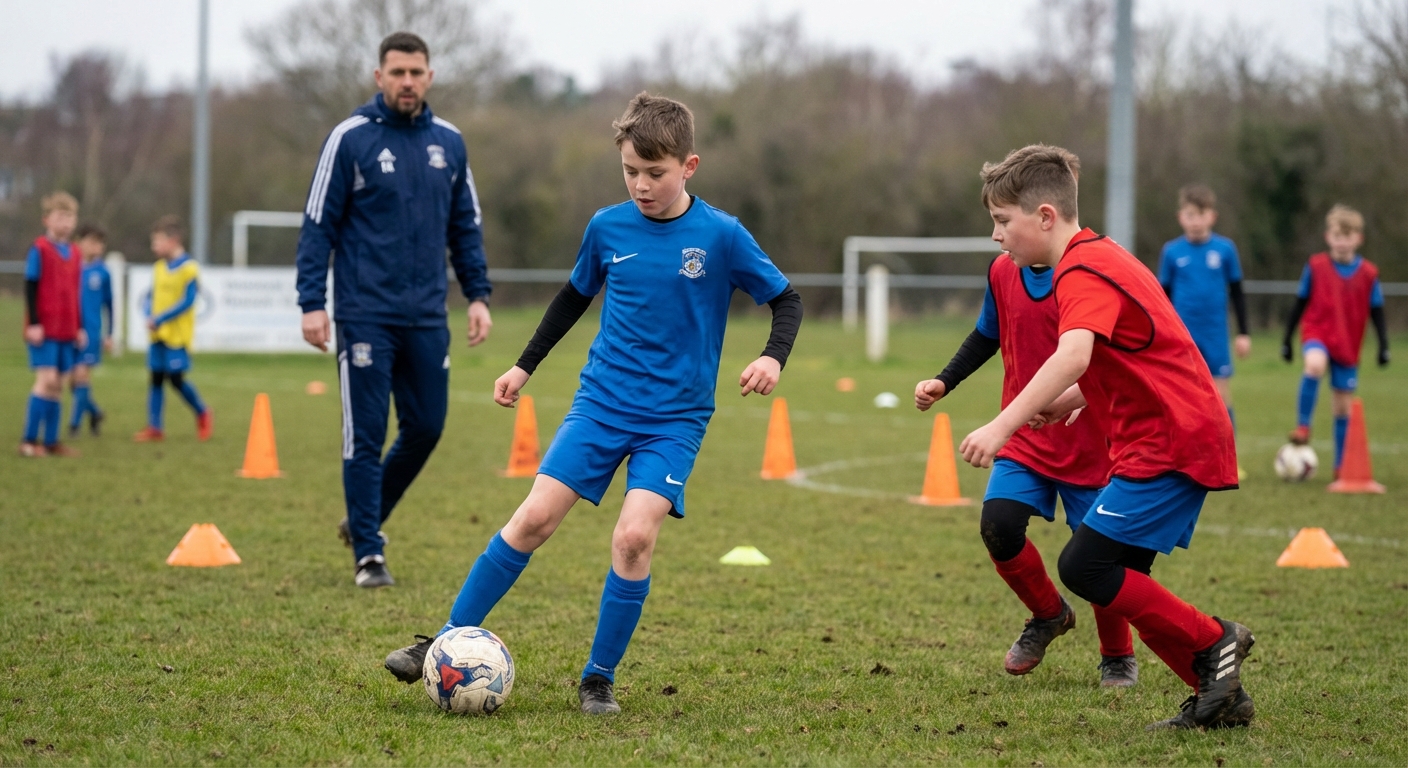
A player's first touch determines everything that follows: whether they can play forward, turn, or simply retain the ball. This article explores why training first touch in isolation is not enough, and how to design sessions that develop this critical skill under realistic game pressure.
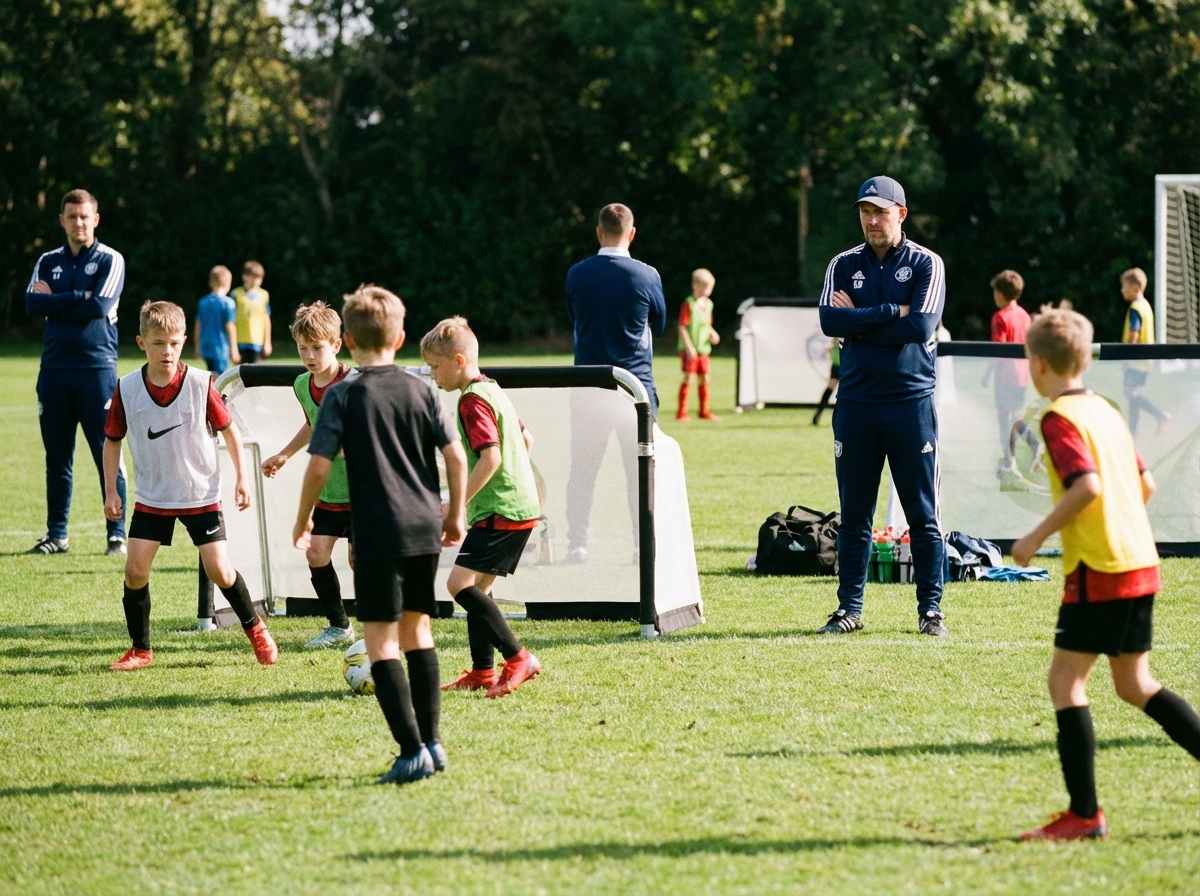
The coaching methodology revolution sweeping grassroots football - and how to implement it at your club this season.