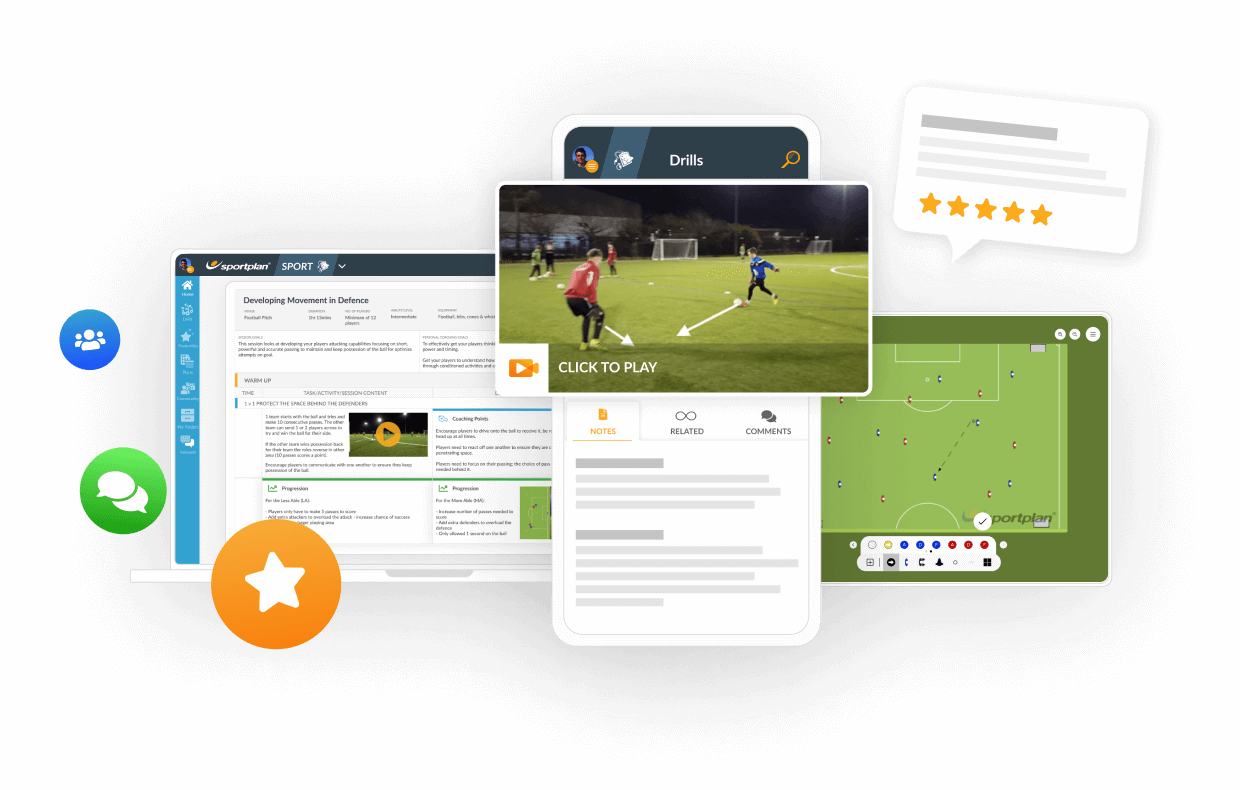
A selection of latteral excercises that replicate game based movements.
Most of these can be carried out in a small area. Set yourself out a circuit and keep score of how many reps etc you can do to track your progression.
Why not do it as a team, add your own exercises in between (things like planks, sit ups and press ups) or introduce the ball to vary your workout.
All excercies can be done in 1, 2 or 3 minute intervals, its completely up to you.
*Repeat each exercise until your required amount of time is up!
1: Side step to one cone, touch it then repeat with the other cone.
2: Small hurdle (use some cones or a couple of footballs if you dont have a hurdle) Feet together and jump from side to side. *Progress by using just one leg and then swap.
3: Quick feet, sideways, step in and out of the gaps as quick as you can (try not to hit any cones) Swap direction so you work both sides.
4: Sprint-Side step-sprint through the cones. Be disciplined when doing this.
5: Short Sharp Sprints. Get through the cones as fast as you can. Remember to go round the cones.
6: Side footing your way round the cones in a figuire of 8 motion.
7: Sprint-Side foot- Sprint-Side foot (like number 4 but on a bigger scale, running fast over a longer distance)
8: Toe tap the ball x amount of times (up to you) and then sprint to a cone and repeat all 4. If working with a friend why not number the cones or use coloured ones and test eachother mentally aswel as physically. Again, this one can be changed from toe taps to step overs or whatever else you would like to work on.
in more ways than one
 sportplan_netball


in more ways than one
sportplan_football
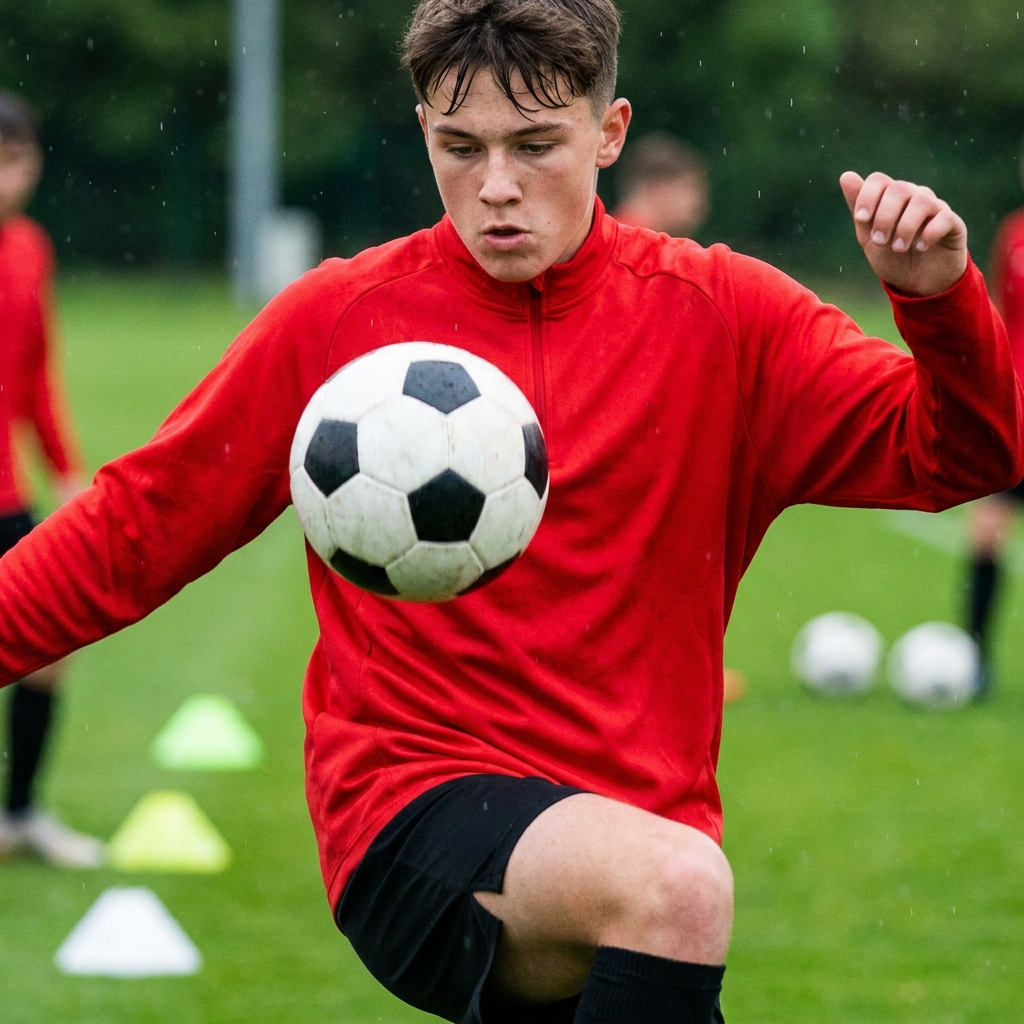
Deliberate heading is now out of U11 grassroots matches. Here is how to coach chest, thigh and foot control so your players still win the ball in the air.

Long-range goals doubled at the 2026 World Cup as teams sat deep. Here is how to coach when to shoot from distance, the technique, and the follow-up.

Under FutureFit, your Under-9s stay at 5v5, your Under-11s stay at 7v7 and your Under-13s stay at 9v9. Same pitch, same numbers, one more year. Here is how to make sure that year feels like a step forward rather than a repeat.