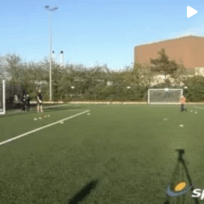
* Two even teams play a possession game inside the white coned area.
* Two target zones in the area (one for each team)
* Spare balls spread around outside of the area to keep game flowing quick (when ball goes out of play, a player from the team who will restart will get to a ball put there hand on it before passing in to area)
* Teams play possession football and as soon as they get the opportunity to pass it to the target player they go for it)
* Target player has to catch the ball inside the target zone for point to count
* Target player then restarts the game by giving possession to the other team
* Press the ball quickly when out of possession
* Nearest man to player in possession should shut down
* Remaining players get marked up to cut off options
* When closing down, can player encourage the opponent in possesion to move a particular way?
* Angle of approach of pressing player

in more ways than one
 sportplan_netball


in more ways than one
sportplan_football
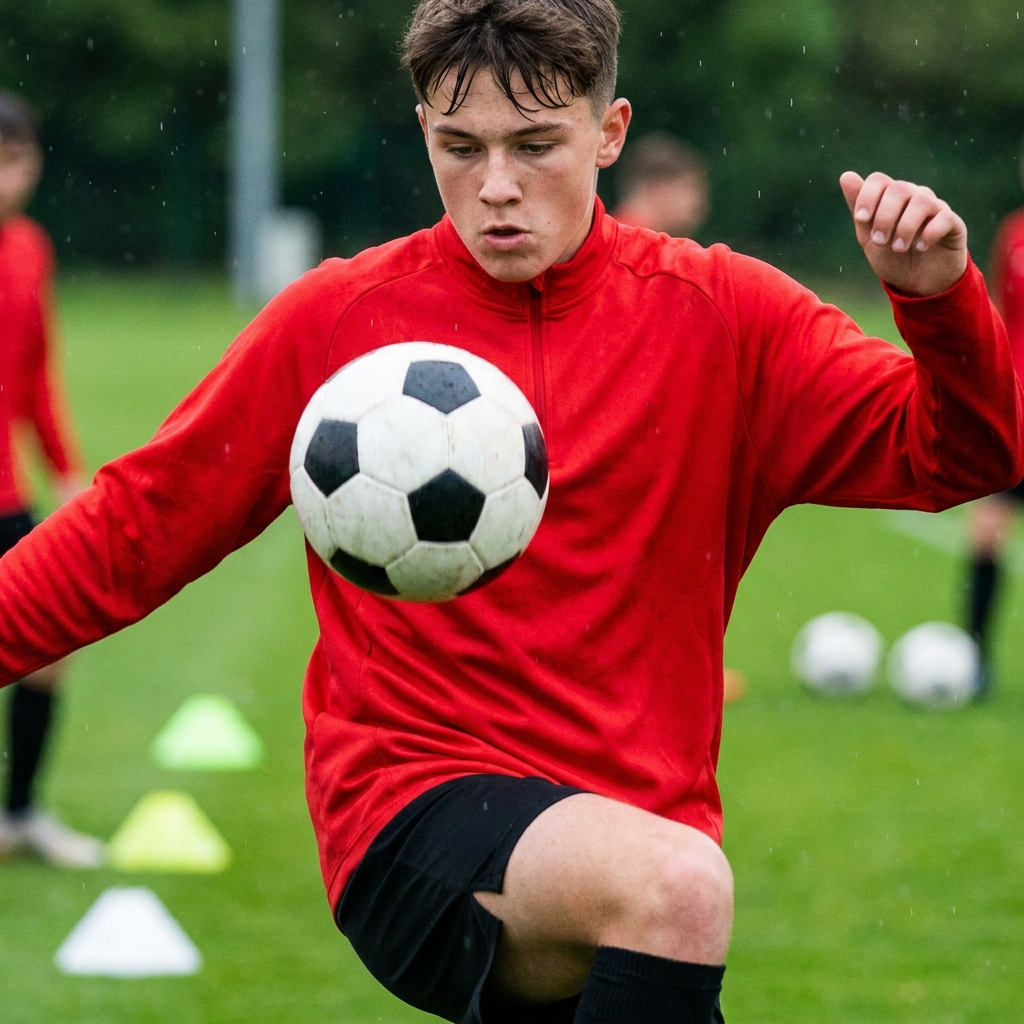
Deliberate heading is now out of U11 grassroots matches. Here is how to coach chest, thigh and foot control so your players still win the ball in the air.
Long-range goals doubled at the 2026 World Cup as teams sat deep. Here is how to coach when to shoot from distance, the technique, and the follow-up.
Under FutureFit, your Under-9s stay at 5v5, your Under-11s stay at 7v7 and your Under-13s stay at 9v9. Same pitch, same numbers, one more year. Here is how to make sure that year feels like a step forward rather than a repeat.