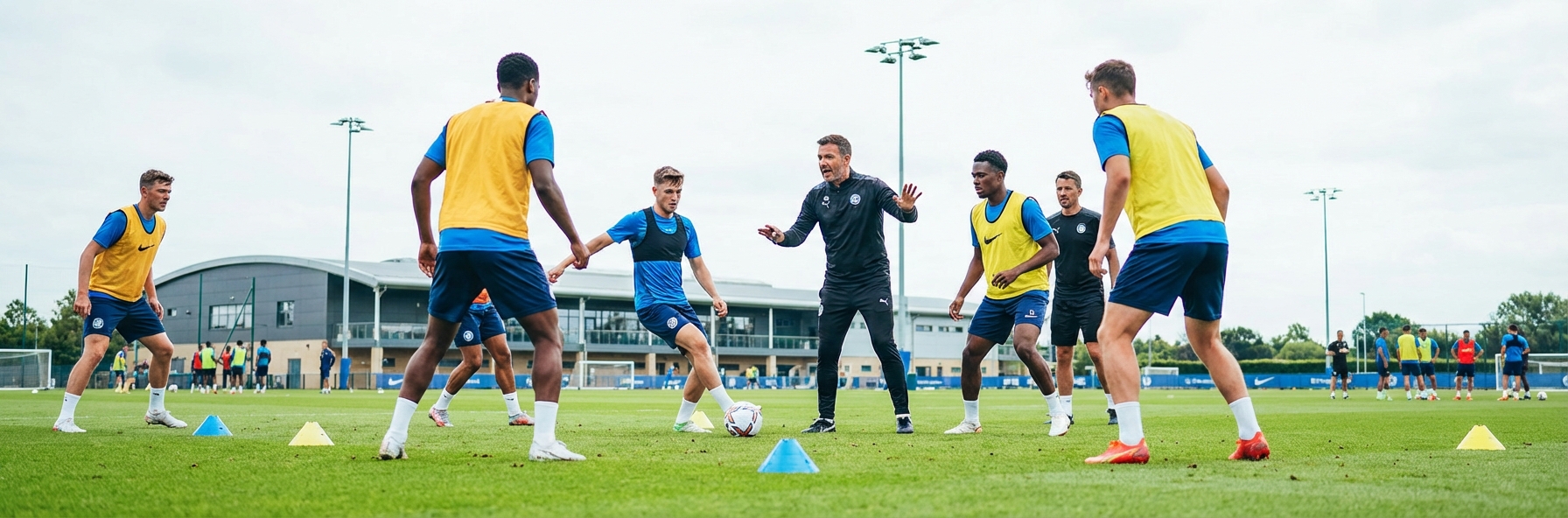
Watch any top team dismantle a compact defence and you'll notice the same pattern: a midfielder receives the ball, scans, and plays a pass that bypasses an entire line of opponents. It looks effortless. It isn't.
Line-breaking passes are the most valuable skill in modern midfield play. They're also the hardest to develop because they require technical ability, spatial awareness, and - crucially - courage.
The Problem: Safe Passes Kill Attacks
Most grassroots midfielders default to the easy option. They receive the ball, look for a teammate at the same horizontal level, and play sideways. It's safe. It's comfortable. It achieves nothing.
Analysis of amateur football reveals that teams typically attempt fewer than 10 genuine line-breaking passes per match. Professional teams average over 40. The difference isn't just technique - it's training methodology.
Understanding Defensive Lines
Before your players can break lines, they need to understand what lines actually are. Modern defences organise in horizontal bands:
- First line: The forwards pressing the ball
- Second line: Central midfielders screening passing lanes
- Third line: Defensive line protecting the goal
A line-breaking pass travels through the gap between any two of these bands. The receiver ends up in a pocket of space with time to turn and face goal.
The Technical Foundation
Line-breaking passes demand specific technical attributes:
Disguise: The passer must look one way and play another. Defenders read eyes and body shape. The best midfielders sell the easy pass before playing the killer one.
Weight: Too firm and the receiver can't control it. Too soft and the defender intercepts. The ball should arrive at the receiver's feet at a pace they can manage in one touch.
Timing: The pass must be played in the split second when the defensive line is unbalanced - often triggered by an attacker's run or a defender's mistake.
Training Methodology
Phase 1: Recognition
Before players can execute, they need to see the opportunity. Use video analysis to show examples of line-breaking passes. Pause footage at the moment before the pass and ask: "Where's the pass?" This trains the eye before the foot.
Phase 2: Unopposed Repetition
Set up three lines of cones representing defensive lines. Midfielders must receive with an open body shape and play passes that travel through the gaps. Focus on technique without pressure initially.
Phase 3: Shadow Defenders
Add passive defenders who can move laterally but not intercept. This forces the passer to time their delivery as gaps open and close. Progress to semi-active defenders who can intercept obvious passes.
Phase 4: Game Integration
Create small-sided games where line-breaking passes earn bonus points. A 5v5 game where any pass through a "gate" (two cones representing a defensive line) counts double encourages risk-taking.
The Scanning Habit
Elite midfielders scan the pitch 6-8 times in the seconds before receiving the ball. They're building a mental map of where teammates and opponents are positioned. By the time the ball arrives, they already know where the line-breaking opportunity exists.
Train this by calling out instructions during possession drills. Players must identify a "forward target" before receiving. If they can't name one, they must play backwards. This makes scanning instinctive rather than conscious.
Creating Courage
The psychological barrier is often bigger than the technical one. Line-breaking passes carry risk. They can be intercepted. Young players especially fear the criticism that follows a turnover.
Build a training environment where attempting the difficult pass is celebrated, regardless of outcome. Praise the intention. Correct the execution. Never punish ambition.
Key Coaching Points
- Body position on receiving - open to the pitch, not closed to the passer
- First touch out of feet to create passing angle
- Head up before ball arrives, not after
- Play the pass before the gap closes
- Follow the pass - support your own ambition
From Training to Matchday
The real test comes on Saturday. Players who have trained line-breaking passes in realistic conditions will attempt them in matches. Those who've only practised safe passing will continue playing safe passes under pressure.
Your job is to create the conditions where attempting the difficult pass becomes automatic. When that happens, you'll have built a midfielder who can unlock any defence.

 sportplan_football