

Every club has the same conversation in April. The bowlers are stiff, the batters have not faced a ball since August, and the first few weekends feel like an extended pre-season played in front of real opposition. Half the squad pick up a niggle before May.
Winter does not have to mean six months of nothing followed by a panic. A light, well-organised off-season plan keeps players ticking over, fixes the things that let them down last summer, and brings juniors back in spring still wanting to play. It does not need to be complicated, and it should not start with a net session next week.
Start With an Honest Review
Before anyone picks up a bat, sit down with your captains and senior players and look back at the season. Not the scorebook highlights, the patterns. Where did you lose games? Collapses in the middle order, overs leaked at the death, dropped catches, poor running between the wickets?
Then do the same for individuals. A short one-to-one chat with each player works better than a questionnaire. Ask them what went well, what frustrated them, and one thing they want to be better at next year. Write it down. That single sentence becomes the backbone of their winter.
A Four-Step Winter Framework
Step One: Rest properly. Most club cricketers need a genuine break after a long summer, particularly bowlers. Give the squad a few weeks with no cricket at all. Tired bodies and stale minds do not improve, and a break makes people want to come back.
Step Two: Build the body before the skills. From late autumn, encourage simple strength and conditioning: bodyweight work, core and hip stability, some running and mobility. It does not need a gym membership. The aim is robustness, so players can bowl and field hard in spring without breaking down.
Step Three: Bring bowlers back gradually. Bowling is the job most likely to cause injury when it restarts too quickly. Begin with short, low-intensity spells focused on action and accuracy, then add overs and intensity week by week in the new year. Nobody should be bowling flat out for an hour at the first indoor session.
Step Four: Give every player one or two skill priorities. Use the review to agree specific goals. A top-order batter might work on leaving outside off stump; a spinner on consistent length; a keeper on standing up. Two clear priorities beat a vague promise to "have a good winter".
Indoor Nets With Purpose
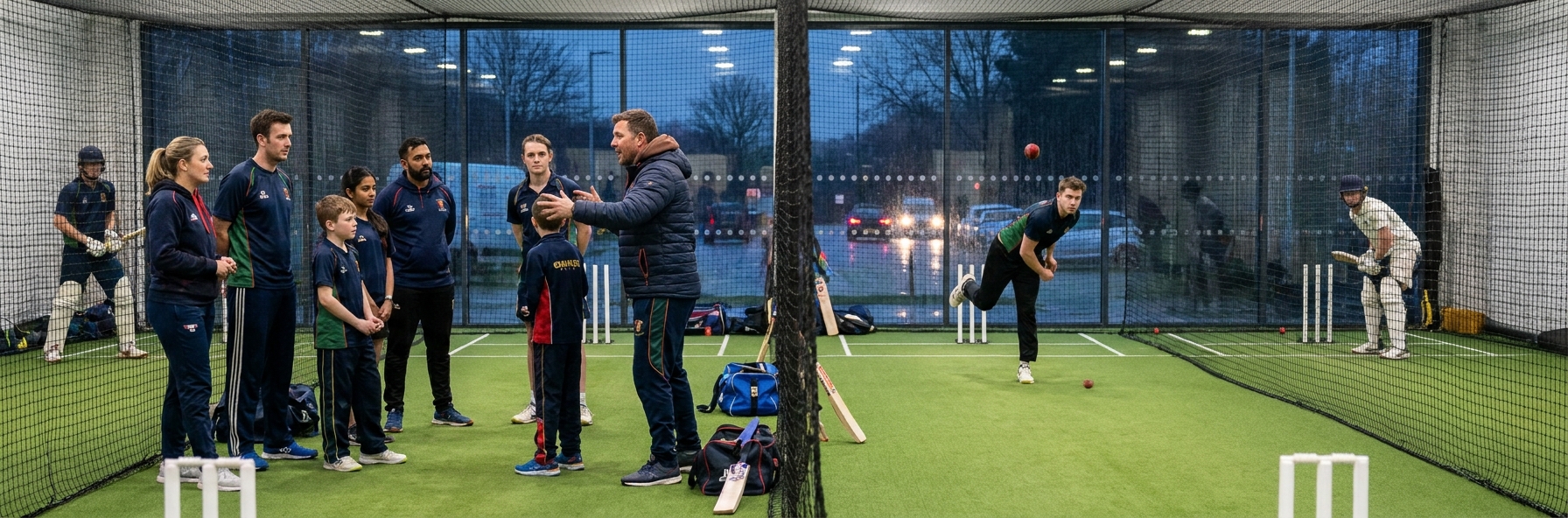
Winter nets are valuable and often wasted. The classic session is a queue of bowlers running in off a shortened run-up while a batter tries to hit every ball into the roof netting. Everyone goes home sweaty and nobody has improved.
Set each net a job instead. Batters face a scenario, such as ten balls to see off with no false shots, or six overs to score thirty with only a set number of risks. Bowlers bowl to a plan and a target area, and count how many land there. Rotate roles often so nobody stands still for long, and finish with a short competitive game so the session has an edge.
Keep a simple record. If a bowler hits their target area more often in February than in November, they can see the improvement, and that keeps them coming back through the cold months.
Keeping Juniors Engaged Over Winter
Juniors are the players most likely to drift away between September and April. Other sports fill their weekends, and by spring cricket can feel like a distant memory. A regular, fun indoor session, even once a fortnight, keeps them connected to the club.
Keep it game-based and active. Short matches, catching challenges and target bowling competitions will hold attention far better than long technical drills. Mix age groups occasionally so younger players get to see what they are working towards, and invite a senior player or two along to help.
Key Coaching Points
- Review the season honestly, as a team and one-to-one, before planning anything.
- Build in a proper rest period, especially for bowlers after a long summer.
- Prioritise simple strength, mobility and conditioning before intense skill work.
- Increase bowling workloads gradually through the winter, never all at once.
- Give every net session a purpose and every player one or two clear skill priorities.
- Keep junior sessions short, active and game-based so they stay connected to the club.
Recommended Drills



Frequently Asked Questions
When should club bowlers start bowling again over the winter?
There is no single right date, but most bowlers benefit from a clear break after the season and a gradual return in the new year. Start with short spells focused on rhythm and accuracy, then build the number of balls and the intensity over several weeks. If a player has had an injury, get advice from a qualified physio before they return.
Our club can only book one indoor net a week. Is it worth it?
Yes, if you plan it. One well-run hour with set scenarios, rotating roles and a target for every bowler is worth more than three hours of casual slogging. Use the rest of the week for players to work on their fitness and personal goals at home.
How do we stop juniors losing interest before the summer?
Keep them playing and keep it fun. Regular short sessions built around games and competitions, a clear date for when outdoor cricket starts again, and a sense that the club remembers them all help. Juniors who feel part of the club over winter are far more likely to be back in April.