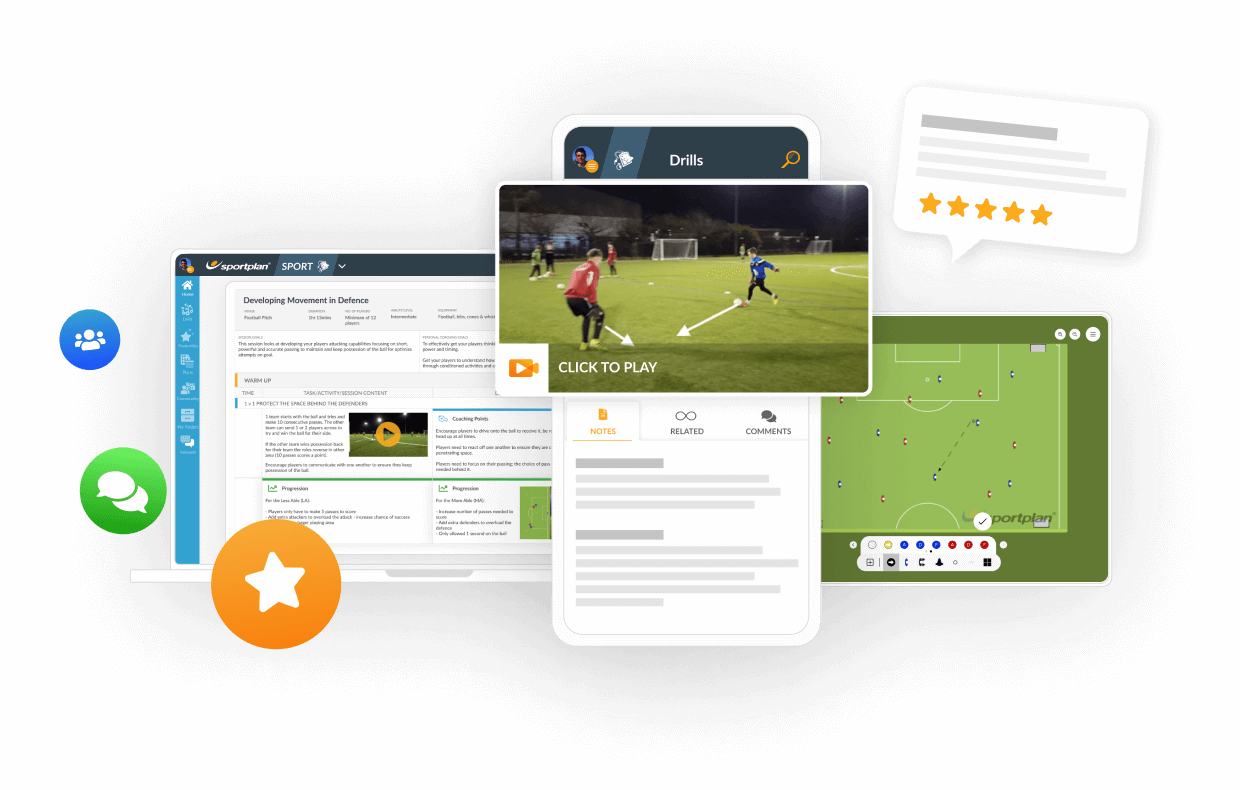
Line up all the children but one at one end of the field, each with a soccer ball.
The remaining child, Mr. Wolf, stands at the other end of the field with their back to the rest of the players.
The players call out, “What Time is it Mr. Wolf” and Mr. Wolf must respond with a time (ie. it’s one o’clock, it’s nine o’clock, etc.). The players count to the number called out while dribbling their ball towards Mr. Wolf.
The question is repeated over and over until Mr. Wolf responds to the players’ question with “It’s lunch time!” At that point, all the players must change direction and dribble their ball as quickly as possible to the start line before Mr. Wolf tags one of them. Whichever child is tagged then becomes Mr. Wolf.
in more ways than one
 sportplan_netball

in more ways than one
sportplan_football

Deliberate heading is now out of U11 grassroots matches. Here is how to coach chest, thigh and foot control so your players still win the ball in the air.
Long-range goals doubled at the 2026 World Cup as teams sat deep. Here is how to coach when to shoot from distance, the technique, and the follow-up.

Under FutureFit, your Under-9s stay at 5v5, your Under-11s stay at 7v7 and your Under-13s stay at 9v9. Same pitch, same numbers, one more year. Here is how to make sure that year feels like a step forward rather than a repeat.