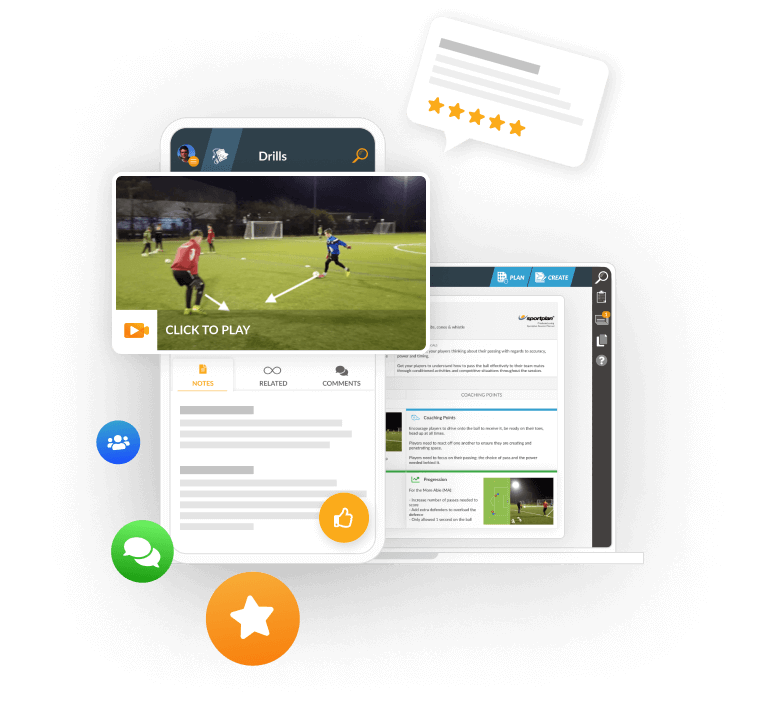
Set Up - Two Circular grids. One small and one large.
The Game - Players each with their own ball, dribble around the small large grid. They should be dribbling at a decent pace, avoiding each other and keeping their heads up.
After they have been dribbling for a while, call out the word "SWITCH" When you do this each player must stop their ball, leave it where it is, and run around a cone on the outer circle and run back into the small circle to a new or different soccer ball. It is important they get to new balls right away and continue dribbling.
Once they get comfortable with the concept of the drill, remove one player's ball. This player now must run around the drill without a ball. When the next "Switch" comes about, players again run to the outside circle and back into the smaller one. Any player who doesn't end up with a ball after a "Change" has to run round the grid.
Heads up. Dribble with pace. Add moves. Older players- increase distance of circles.
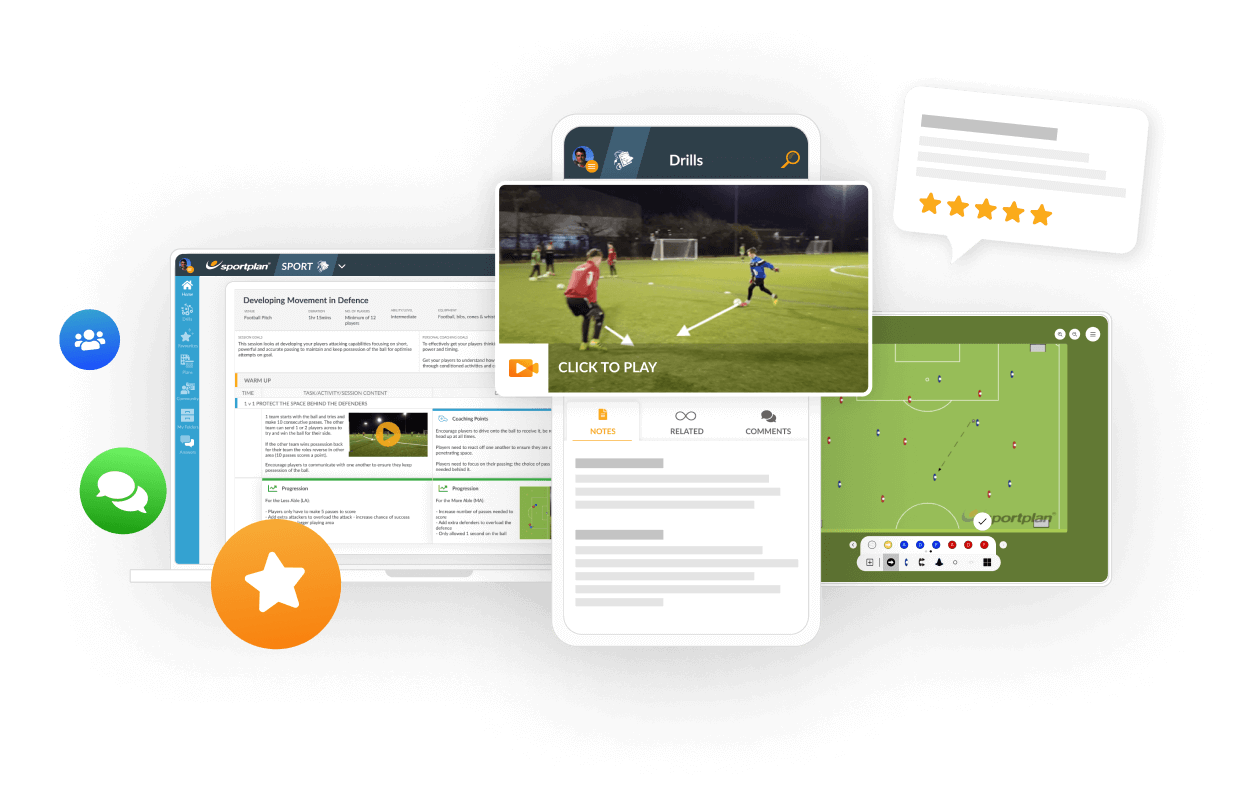
in more ways than one
 sportplan_netball


in more ways than one
sportplan_football
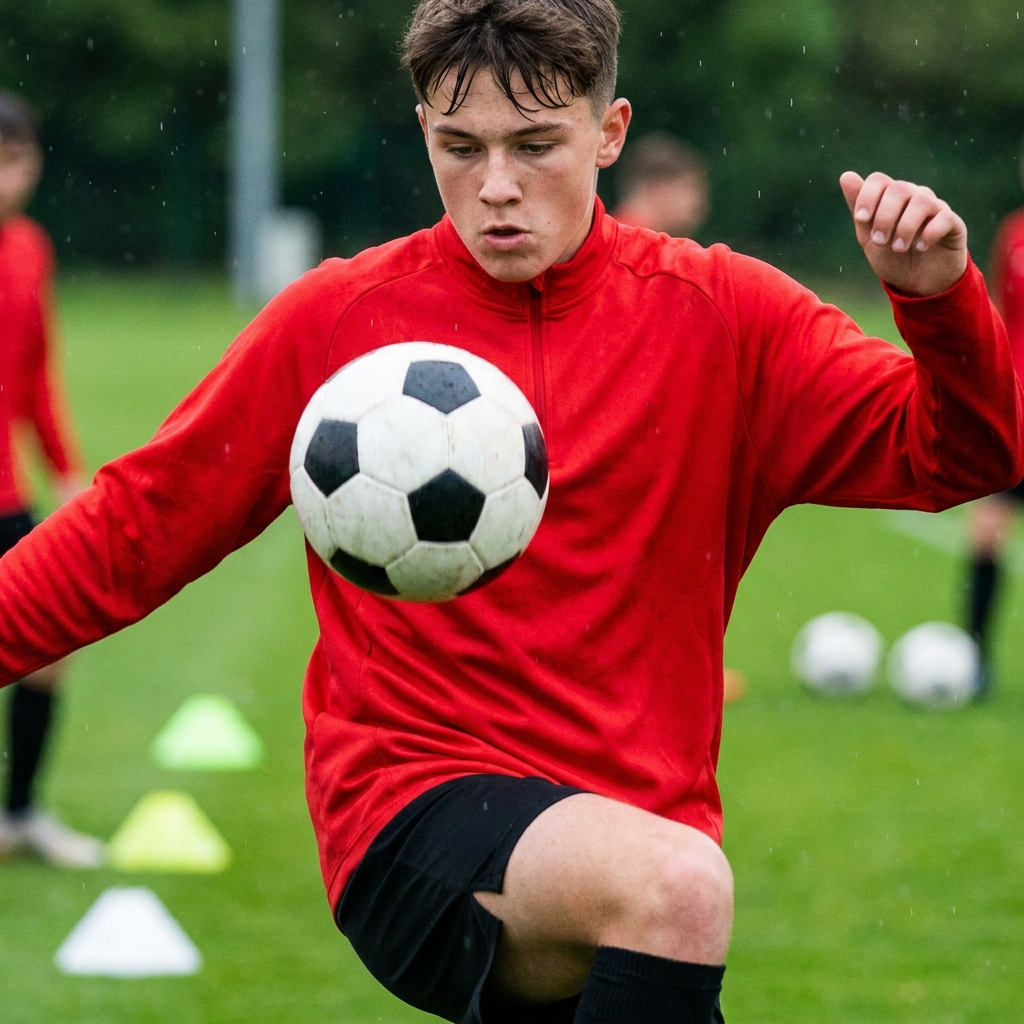
Deliberate heading is now out of U11 grassroots matches. Here is how to coach chest, thigh and foot control so your players still win the ball in the air.
Long-range goals doubled at the 2026 World Cup as teams sat deep. Here is how to coach when to shoot from distance, the technique, and the follow-up.
Under FutureFit, your Under-9s stay at 5v5, your Under-11s stay at 7v7 and your Under-13s stay at 9v9. Same pitch, same numbers, one more year. Here is how to make sure that year feels like a step forward rather than a repeat.