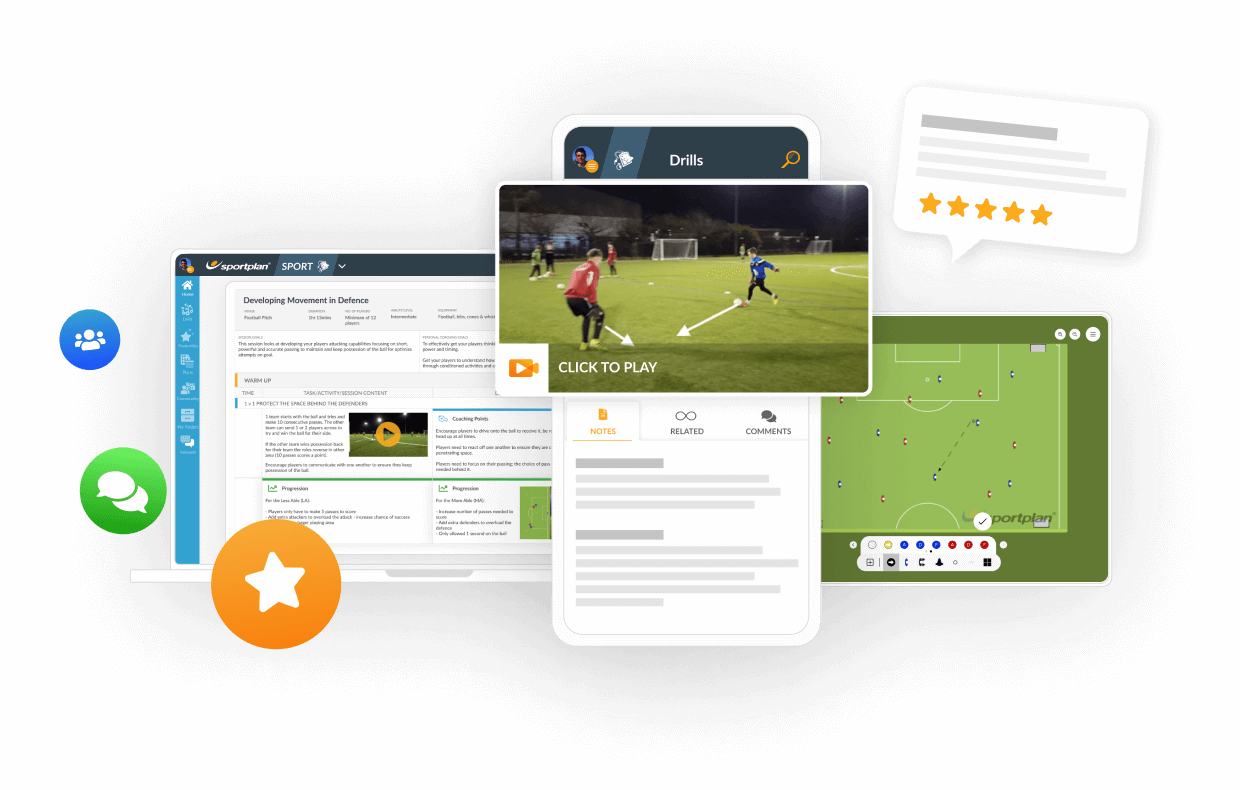
Players line up behind goal line (blues)
Coach stands outside 18 yd with balls ready to serve
Players must complete some activity before they can move forward i.e. start on their knees, complete a push up, start in seated position, etc.*CONDITIONING ELEMENT*
Forward run should be a 3/4 sprint (game pace)
Coach plays ball in to player so they meet the ball at roughly halfway point (A). Player must adjust their body to play a (max) 2 touch pass back to the coach. Coach can serve ball as simple ground pass, throw it for header etc.
Player will tell coach to "HOLD" the ball while they make a run around the coach. Player should call for ball to be released into the box for them to run on to and shoot (D).
Variations:
Player dribbles ball around coach and finishes.
Coach plays ball back to next player in line who will play a pullback ball from goalline towards the attacking player for them to meet and shoot.
Coach can serve the ball from behind the players in line so they must react when they see the ball moving in front of them. Player will chase ball and dribble it around the cone, inside and shoot.
High intensity of 3/4 sprints.
Adjust body positioning to deal with the service - it will not always be predictable.
Coach, play ball from different angles at different speeds and heights e.g. play the ball in from wide angles, have the ball bounce awkwardly etc.
Player should accelerate after turning towards goal, as they would to lose a defender.
in more ways than one
 sportplan_netball


in more ways than one
sportplan_football

Under FutureFit, your Under-9s stay at 5v5, your Under-11s stay at 7v7 and your Under-13s stay at 9v9. Same pitch, same numbers, one more year. Here is how to make sure that year feels like a step forward rather than a repeat.
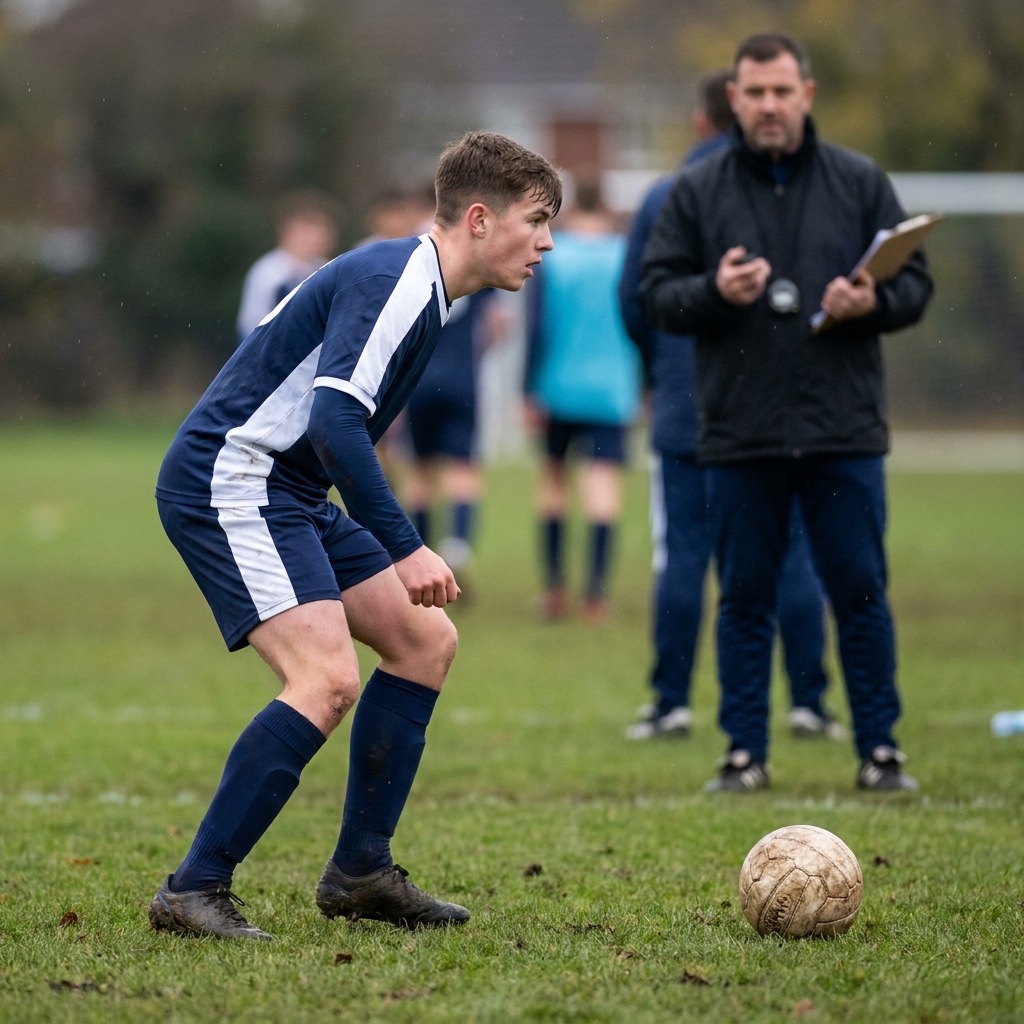
Most 1v1s are lost in the first second, when the defender rushes in and dives. Teach your players to slow the attacker down, take away the dangerous option and pick the right moment, and they will win far more of them.

The FA's FutureFit framework lands this season, bringing a 3v3 entry format at Under-7s. Here is what actually changes on a Saturday morning, and how to coach it well.