• Area 60x50yds, with 2 additional end zones 10x50yds, as illustrated.
• 16 players, arranged 8v8 in main playing area, 1 ball.
• Practice starts with: Coach feeds into Attacking team who look to
feed a through pass into end zone for receiving player to run on to
& control.
• If under pressure in possession, a player can drop into the defending
end zone to receive ball & cannot be followed by an opponent.
• The player must then transfer ball through cones to another
supporting team mate before ball is passed or run into main
practice area.
• All passes must be below head height.
Detail:
• Receiving player cannot enter the attacking end zone to collect
ball before the through pass is delivered.
• Looking for early, accurate & quick passes.
• Concentration, awareness, composure & ball retention.
• One, two touch passing & slower searching possession.
• Controlled & measured through passes ahead of runner delivered
with either foot & different surfaces as required.
• Attacking space behind opponents to receive passes.
• Simple progression for this practice is:
- Add opponent-free safe zones on either side of playing areas, to
create attacking flank channels.
• Team dispersal (spreading-out) in possession.
• Effective passing decisions & quality of passing execution.
• Patient, precise passing with an emphasis on penetration
as a priority.
• Support & movement around ball holder.
• Blending quick inter-passing & slower approach play.
• Running with & off the ball to attack spaces available.
• Delivering final pass & timing final run to receive
in more ways than one
 sportplan_netball


in more ways than one
sportplan_football
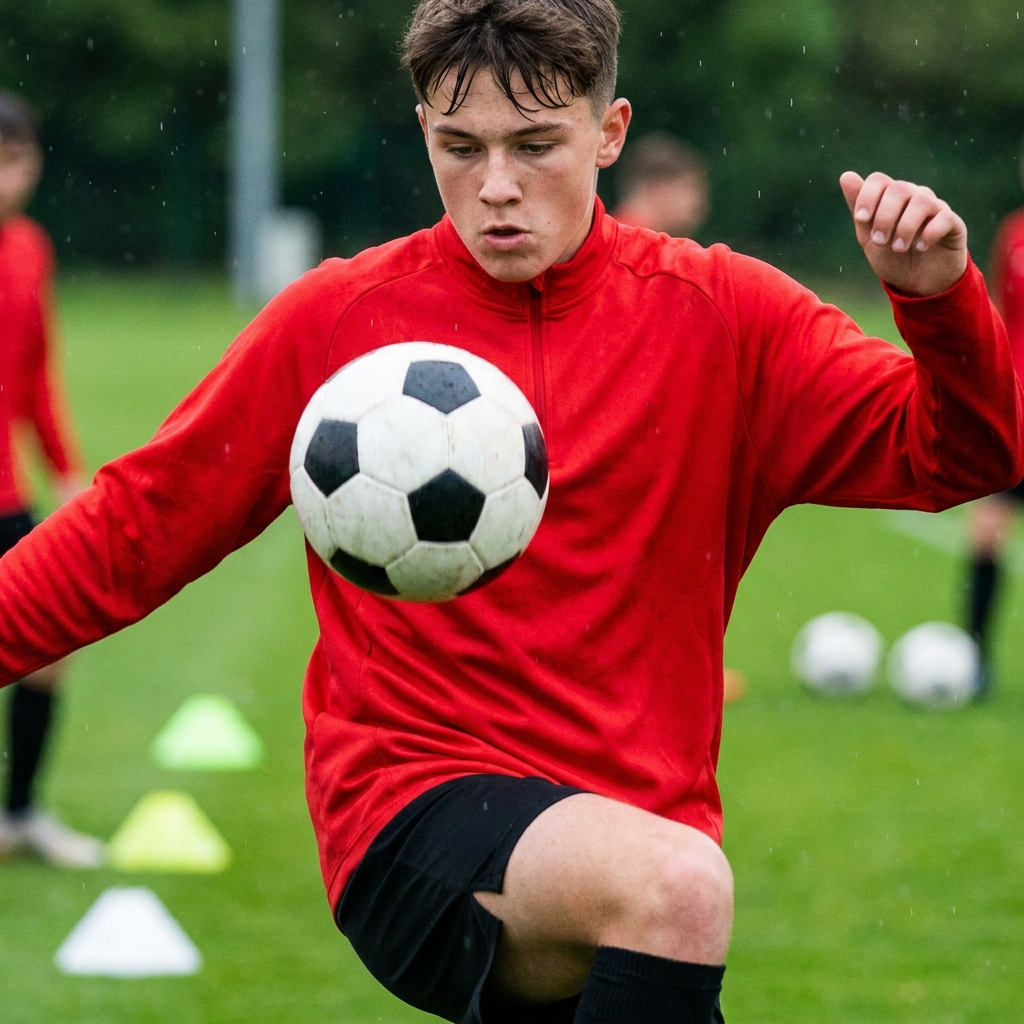
Deliberate heading is now out of U11 grassroots matches. Here is how to coach chest, thigh and foot control so your players still win the ball in the air.
Long-range goals doubled at the 2026 World Cup as teams sat deep. Here is how to coach when to shoot from distance, the technique, and the follow-up.
Under FutureFit, your Under-9s stay at 5v5, your Under-11s stay at 7v7 and your Under-13s stay at 9v9. Same pitch, same numbers, one more year. Here is how to make sure that year feels like a step forward rather than a repeat.