Practice 3: Sliding Keep Ball / Rondo
A rondo variation where it is 4 v 1 but after a set amount of passes players look to switch and slide down to opposite area.
Once they got the hang of it, I joined in as an end fixed player and added an attacker in the middle with defenders. The new rule was 5 passes before switching play but at least one pass had to go through the player in the middle of the box.
Progressions:
One touch only, add passes, and list can go on.
Alternative Ideas:
If you have more than 7/8 players i have done this same principle but with 4 boxed.
You could have any 2 groups working in different boxes with any overload you want. After a set amount of passes they move into a free box which helps training awareness of open areas.
Match Time
We of course finished up with a SSG with the mini goals.
Players were free to play but used one touch finish. I was very proud to see them use a lot of the ideas we used in training - they played 1 touch where they could and their movement and support was excellent.
Even though we were very short on numbers that night the kids and spectating parents said that was one of the most fun sessions they have had.
Sometimes we panic and worry as coaches when we end up with small numbers at training, but I think if we can keep an open mind and flexible approach it can normally work out for the best and we get to spend more one-on-one time with our players
in more ways than one
 sportplan_netball

in more ways than one
sportplan_football
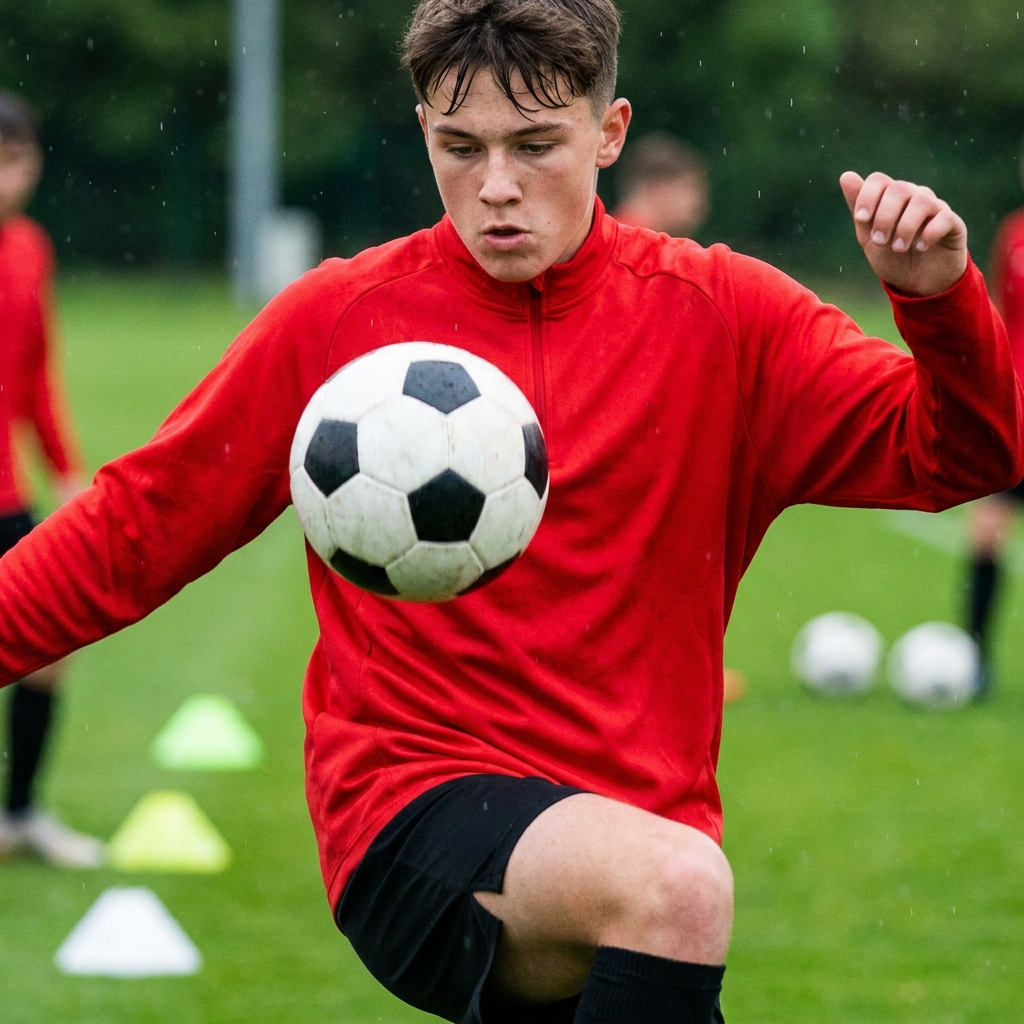
Deliberate heading is now out of U11 grassroots matches. Here is how to coach chest, thigh and foot control so your players still win the ball in the air.

Long-range goals doubled at the 2026 World Cup as teams sat deep. Here is how to coach when to shoot from distance, the technique, and the follow-up.

Under FutureFit, your Under-9s stay at 5v5, your Under-11s stay at 7v7 and your Under-13s stay at 9v9. Same pitch, same numbers, one more year. Here is how to make sure that year feels like a step forward rather than a repeat.