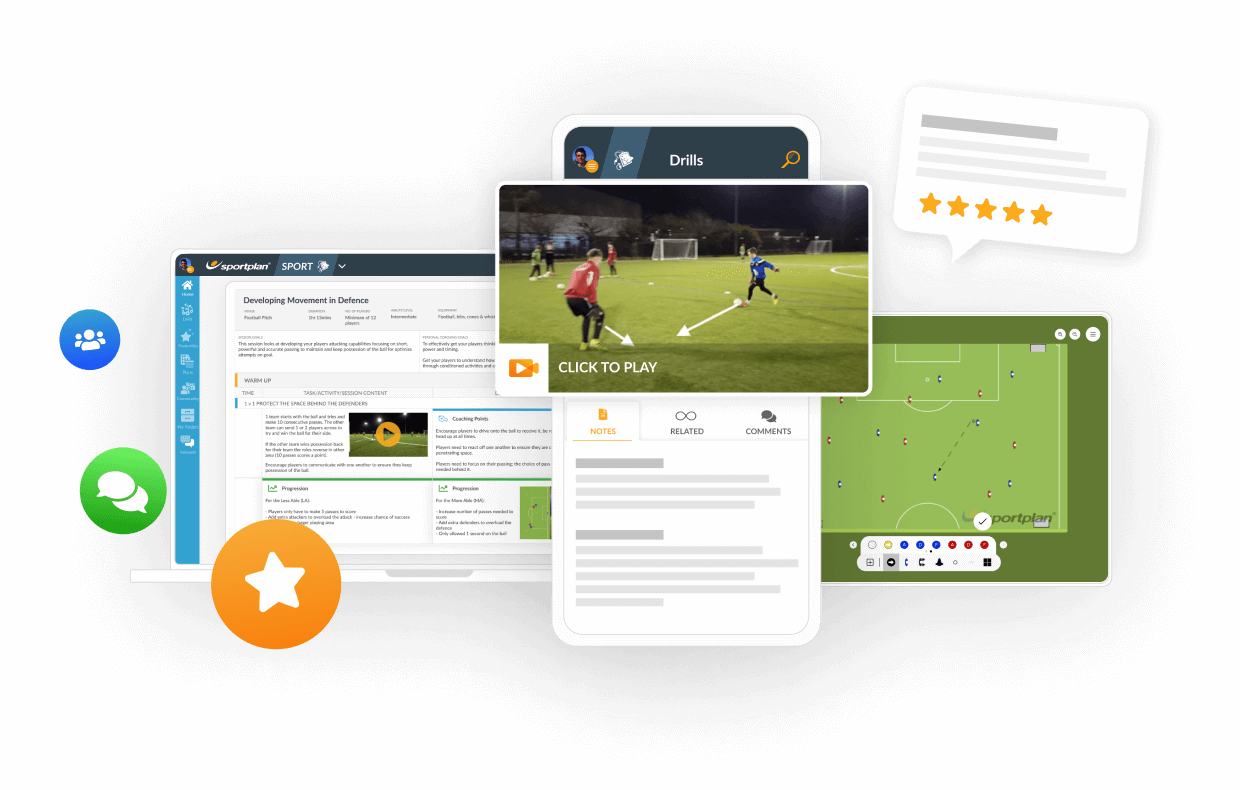
Warm Up 1
Soccer drill procedure
Not every trainer likes a complicated training introduction. We would like to give you an example how you can create an easy but interesting drill sequence. The numbers refer to the displayed numbers in the animation. You need at least two teams to make sure that the sequences work also under 3. Extensions are possible, but you will need two more groups each. Theplayers who stand diagonal to each other, get a ball.
Description
• 1. The diagonal teams dribble back and forth, the ball is passed sensitively.
• 2. The player without ball approaches the dribbler, he passes the ball half-way without stopping.
• 3. After dribbling to the diagonal team, the ball is put down. The next player dribbles then diagonal to the next team, then again back to the opposite team, then again diagonal and so on.
Variations
- Every start player gets a ball, which makes it more difficult
- After arriving in the center, integrate passing
Soccer coach tips
- Improving of ball control, secure passing
- Increase the speed slowly
Organisation of the soccer training drill
Category: Advanced training, children’s training, youth training
Minimum group size: 8
Maximum group size: 16
Materials required: Enough balls, 8 pylones per group
Field size: The greater the distance, the more intensive the drill sequence.
in more ways than one
 sportplan_netball


in more ways than one
sportplan_football

Under FutureFit, your Under-9s stay at 5v5, your Under-11s stay at 7v7 and your Under-13s stay at 9v9. Same pitch, same numbers, one more year. Here is how to make sure that year feels like a step forward rather than a repeat.
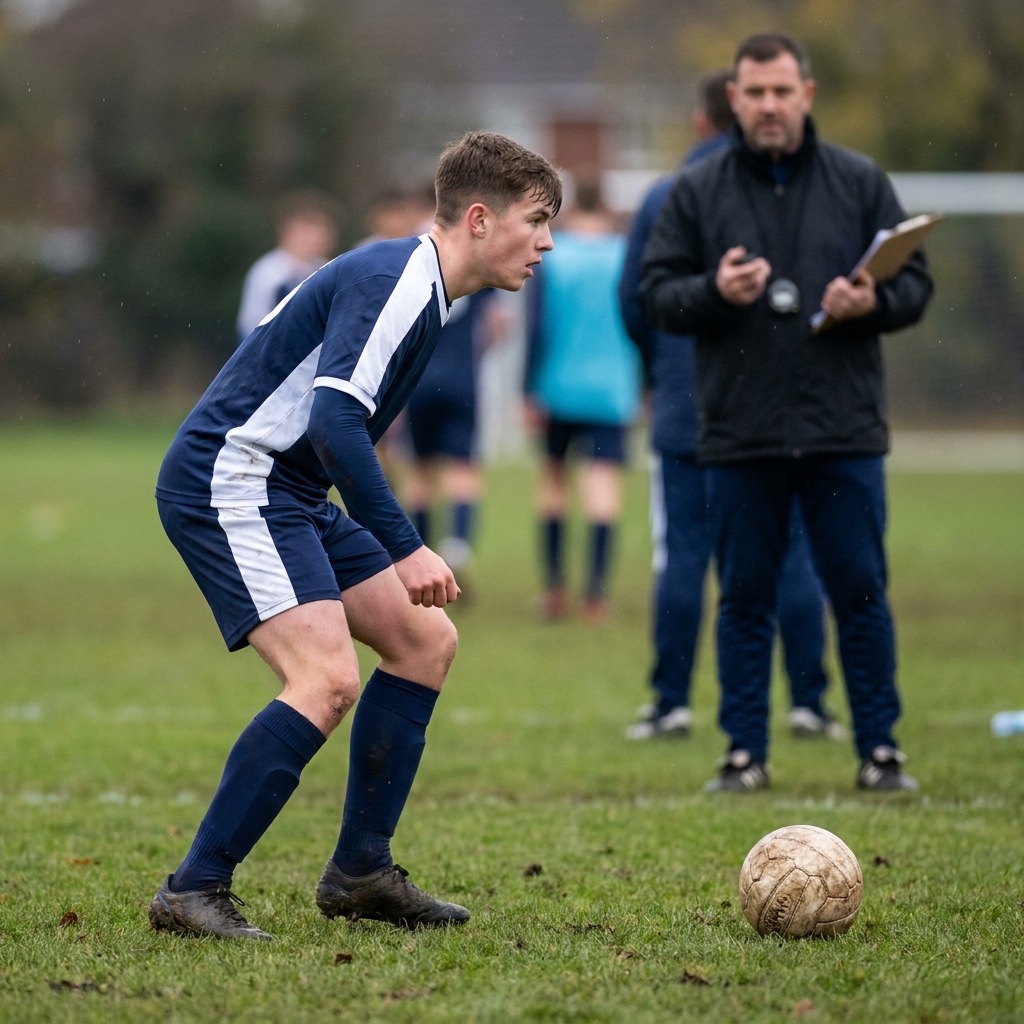
Most 1v1s are lost in the first second, when the defender rushes in and dives. Teach your players to slow the attacker down, take away the dangerous option and pick the right moment, and they will win far more of them.

The FA's FutureFit framework lands this season, bringing a 3v3 entry format at Under-7s. Here is what actually changes on a Saturday morning, and how to coach it well.