This drill is to practise your accuracy. You place bibs or jumpers on each corner of the posts (top and bottom) and try hitting them.
The aim of this drill is to increase your accuracy when shooting. You start by placing the ball on the edge of the box. You will need around a 3stride run up before hitting the ball to get the power to reach the net. The most important part this drill is how you strike the ball. You can either strike the ball. You can either strike the ball with your lacers or the side of your foot.
When using your lacers to strike the ball you will often get more power than using the side of your foot. If you are hitting the two bottom targets you will need to keep your head and body over the ball to keep it down. You bring you leg back and aim to hit the middle of the ball with you lacers and the ball should head in a straight line. Using this method to hit the top targets you have to do it slightly different. When striking the ball you with have to lean slightly back to get some hight on the ball. However if you lean to far back the ball will go to high. You will have to strike under the ball with you laceses.
When using the outside of your foot to strike the ball you just have to strike ther ball with a different part of the ball. Thats the only differeece. Therefore when hitting the top targets you still lean back and when hitting the top target you still put your body and ehad over the ball. However when hitting the bottom targets you strike the ball with the middle of your foot in the middle of the ball, almost like your passing into the net. When hitting the top targets you hit the ball you strike the your foot at the bottom of the ball. However when doing this the ball often curves making it a harder shot for the keeper to save.

in more ways than one
 sportplan_netball


in more ways than one
sportplan_football

Under FutureFit, your Under-9s stay at 5v5, your Under-11s stay at 7v7 and your Under-13s stay at 9v9. Same pitch, same numbers, one more year. Here is how to make sure that year feels like a step forward rather than a repeat.
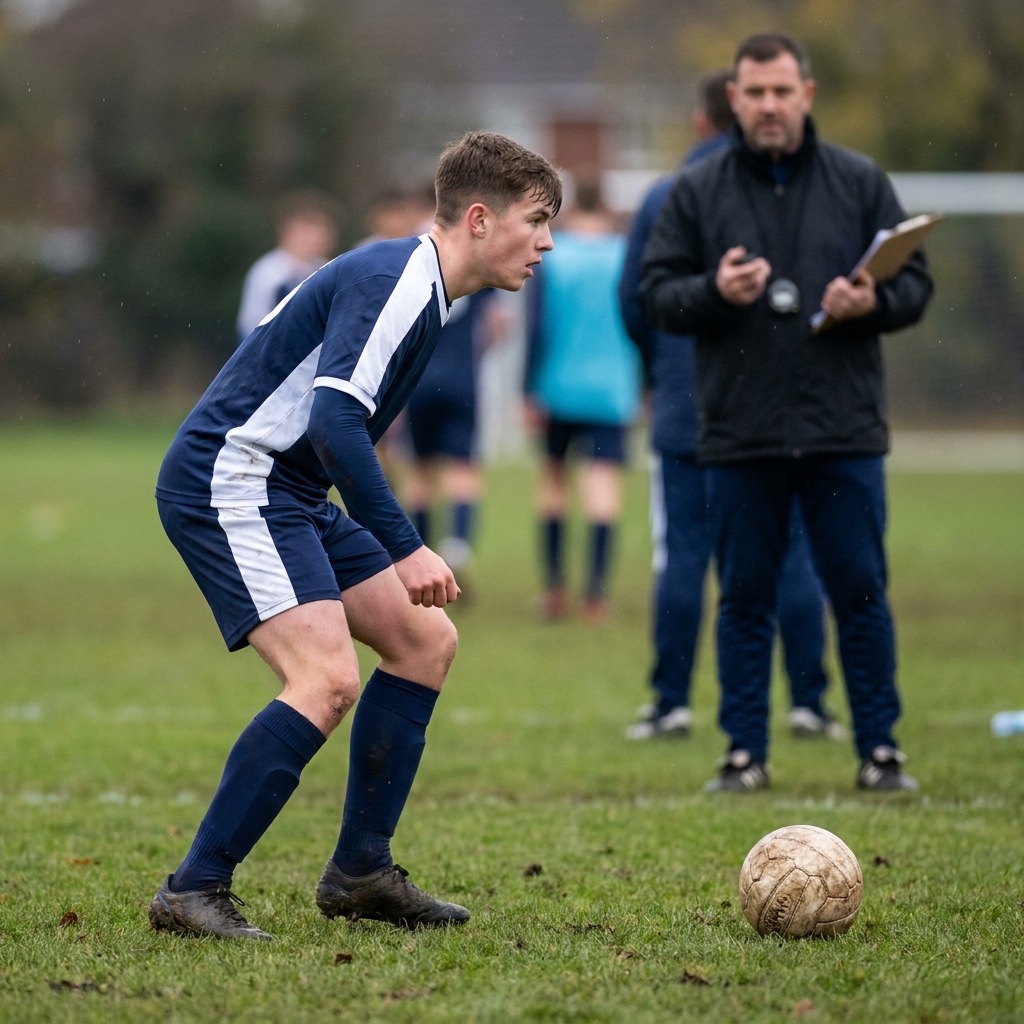
Most 1v1s are lost in the first second, when the defender rushes in and dives. Teach your players to slow the attacker down, take away the dangerous option and pick the right moment, and they will win far more of them.

The FA's FutureFit framework lands this season, bringing a 3v3 entry format at Under-7s. Here is what actually changes on a Saturday morning, and how to coach it well.