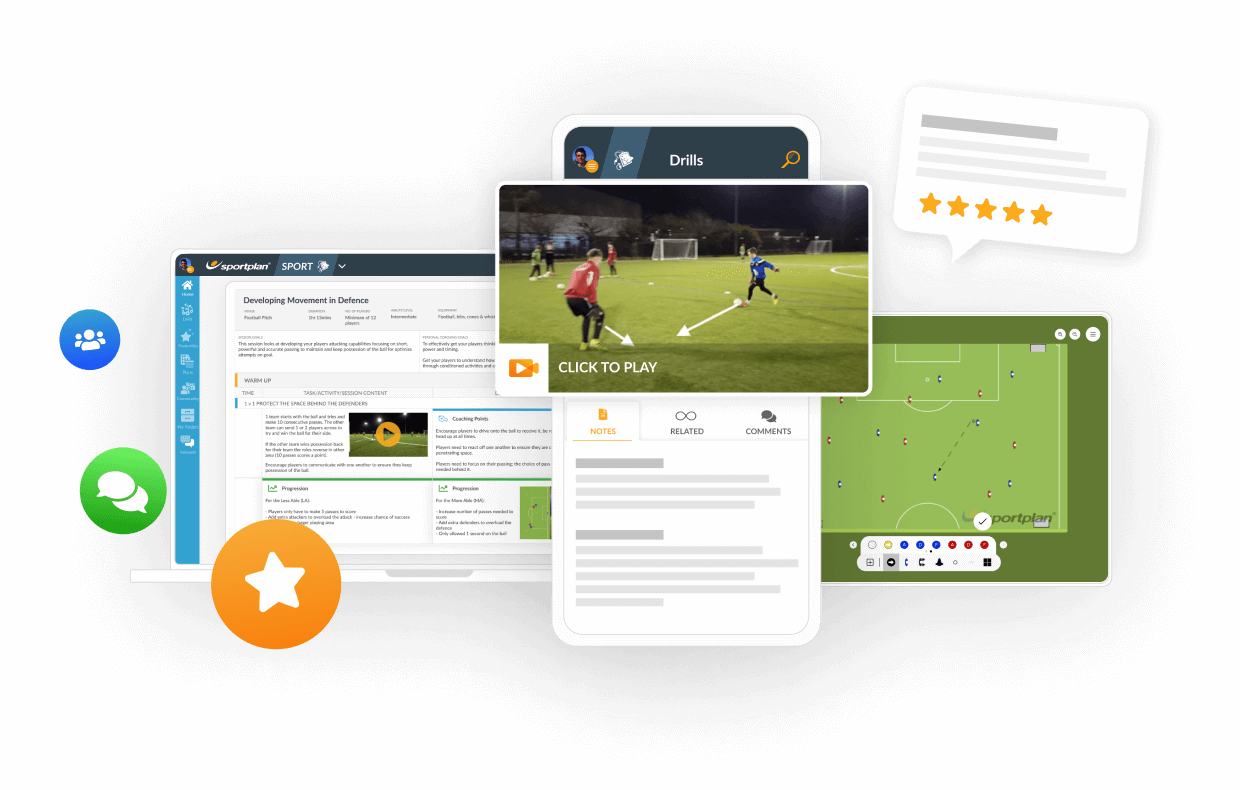
Agility is a vital part to the footballers' game, and including this in your training session is important. A good way to improve your player's agility, speed and communication is again to turn the drill into a race; and get their competitive streaks flowing!
Set up a line of cones or poles vertical down and at either end, place two equal teams opposite one another. Under the starter's orders, the first players of each team must run in and out of the poles as fast as they can. Once they reach the centre, they then run to their right, where an agility ladder will be set up. Here, the player must run through the ladder, placing two feet quickly in each gap. Once this is completed, the player must then sprint to the back of the opposite queue. The process is then completed by repeating the process but returning back to where the team started, going in a clock-wise motion and again, going to your right when they reach the ladder. The first team back to their original position wins!
in more ways than one
 sportplan_netball


in more ways than one
sportplan_football

Deliberate heading is now out of U11 grassroots matches. Here is how to coach chest, thigh and foot control so your players still win the ball in the air.

Long-range goals doubled at the 2026 World Cup as teams sat deep. Here is how to coach when to shoot from distance, the technique, and the follow-up.

Under FutureFit, your Under-9s stay at 5v5, your Under-11s stay at 7v7 and your Under-13s stay at 9v9. Same pitch, same numbers, one more year. Here is how to make sure that year feels like a step forward rather than a repeat.