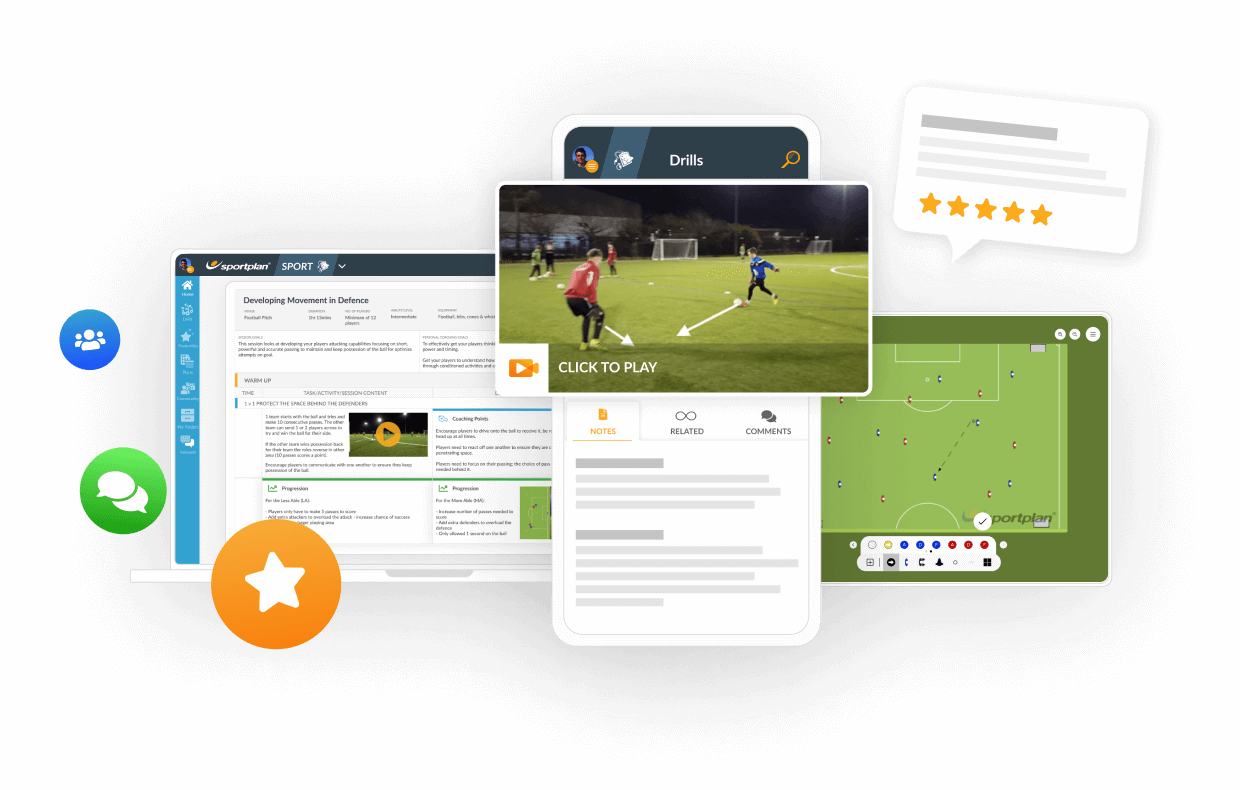
10-20 minute activity
Objective: To be able to strike a football with pace, power, height, curl and accuracy
Concept: This exercise can be done with 7-15 players. They will be split into two teams, with a goalkeeper as well. One team will be given a football for every player except one who will stand just inside the 18 yard box, with the other three players stood out the way to the side of the goal and the other team spread out behind or too the side of the goal. Players will have 2 minutes to score as many goals as they can for their team with a player playing the ball into the player in the area to take a touch and finish, it is important for the coach to provide enough footballs to last players the full two minutes. Every goal scored is a point, they can score 2 points with a first time finish, if they miss the target with a first time finish they lose a point. Players should be encouraged to score in 2-3 touches, there is also a bonus point given by the coach for the best technique in a players finish. Players behind the goal have the job of catching balls or heading balls to take points of the opponent, -1 point for a catch and -2 points for a header (heading rule only applies to players over 10 years old). Once the two minutes is up, the other team takes their turn.
Move: Players will use a lot of hip and arm movement
Connect: Players will connect by being on a team and will communicate when playing a pass to their teammate
Think: Players will need to think about their first touch and the type of finish to make sure they score a goal.
Progressions:
Regressions
Coaching Behaviours: Observation, Praise, Questioning, Constructive Feedback, Instruction
Questions Asked: What should the first touch look like? What part of the goal am I aiming for? How do we generate power in a shot? How can I bend a shot? How do I know when to take a shot first time?
in more ways than one
 sportplan_netball


in more ways than one
sportplan_football
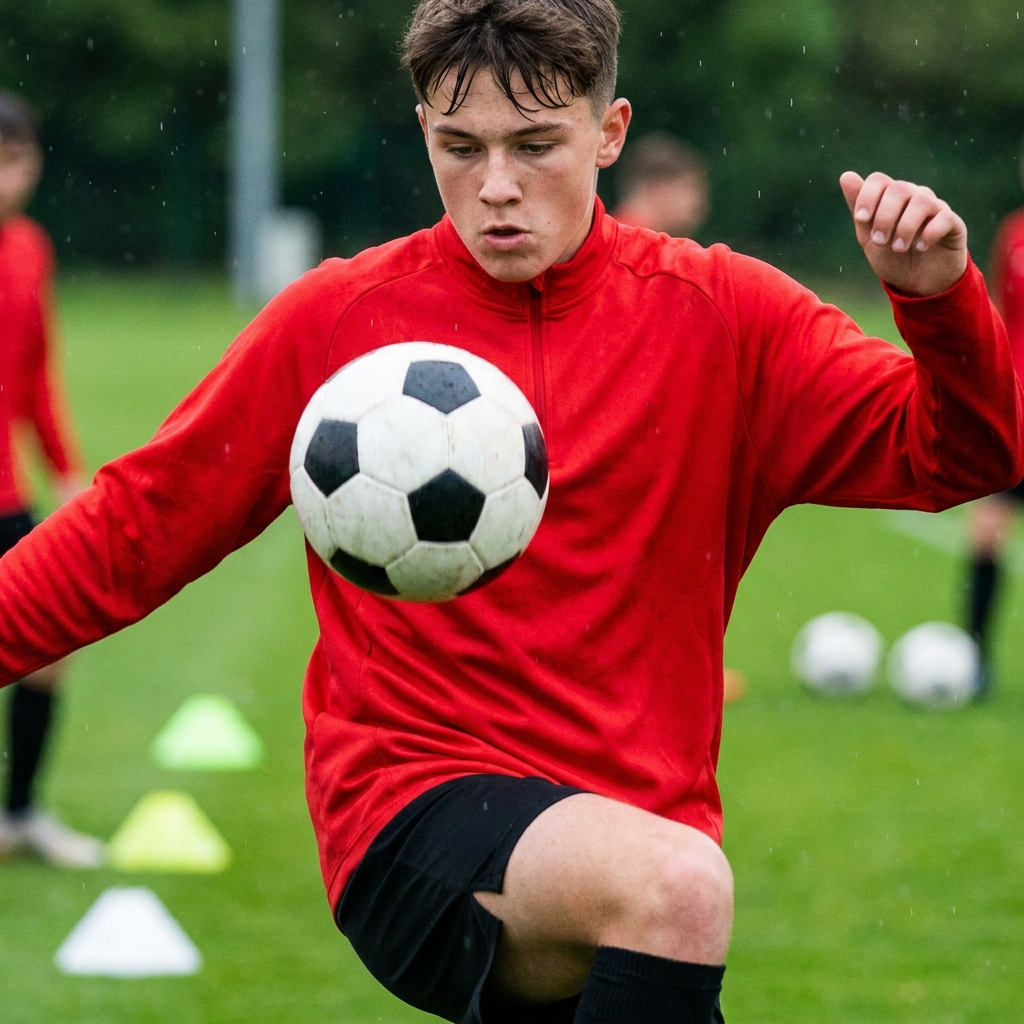
Deliberate heading is now out of U11 grassroots matches. Here is how to coach chest, thigh and foot control so your players still win the ball in the air.
Long-range goals doubled at the 2026 World Cup as teams sat deep. Here is how to coach when to shoot from distance, the technique, and the follow-up.
Under FutureFit, your Under-9s stay at 5v5, your Under-11s stay at 7v7 and your Under-13s stay at 9v9. Same pitch, same numbers, one more year. Here is how to make sure that year feels like a step forward rather than a repeat.