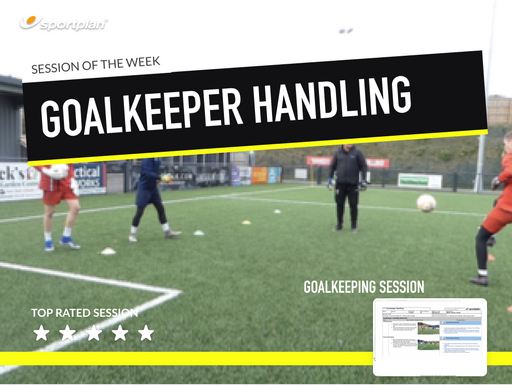
How will this benefit a coach and their players?
The session will benefit the goalkeeper to be able to get the hands in the correct position. With a good hand position the goalkeeper will make more catches when appropriate and use the correct technique.
What key skills will be worked on in this session?
Catching the ball, although the coach can introduce concept of when it is appropriate to parry the ball eg powerful shots or stretching. The two main types of catching with the M grip for lower shots where the hands make a capital M shape and the W grip for higher shots. Whilst we are working on catching the points about the Set position are also key to ensure that the goalkeeper is balanced to deal with shots and get into a good catching position.
Is there a specific age group for this session to be aimed at? If so, what age group and why?
This session is aimed at younger, less experienced goalkeepers. However they may struggle with the catch and volley drill so get the GK to start with the ball and throw it at the server for them to volley out of the hands. However older goalkeepers should be able to volley the ball back to GK and work on their ability to play out with their feet.
Can you name an exercise which is particularly key to this session?
The two ball catch drill is an excellent drill to ensure that the GK's elbows are far away enough from the body to be able to flex back and take the power out from the shot. It also is a good one to get the GK to have the hands out in front which allows a good range of movement in the hands to go into M or W grip

The 2026 World Cup is nearly upon us. Here is Sportplan's preview for the tournament on who we think is going to do well and which teams to look out for.
Discover our new Coaching Trends section - in-depth articles covering the latest tactics, techniques and innovations across Football, Hockey, Cricket, Rugby, Netball, Basketball, Tennis, Handball and Volleyball.
Save yourself a scare this Halloween and ensure your session runs smoothly. No chaos, no fright, just structure.


Register for FREE and get coaching tips, top drills, session and more every week!