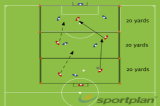
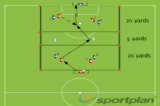
The pitch set up has a defending zone and an attacking zone, divided by a midfield channel.
2 defenders in the defending zone, 1 midfielder in the middle zone and 2 attackers in the attacking zone.
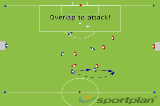
Again, the non passing defender enters the midfield zone to create an overload. Either player located in the midfield zone can then enter the attacking zone to create another overload.
Maintain good possession within the defensive zone and create good possession to be able to play forward.
Midfielders movement away from the ball to create space to receive from defenders.
Defenders entering the midfield zone identify where the space is created by the midfield players.

in more ways than one
 sportplan_netball



in more ways than one
sportplan_football

Under FutureFit, your Under-9s stay at 5v5, your Under-11s stay at 7v7 and your Under-13s stay at 9v9. Same pitch, same numbers, one more year. Here is how to make sure that year feels like a step forward rather than a repeat.

Most 1v1s are lost in the first second, when the defender rushes in and dives. Teach your players to slow the attacker down, take away the dangerous option and pick the right moment, and they will win far more of them.

The FA's FutureFit framework lands this season, bringing a 3v3 entry format at Under-7s. Here is what actually changes on a Saturday morning, and how to coach it well.