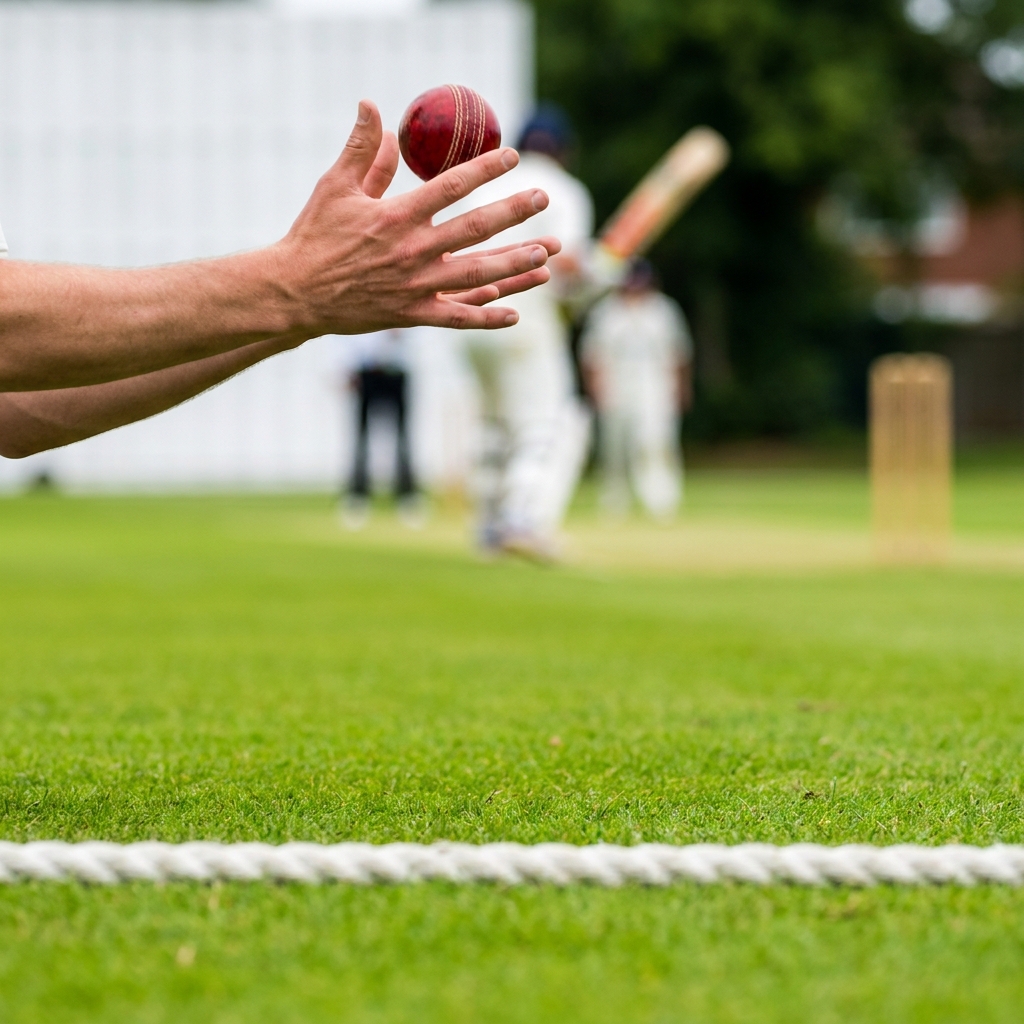


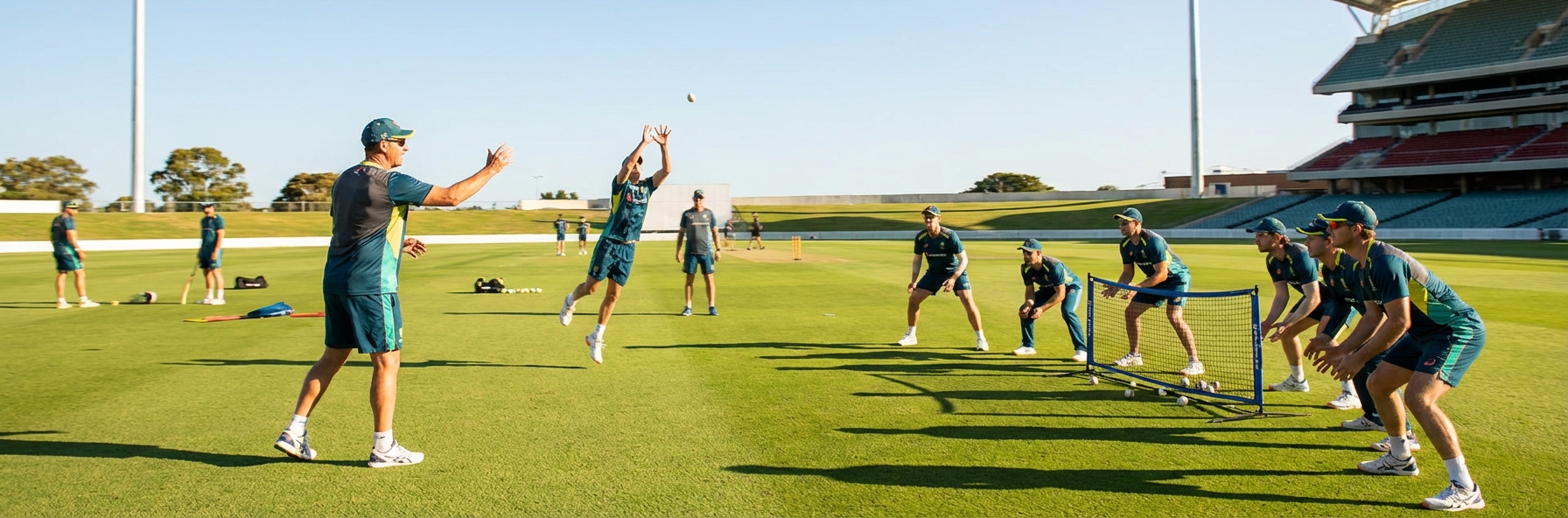
Catching is the skill that converts bowling pressure into wickets. A dropped catch not only costs the wicket but can demoralise bowlers and lift opposition batters. Elite teams invest significant practice time in catching drills across all positions and situations.
High Catching Technique
Dealing with skied balls:
Early positioning: Getting under the ball quickly to make final adjustments.
Hands position: Creating a basket with fingers pointing up for balls above the head.
Watching into hands: Tracking the ball all the way into the catch.
Calling: Clear communication to avoid collisions and confusion.
Slip Catching Fundamentals
Ready position: Low stance with weight forward, hands together.
Soft hands: Absorbing the ball rather than snatching at it.
Reaction time: Watching the edge, not the release point.
Lateral movement: Covering ground to both sides efficiently.
Close Catching Positions
Short leg: Low stance, quick reactions to bat-pad chances.
Silly point: Protecting the face while maintaining catching readiness.
Gully: Wider position requiring lateral diving ability.
Leg slip: Reading the ball off the bat for deflections down leg.
Outfield Catching
Ground coverage: Running to get under high hits to the boundary.
Sliding catches: Safe technique for diving forward or sideways.
Over-the-shoulder: Catching while running away from the wicket.
Boundary awareness: Knowing where the rope is without looking.
Key Coaching Points
- Catching practice should be part of every training session
- Position-specific drills develop specialist catching skills
- Soft hands prevent spilled catches at slip
- Communication prevents collisions and dropped catches
- Mental preparation helps players stay focused for long spells