



MCC's new edition of the Laws of Cricket came into effect on 1 October 2026, and one change matters to every outfielder: the so-called 'bunny hop' boundary catch has been removed. The spectacular juggle where a fielder leaps from beyond the rope, taps the ball back, lands outside and jumps in again to finish the catch is no longer allowed.
The off-season is the perfect time to get ahead of it. Your fielders have a whole winter of indoor sessions before the first league fixture, and the habits they build on a sports hall floor with a taped line will decide whether they take the catch, or concede six, next summer.
What the Law Now Says
Under Law 19.5.2, a fielder who has gone outside the boundary may touch the ball while airborne only once. After that touch, they must be wholly grounded inside the boundary for the rest of the delivery. If they parry the ball and then land outside, or step outside later, a boundary is scored, even if the ball has been knocked to a team-mate or back into the field of play.
In MCC's own words, the fielder gets one chance to touch the ball having jumped from outside the boundary, and after that the boundary becomes a hard line. The ICC had already adopted this change for international cricket, so you may have seen it on television already.
Two other changes are worth sharing with your fielders. The Laws now define 'complete control' of the ball, which is the same standard for a catch as for holding the ball when breaking the stumps for a run out. And the overthrow Law has been rewritten so that a misfield, such as a fumbled stop or a pass to a team-mate near the boundary that goes astray, is no longer treated as an overthrow.
Why Fielders Get It Wrong on the Rope
Most dropped or illegal boundary catches come from poor awareness rather than poor hands. Fielders do not know where the rope is, so they back-pedal blind, run out of room and panic. Others flick the ball up instinctively with no plan for what happens next, and with the new Law that improvised second touch can now cost six runs.
The fix is a clear decision-making framework, practised until it is automatic.
A Five-Step Framework for Boundary Catches
Step One: Know your rope. Before every ball in the deep, check the distance to the boundary behind and to either side. A quick glance and a couple of strides back towards the rope tells you how much room you have.
Step Two: Get there early and stop. Run hard to where the ball will land, then arrive balanced with your feet set, rather than catching on the move. Fielders who are still drifting backwards as the ball arrives are the ones who end up over the rope.
Step Three: Catch with your weight going forwards. Where possible, position yourself slightly deeper than needed so you can step in to the catch. Soft hands, fingers up for a high ball, and give with the ball as it arrives.
Step Four: If you are going over, release once and early. If momentum is carrying you over the rope, toss the ball up and back into the field while you are still inside, so that you can step back in and complete the catch. If you are already airborne from outside the boundary, you get one touch only, so knock it firmly to a team-mate or back infield and accept that you cannot touch the ground outside again that delivery.
Step Five: Communicate the relay. The second fielder should be moving towards the catcher, calling early, ready to take a parried ball. A good relay is planned, not improvised, and the call of the catcher's name tells the first fielder there is help close by.
How to Train It This Winter
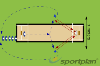
Indoor sessions are ideal, because a taped line on a sports hall floor gives you a perfect, safe boundary. Use a soft or incrediball until the timing is reliable.
Warm-up: pairs throw-and-catch with a step back after every clean catch, then a few minutes of high catches with players running in to the ball.
Technical: place a fielder a few metres from the taped line. The coach feeds high balls that drift towards the line. The fielder practises getting set early, catching inside the line and, on the coach's call, tossing the ball up before crossing and stepping back in.
Decision-making: add a second fielder for relay catches. The feeder varies the height and depth, so the catcher must decide in the moment: catch cleanly, self-relay inside the rope, or pass to the partner. Score it, with points for legal catches and penalties for any touch that would now be illegal.
Game: finish with a competitive high-catching game in teams, where a ball landing in your area or an illegal relay counts as a point to the opposition.
Key Coaching Points
- Check the distance to the rope before every ball in the deep.
- Get to the ball early and arrive balanced, ideally stepping forward into the catch.
- If you are going over, release the ball while still inside the boundary and step back in.
- From outside the rope you get one airborne touch only, then stay wholly inside for the rest of the delivery.
- The relay fielder moves early and calls clearly, so the catcher knows help is there.
- Hold the ball with complete control before celebrating; the same standard applies to run outs.
Recommended Drills



Frequently Asked Questions
Is the bunny hop catch still legal in club cricket?
No. The 2026 edition of the Laws came into force on 1 October 2026, so it applies to club cricket from next season unless your league's playing regulations say otherwise. A fielder who jumps from outside the boundary can touch the ball once in the air, then must stay wholly inside the boundary for the rest of that delivery.
Can a fielder still throw the ball up and step back in to take the catch?
Yes. A fielder who releases the ball before touching the ground beyond the rope can still come back and complete the catch, but any touch made while airborne from outside counts as their one chance, after which they must stay wholly inside the boundary. What has gone is the repeated touching of the ball while airborne from outside the rope. Coach players to make the release early rather than as a last-second scramble.
What is the best way to practise boundary catching indoors?
Tape a line on the sports hall floor as the rope, use soft balls at first, and have a coach or feeder throw or hit high catches that drift towards the line. Add a second fielder for relay catches and score each rep, so players build the habit of checking the rope and making quick, legal decisions.