Keep students in pairs, as this will be their team. Each team will have two overs (12 balls) batting, and two overs bowling (1 bowling, and 1 as wicket keeping) Set up wickets in a central area close to a wall that allows for maximum area to hit into (See Diagram) Batting team (Blue) must run for every ball that makes contact with the bat, and will score one run for every run between the wickets they make. Batting team will lose 5 runs for each wicket they lose, but continue to bat out their two overs Hitting the ball into the side wall is 4 runs on the full, and 2 runs if it bounces. Back wall is 6 runs on the full, 4 on the bounce. No extra runs for hitting the back wall or roof. If students can hit the basketball rings, an extra 5 runs is given, or 20 if it goes in the ring. The bowling team (red) gets 5 runs for every wicket they take, with 10 if the bowler gets the batter out through a caught and bowled ball. Fielding team (white) gets an extra 5 runs for any catches or run outs they are involved in. The winning pair is the pair who gets the most runs through batting, bowling and feilding.
This practice has no coaching points
This practice has no progressions

Early-season innings catch out even your best batters. Coach a simple method for grinding through the rust and playing yourself in.
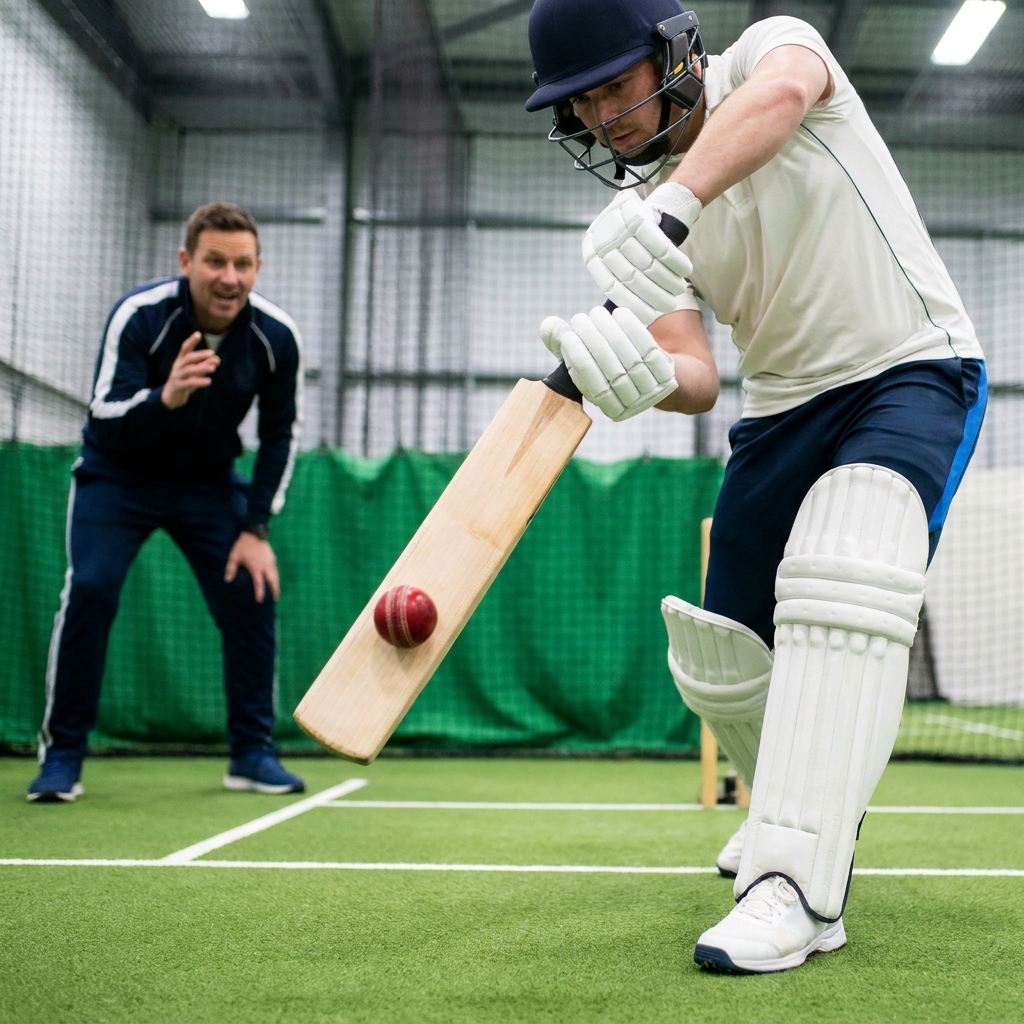
Indoor nets teach habits that fall apart outdoors. Here is how to coach technique that survives pre-season.

Dropped sitters, overstepping no-balls and mixed-up calls: the early-season nightmares haunting club sides, and the fixes that banish them for good.


Register for FREE and get coaching tips, top drills, session and more every week!