Week one - Stage 1
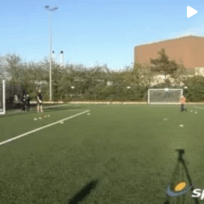
Give the players a number, they are to line up behind the goal.
Players all have to be toauching the back of the goal.
Ensure when numbering the players they are numbered so all number 1's are equal ability and all number 2's 3's and 4's are equal ability.
On the coaches say they are to run to get a ball, put it in there goal.
only when the ball is in thier goal can the next player go.
The team with the most balls in the goal wins.
Week 1 - Stage 2
All the balls on the side with the coach.
When the coach shouts a number and puts a ball on the pitch then the game is in play for all players of that number, they are to get the ball and put it in thier goal.
Team with the most balls in thier goal wins.
Future state
Can shout out multiple numbers.
Can have it so they are to attack another goal, the goal is to not concede goals
Turn the goals in to face in lines, left side v right side.
Week 1 - stage 1
Only a quick drill this, so just try it twice, about collecting the ball, turning a putting it in your goal.
Week 1 - stage 2
Pass the ball to favouritsm if needed. If all number 1's has a player upgraded to number then then you can pass the ball to slightly favour him.
Can shout out small maths numbers for who goes. 3 - 2 = Then they have to work it out.
Make sure the players stay behind the goal. If not then put a cone out, they must touch the cone or i shout there player dead.
Future state
in more ways than one
 sportplan_netball

in more ways than one
sportplan_football
Under FutureFit, your Under-9s stay at 5v5, your Under-11s stay at 7v7 and your Under-13s stay at 9v9. Same pitch, same numbers, one more year. Here is how to make sure that year feels like a step forward rather than a repeat.
Most 1v1s are lost in the first second, when the defender rushes in and dives. Teach your players to slow the attacker down, take away the dangerous option and pick the right moment, and they will win far more of them.

The FA's FutureFit framework lands this season, bringing a 3v3 entry format at Under-7s. Here is what actually changes on a Saturday morning, and how to coach it well.