7 v7
Set up GK, 1, 3, 2 Attacking team
Set up GK 3, 2, 1
Attacking team attack big goal
Defending team try and play out and score into two small goals on half way.
Build up play into final third (Getting into final third)
How?
Excellent forward who is efficient in central areas –
to receive, create, exploit, aware.
Can control with any surface of body and effectively
In front – back to goal? Secure, turn, set.
Know circumstances – space, position of defenders, -
movement to receive, where, when, how?
Ability to receive and manage pass – for self – control,
timing, secure
For others – lay off (1st touch) spin, combine, aerial
Deal in tight spaces and high speed
Breaking the line
Midfielder – pass and support into CF
Dribble through midfield
½ with other midfielder
Key to getting into heart
deception and quality
Midfielder – look one way/play other
Inside the heart
No. 10 – can he find space in the hole?
Turn and attack def 1v1
Solo or combine with no. 9
Play in 7/11 who have come inside
Key – movement, awareness, 1st touch quality,
Alternative no. 9 comes deep and 10 goes high
Confuse defenders – ability to create space to turn?
Turn/dribble/combine to score
Key components
Space – can you create – how – timing, movement,
understanding, quality – pass, touch.
Secure – quality of 1st touch – control with any part of
Body.
Ability to set or combine with 1 touch
Secure – kill ball or roll defender with a no touch turn
End product – produce strike at goal
in more ways than one
 sportplan_netball


in more ways than one
sportplan_football

Under FutureFit, your Under-9s stay at 5v5, your Under-11s stay at 7v7 and your Under-13s stay at 9v9. Same pitch, same numbers, one more year. Here is how to make sure that year feels like a step forward rather than a repeat.
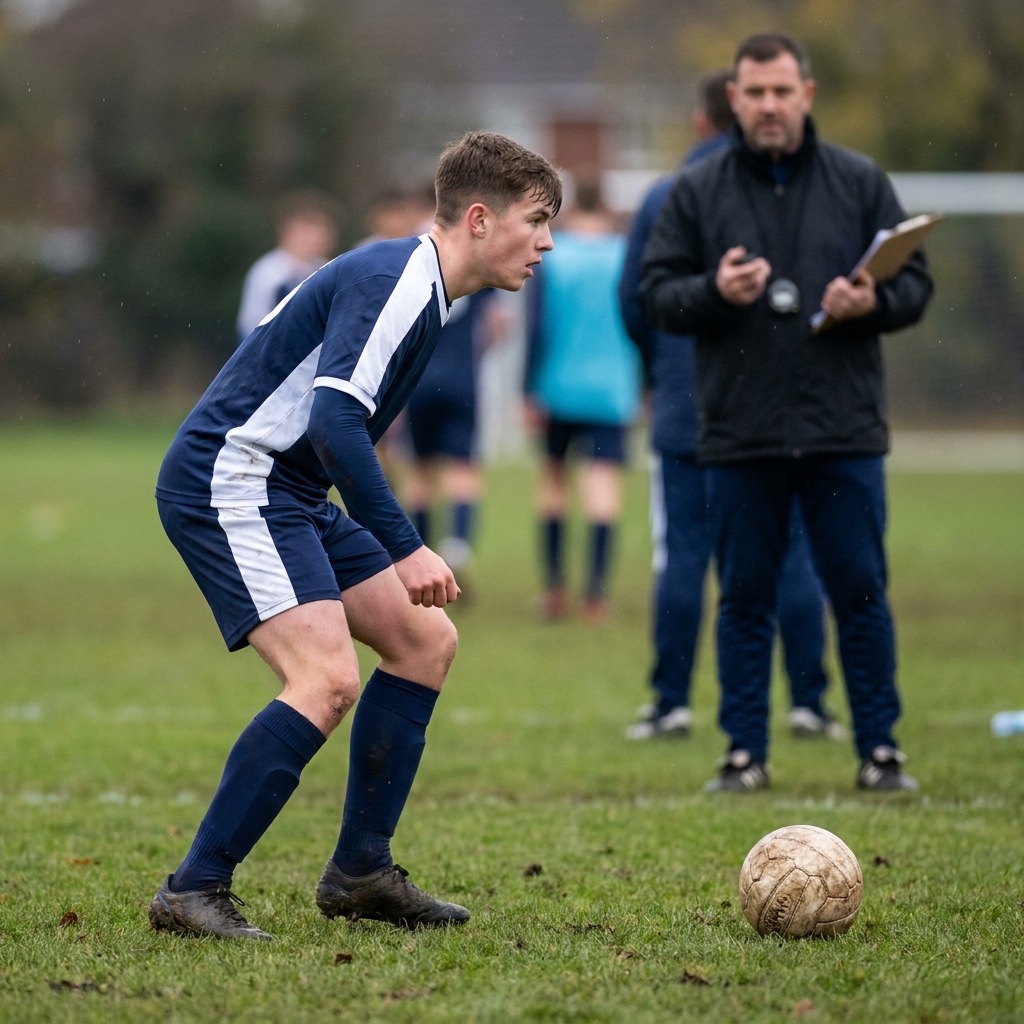
Most 1v1s are lost in the first second, when the defender rushes in and dives. Teach your players to slow the attacker down, take away the dangerous option and pick the right moment, and they will win far more of them.

The FA's FutureFit framework lands this season, bringing a 3v3 entry format at Under-7s. Here is what actually changes on a Saturday morning, and how to coach it well.