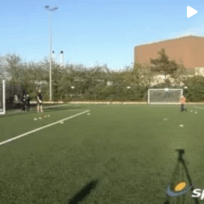
Le joueur passe le ballon vers la droite.
Le joueur reçoit avec son pied droit et dirige celui-ci vers sa droite et fait une passe vers l'autre joueur.
Après 4-5 minutes, on change le sens de rotation de l'exercice.
Cette fois, les joueurs recoivent le ballon avec le pied gauche et dirige celui-ci vers la gauche.
Important de positionner son corps vers la droite ou la gauche et non pas seulement la jambe ou le pied.
Si la passe est imprécise, le joueur doit se déplacer afin d'être en bonne position pour exécuter l'exercice.
Le joueur doit être sur la pointe des pieds en tout temps. Cela lui permettra d'avoir un temps de réaction plus rapide lors d'un déplacement vers la gauche ou la droite.
in more ways than one
 sportplan_netball

in more ways than one
sportplan_football
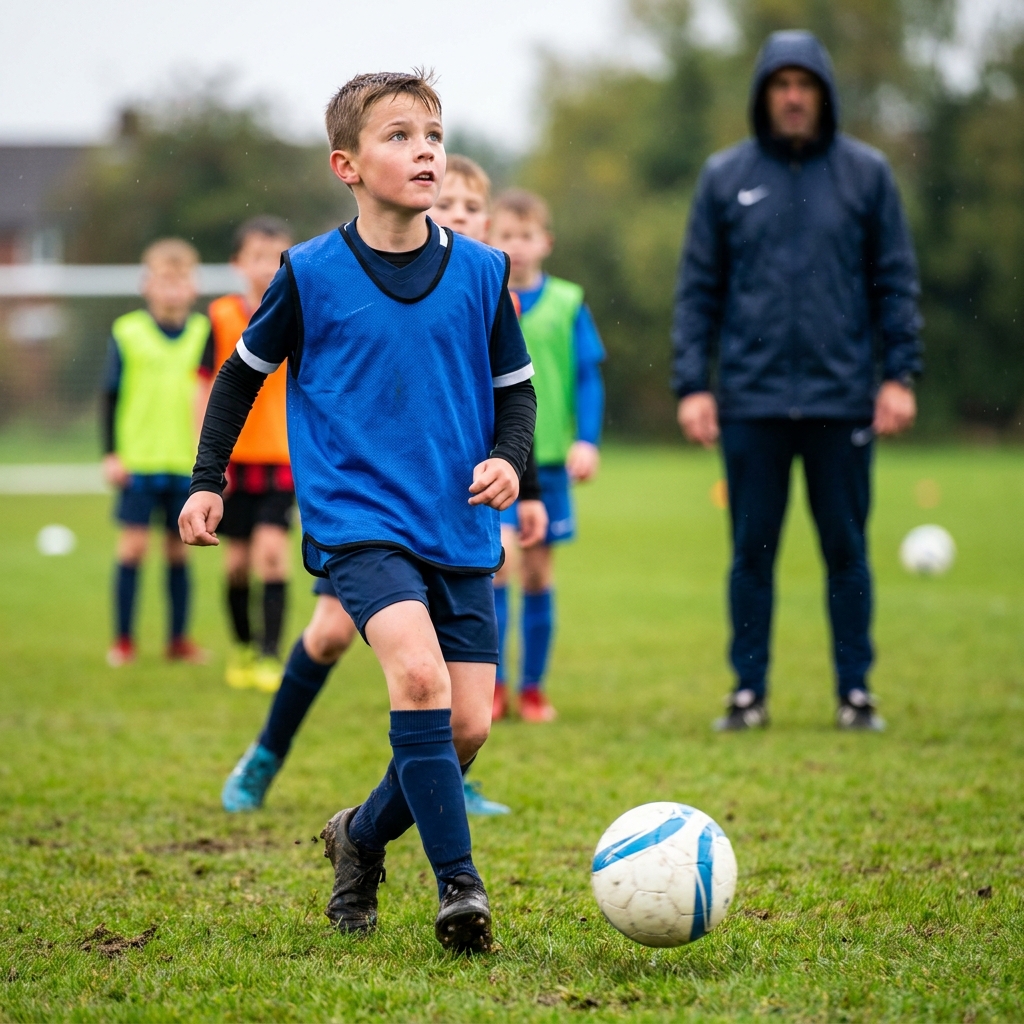
Under FutureFit, your Under-9s stay at 5v5, your Under-11s stay at 7v7 and your Under-13s stay at 9v9. Same pitch, same numbers, one more year. Here is how to make sure that year feels like a step forward rather than a repeat.
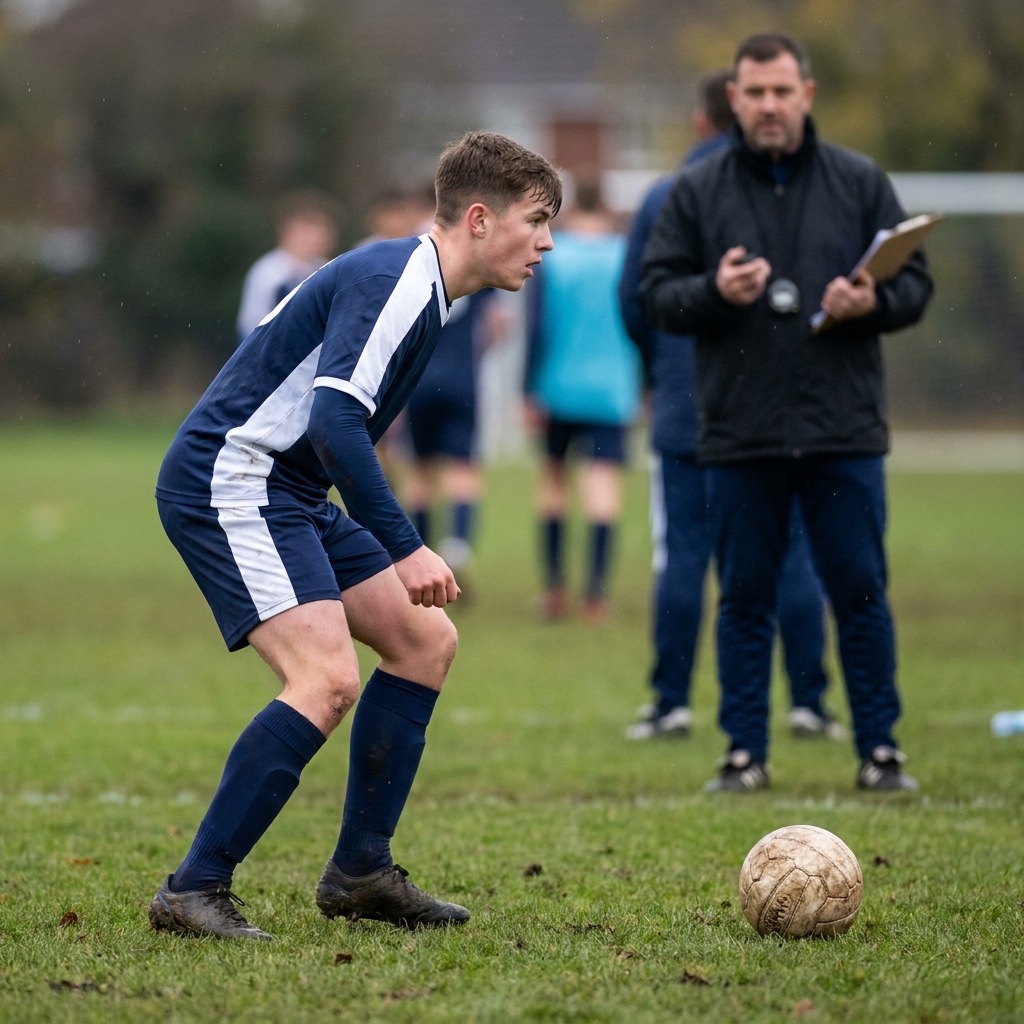
Most 1v1s are lost in the first second, when the defender rushes in and dives. Teach your players to slow the attacker down, take away the dangerous option and pick the right moment, and they will win far more of them.
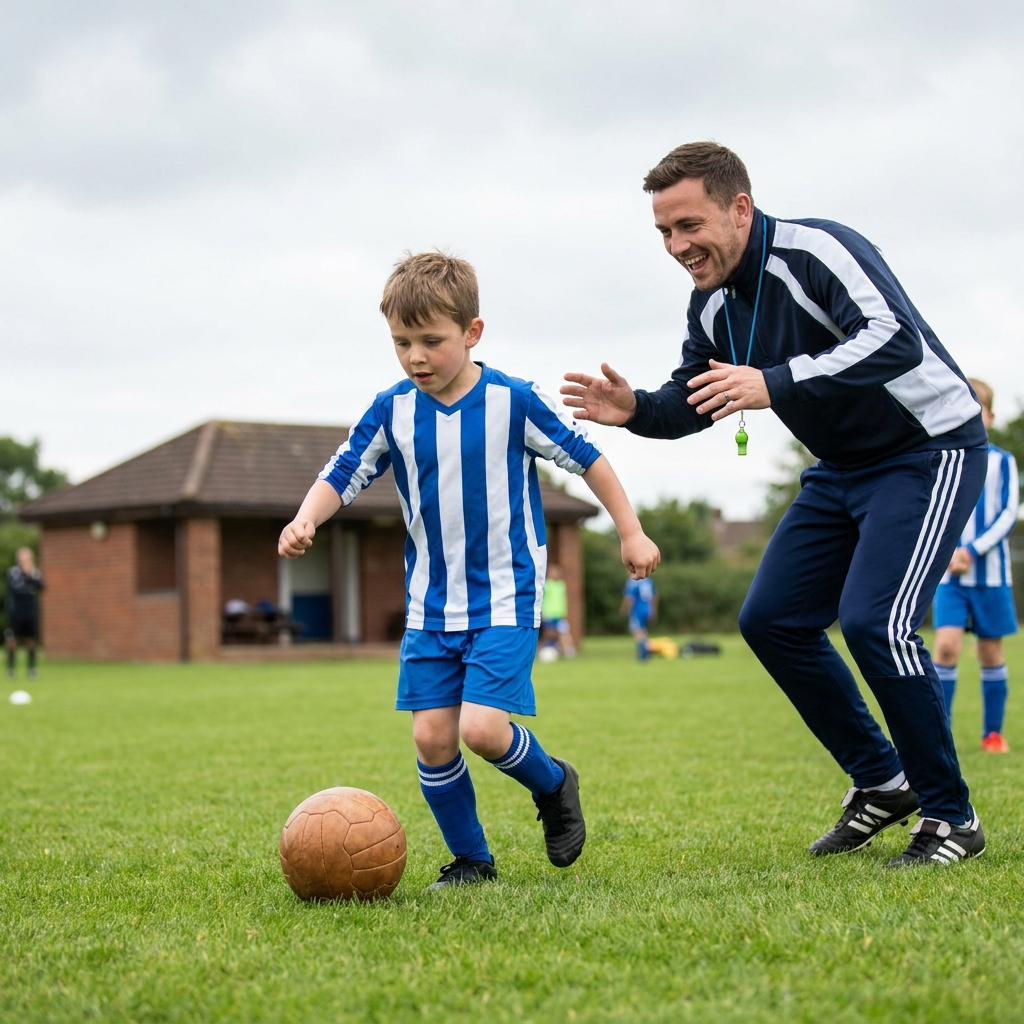
The FA's FutureFit framework lands this season, bringing a 3v3 entry format at Under-7s. Here is what actually changes on a Saturday morning, and how to coach it well.