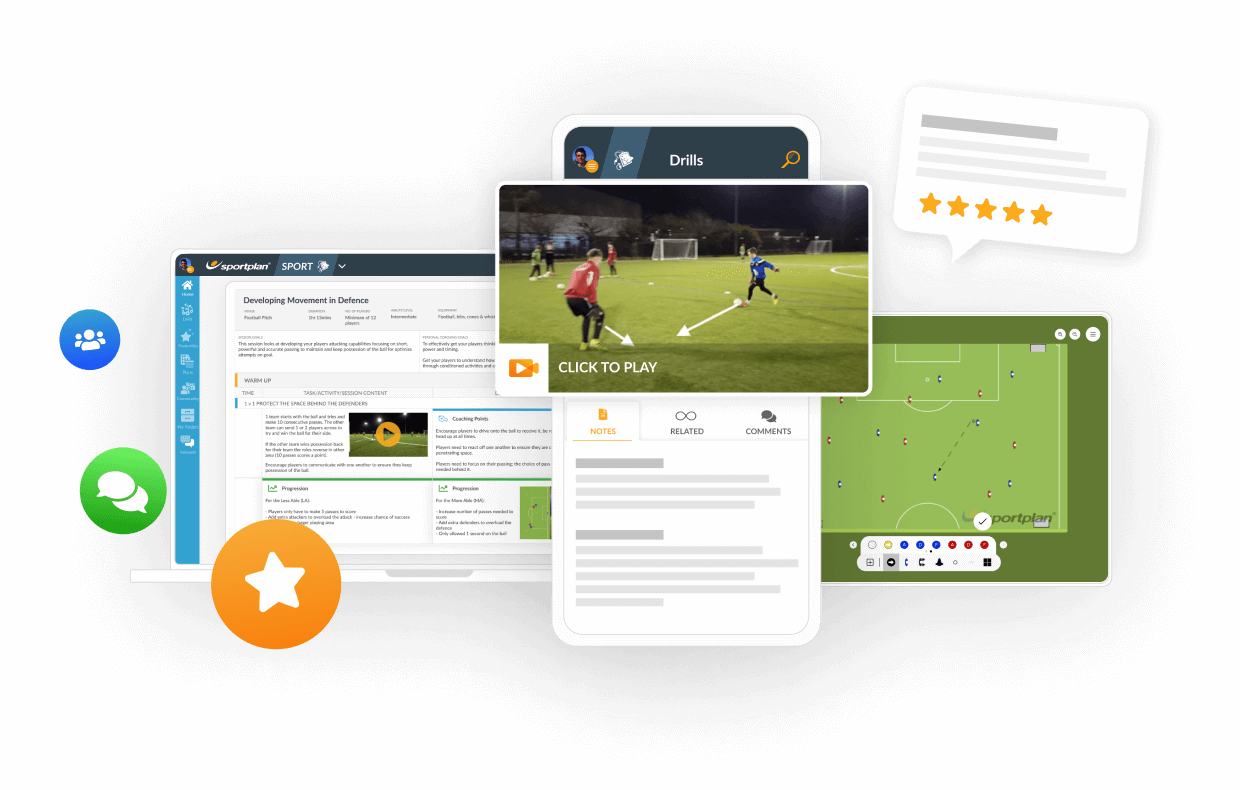
1- Acomodamos a los jugadores como en la foto, A pasa a B, B hace recepción orientada y pasa a C, A va a lugar de B y B va a lugar de C, C hace recepción y conduce hacia el cono y pasa a D, D recepciona y va al inicio, C va a lugar de D, D se forma para iniciar. Cambiar los perfiles después de cierto tiempo.
2- La misma organización, A pasa a B, B regresa a movimiento de A, A pasa largo a C, B le hace pasada por atrás a A y va a hacer pared con C, A queda en lugar de B y B queda en lugar de C, C conduce y pasa a D, D recepciona y va al inicio, C va a lugar de D. Cambiar perfiles después de cierto tiempo, se colocan los conos como esta el dibujo y todos trabajan lo mismo, despues cambian perfiles, y despues se hacen las variantes.
Poner énfasis en los detalles técnicos, todos en movimiento, hacer los movimientos cuando se tienen que hacer, golpeos firmes y de parte interna, dependiendo la capacidad de los jugadores se puede hacer de uno a dos toques
in more ways than one
 sportplan_netball

in more ways than one
sportplan_football
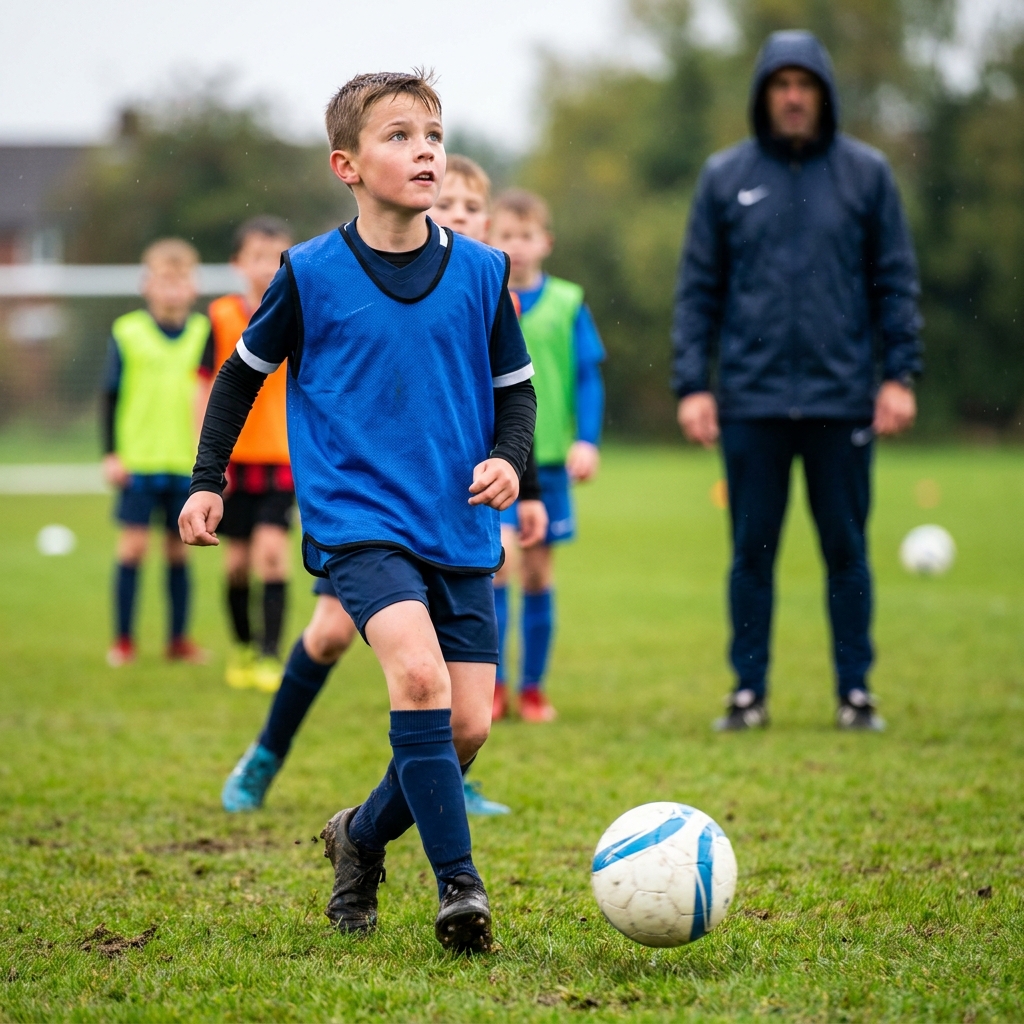
Under FutureFit, your Under-9s stay at 5v5, your Under-11s stay at 7v7 and your Under-13s stay at 9v9. Same pitch, same numbers, one more year. Here is how to make sure that year feels like a step forward rather than a repeat.
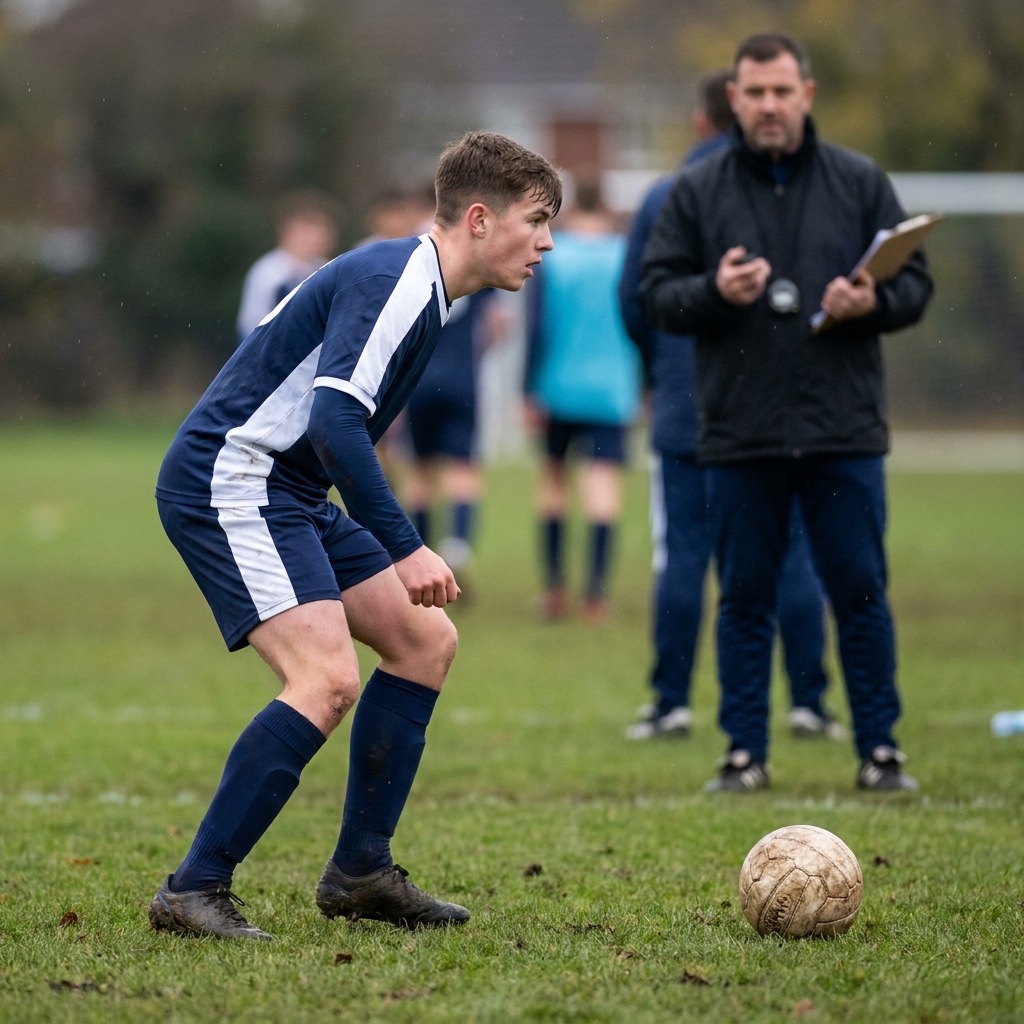
Most 1v1s are lost in the first second, when the defender rushes in and dives. Teach your players to slow the attacker down, take away the dangerous option and pick the right moment, and they will win far more of them.
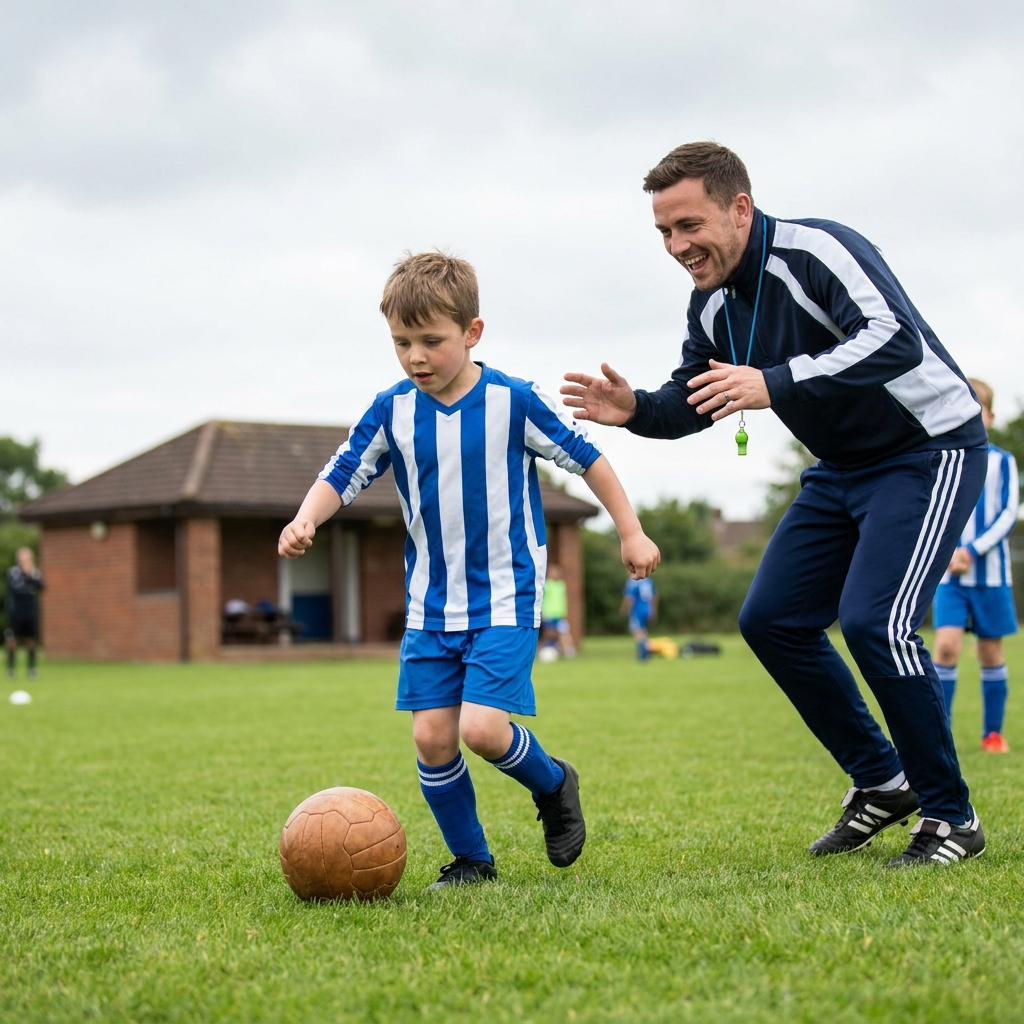
The FA's FutureFit framework lands this season, bringing a 3v3 entry format at Under-7s. Here is what actually changes on a Saturday morning, and how to coach it well.