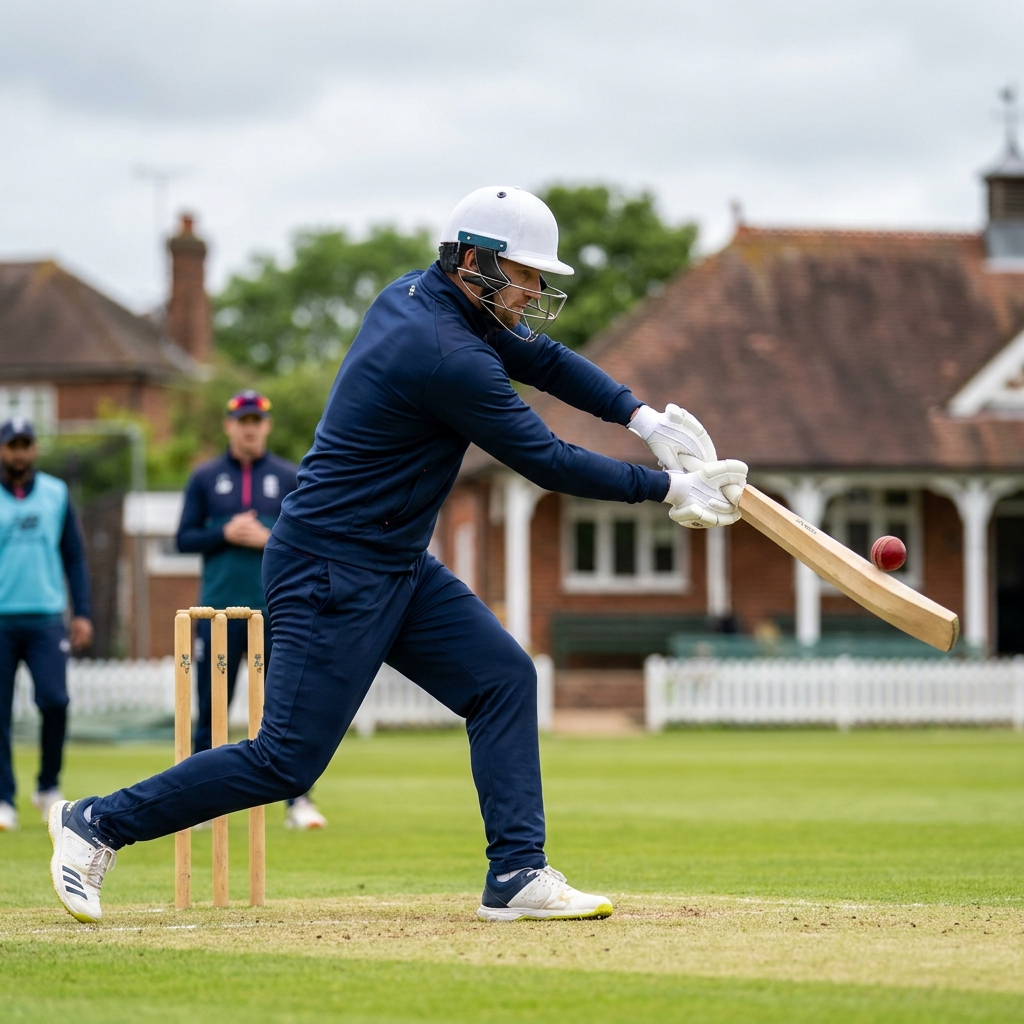


How can I BOWL a really fast bouncer?
How can I BOWL a really fast bouncer?

Hi Faisal, In order to bowl a quick bouncer you must first be able to bowl quick! This comes with good technique and practice. Your action can pretty much be anything as long as your leading arm (left arm is you bowl right handed) is facing the direction you want to bowl and your hips and shoulders are in line. Next is your run up, it needs to be smooth, balance, rythmical and consistent. (this means not just trying to run as fast as possible because that wont make the ball go any faster if your action is not great.). YOur head must be as steady and level as possible. and you must make sure your action is correct. Good base position (back foot parrallel, hips and shoulders in line, body weight forward)then you need a good full shoulder rotation with your head steady throughout.
These are just a few coaching points you could look at to improve your action. Once your action is as solid as posible you can start pitching the ball wherever you like! (with a bit of practice).
Matt
Hi Faisal
In response to Matts excellent answer, I would like to pose a couple of tactical ideas:
1) Timing of your bouncer - If you are going to bowl a bouncer, make it worth while! Bowling a bouncer takes a lot of effort to do - get it right. The ideal boncer is at a batters body, around throat height. It should be used as a weapon to intimidate a batter and create a doubt in the batters mind
2) Be subtle - The art of a good bouncer is in the element of suprise. Keep your usual rhythm and flow to your run up, and try and keep your action the same. You want it to catch the batter off guard.
3) Try bowling the ball cross seam - this may be appropriate and may cause the ball to kiss off the surface more, as well as vary in height off the pitch.
It may not be that your bouncer is currently slow - it may just be too predictable at present
Other than that, as Matt says - keep the basics of your action good and strong.
I hope this has given you food for thought anyway.
Tom