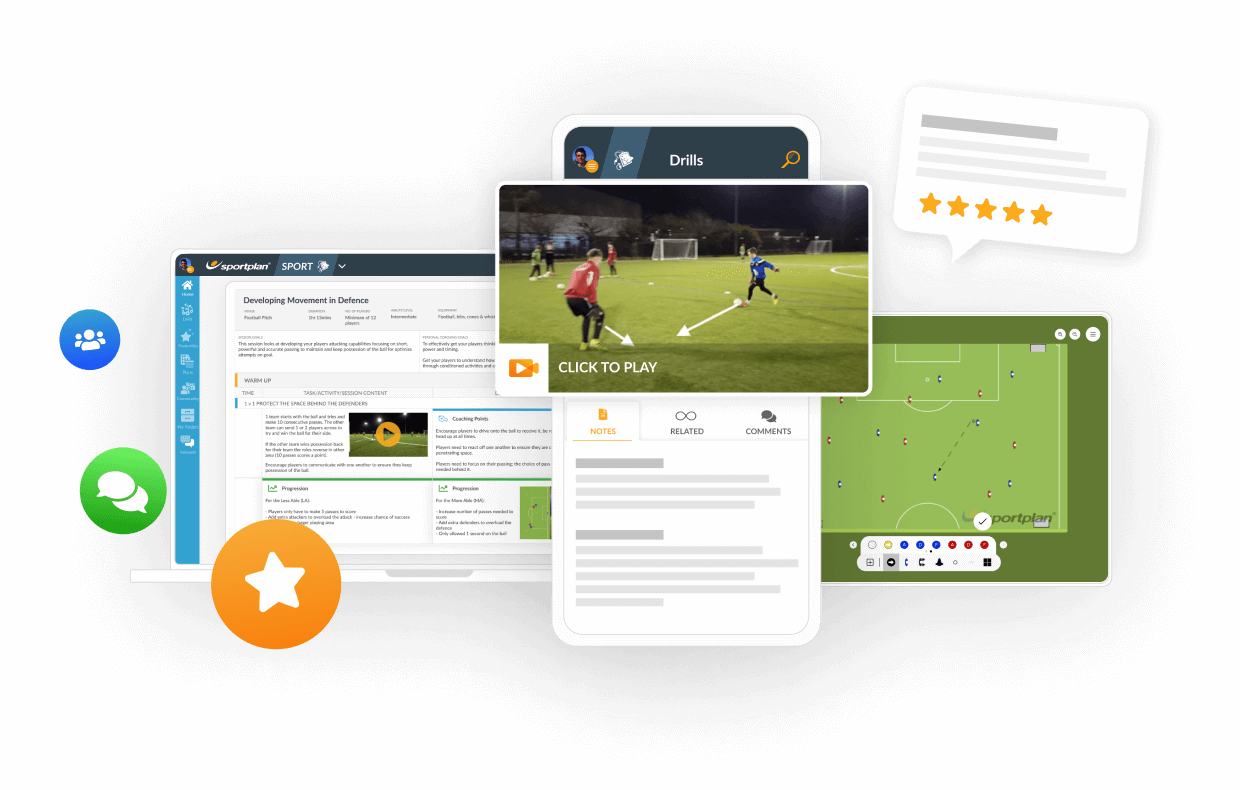
Station small goals (2 yards wide) in each corner of the area facing in towards the field of play. No goalkeeper, 4 v 4 - 6 v 6, one ball.
The red team must interplay to score by running the ball through any of the goals. The blue team attacks any of the goals once they get possession.
You can change the direction of the play so that teams can now attack only diagonally opposed goals. This will encourage players to switch the point of attack.
in more ways than one
 sportplan_netball



in more ways than one
sportplan_football

Pre-season is your one window to build a real engine. This July, ditch the endless laps and learn how to condition your players with a ball at their feet.

A clear game model turns a squad into a team. Use pre-season to decide who you want to be, then train it every single week so your side is recognisable from the first whistle.

Roughly a fifth of Premier League goals come from set pieces, and the gap between teams who plan their routines and teams who do not has never been wider. Here is how the modern set-piece specialists design attacking corners, free kicks, and throw-ins - and how you can apply their ideas at any level.