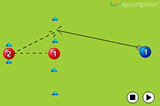
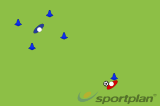
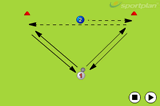
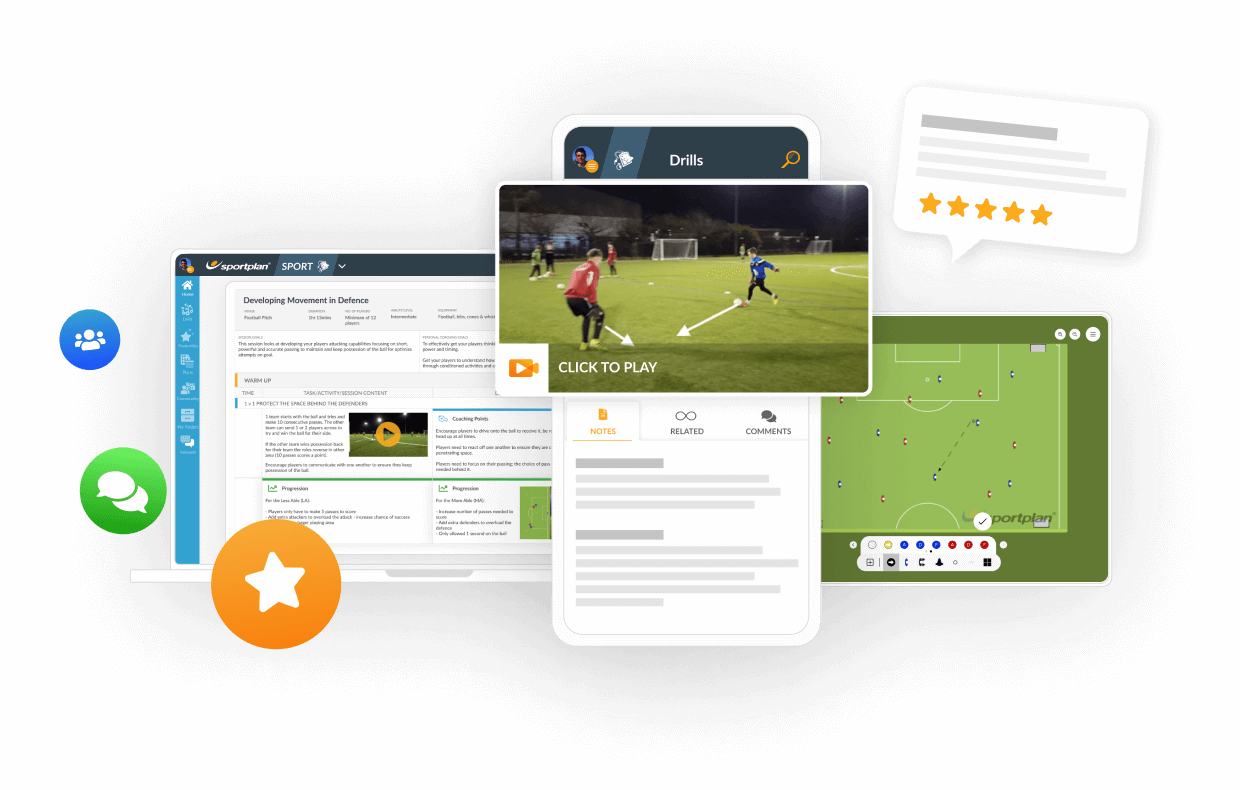
Set up as shown with 2 players and 1 ball between the two.
The area should be a 4x4 square, however the shape and size can be modified depending on the level of your players and the main aspect movement to receive that you want to achieve.
Play begins with the internal player making movement to receive the ball and then exiting the square. Once they exit the square the player on the far end makes a pass into the middle player who controls and passes back.
The sequence is repeated with the middle player making a new movement to receive on a different side of the square.
The far end player should move away from the ball after he makes a pass and then move towards the ball when the pass is played towards him.
Work on good firm passes that will allow the first touch of the players to be tested and improved.
Player in the middle should be ready and 'on their toes'.
They should make movement to feint as if going to leave out of one side before getting out of another side.
The passes should be played quickly, taking 1 and 2 touch maximum.
The 1st touch of the middle player is a trigger for the end player to stop moving backwards and to come forwards to a new position to meet the pass.
in more ways than one
 sportplan_netball


in more ways than one
sportplan_football

Under FutureFit, your Under-9s stay at 5v5, your Under-11s stay at 7v7 and your Under-13s stay at 9v9. Same pitch, same numbers, one more year. Here is how to make sure that year feels like a step forward rather than a repeat.
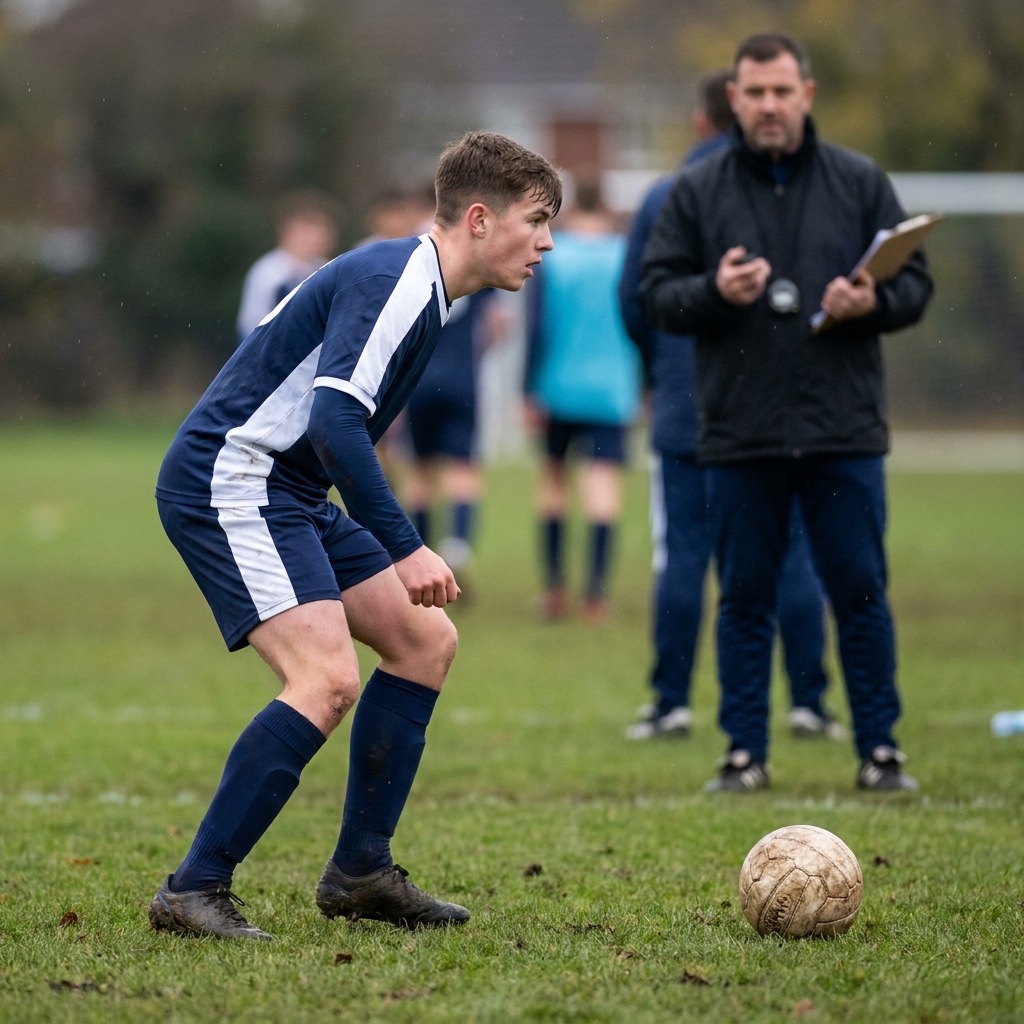
Most 1v1s are lost in the first second, when the defender rushes in and dives. Teach your players to slow the attacker down, take away the dangerous option and pick the right moment, and they will win far more of them.

The FA's FutureFit framework lands this season, bringing a 3v3 entry format at Under-7s. Here is what actually changes on a Saturday morning, and how to coach it well.