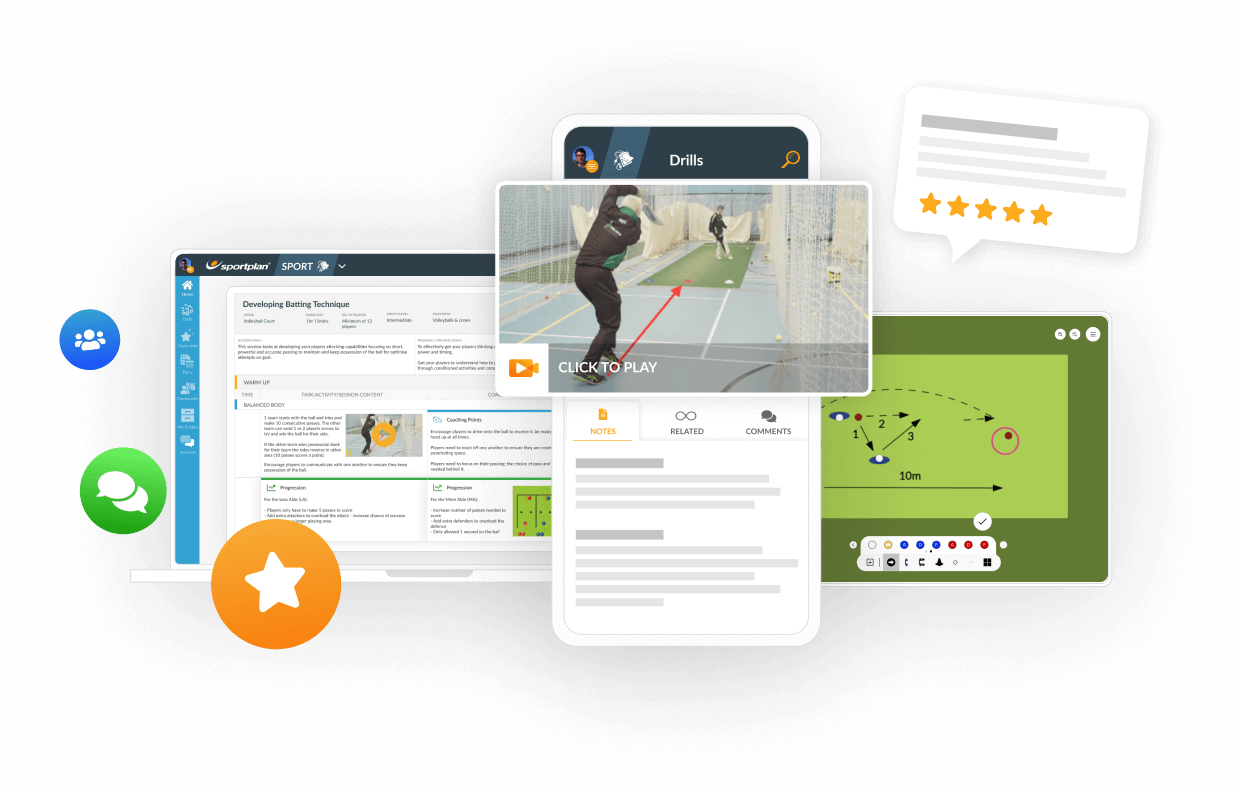


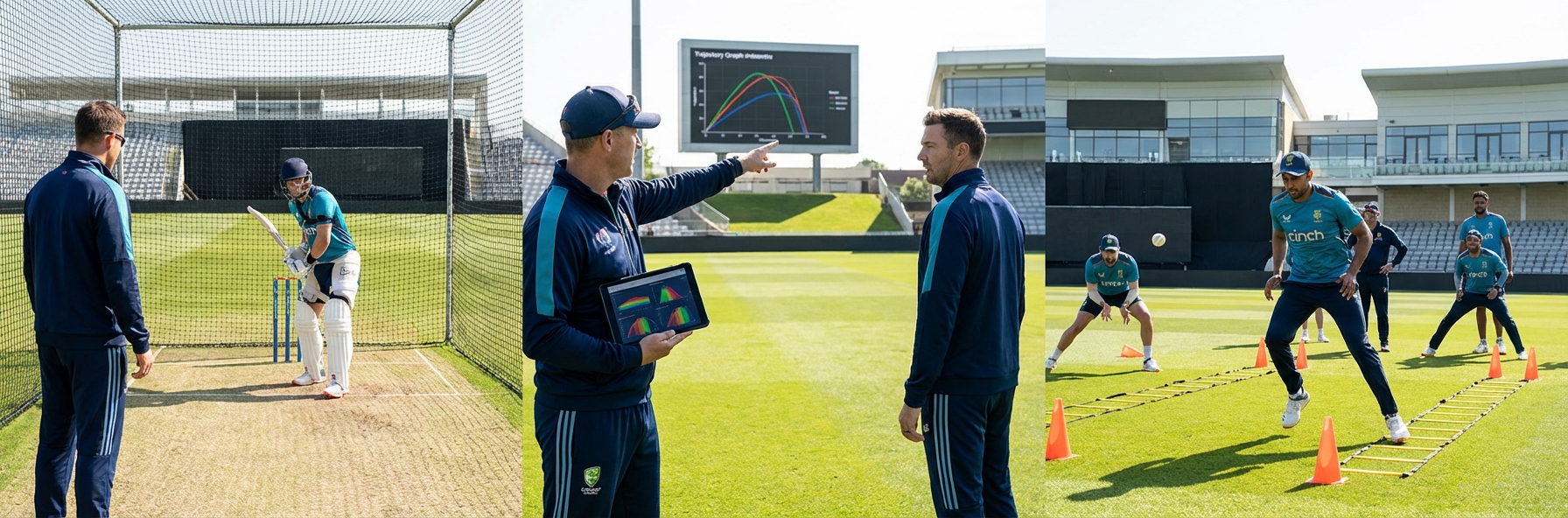
Technology integration in cricket coaching has accelerated dramatically. Biomechanical analysis systems, wearable sensors, and video analysis tools provide coaches with objective data to guide player development. Understanding how to use these tools effectively is becoming essential for modern coaches.
Biomechanical Analysis
Understanding movement patterns:
Motion capture: Tracking joint angles and movement sequences in bowling and batting.
Force plates: Measuring ground reaction forces during delivery strides.
3D modelling: Creating detailed analysis of technique for comparison with elite players.
Injury prevention: Identifying risky movement patterns before they cause problems.
Video Analysis Tools
Slow motion review: Breaking down technique frame by frame.
Overlay comparison: Comparing player technique with model examples.
Angle measurement: Quantifying bat swing path and bowling arm angles.
Session recording: Building libraries of footage for longitudinal tracking.
Wearable Technology
Smart bats: Sensors measuring bat speed, impact location, and swing path.
GPS tracking: Monitoring workload and movement patterns during training.
Heart rate monitors: Tracking physical load and recovery status.
Bowling sensors: Measuring release speed, revolutions, and seam position.
Virtual Reality Training
Batting simulators: Facing virtual bowlers in controlled environments.
Scenario practice: Recreating match situations without physical wear.
Mental rehearsal: Visualising performance in immersive environments.
Accessible training: Quality practice when nets or bowlers are unavailable.
Key Coaching Points
- Technology should support coaching, not replace coach-player relationships
- Data is only valuable when translated into actionable feedback
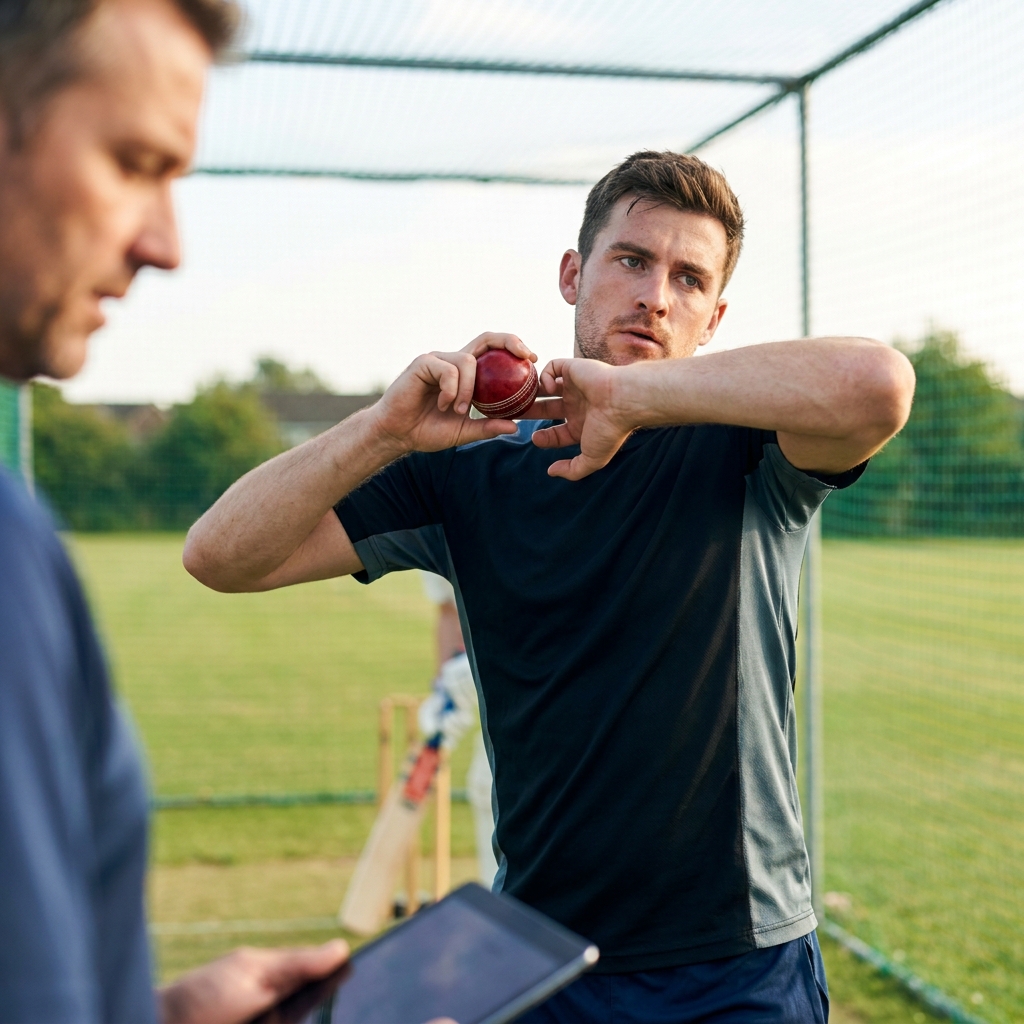
- Video analysis is accessible at all levels with smartphone technology
- Wearables help manage workload and prevent overtraining
- VR offers supplementary practice, not replacement for real bowling