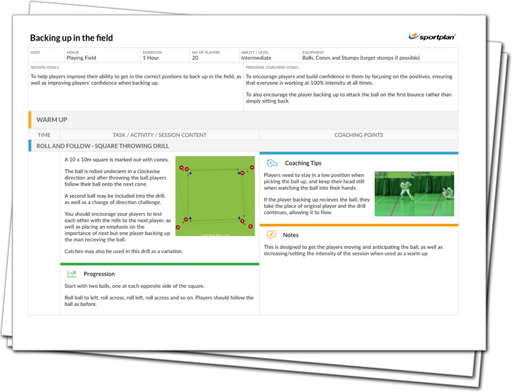
It's great the have a shy at the stumps when a run-out is on, but the risk can be quite high if your team are not on their toes to back-up. This session is a great way of getting up to speed with protecting those over throws!
What's in the Session?
Whether it?s backing up behind the stumps, or helping your mate out in the the field with a firmly struck shot, this session has got it all covered. It starts off with a basic warm-up to get the players bodies up to speed and their minds switched on. The session then progresses into more strenuous practices which will really require the players to concentrate on their technique when throwing at the stumps as well as being switched on to backing up. Really push your players throughout to pick up and throw as quickly and as accurately as possible to really lump the pressure on the batsmen scampering between the wickets.

What is Backing Up?
As a fielder prepares to catch the ball another fielder, at a further distance, positions themselves behind them, so that if the first fielder misses the ball the damage will be minimal, with the second fielder being able to sweep up behind them.

The new Laws of Cricket are in force from 1 October 2026 and the 'bunny hop' boundary catch is gone. Here is how to coach your fielders to catch on the rope this winter.

The covers are on and the last tea has been served. What your club does between now and April decides how the next season starts. Here is a simple, honest winter plan for players, bowlers and juniors.

August is when seasons are decided, and most club games are lost chasing rather than setting. Give your batters a framework for the chase and you win the close ones.


Register for FREE and get coaching tips, top drills, session and more every week!