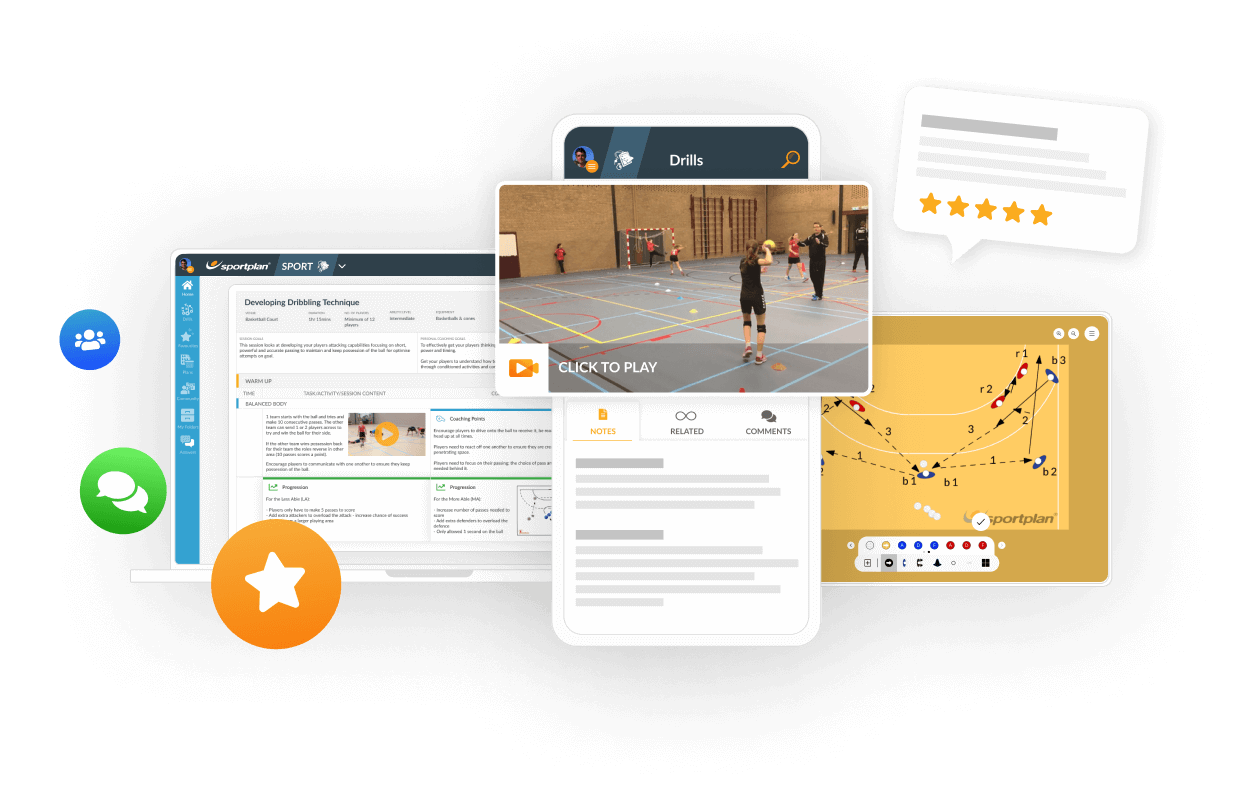
RR spielt den Ball zur Anspielstation auf HR bei 9m (1) und startet ohne Ball in Richtung Fahnenstange (2). Diese wird berührt und im Anschluss daran um die zweite Fahnenstange herumgelaufen (3). RR erhält den Ball vom Anspieler (4) und startet die Aktion (5)
m Fokus steht das Zusammenspiel mit dem Kreisspieler, die Abwehrspieler bestimmen aber maÃgeblich die Aktion des RR. Bleiben die Abwehrspieler passiv, muss RR werfen. Tritt einer der beiden Abwehrspieler auf RR hinaus, geht es ins 1:1 und/oder ins Zusammenspiel mit dem Kreisspieler (z.B. Sperre absetzen am herausgetretenen Abwehrspieler oder das zeitlich richtige Absetzen in den frei gewordenen Raum hinter den nach vorne agierenden Abwehrspieler). Denkbar auch, dass beide Abwehrspieler auf RR hinaustreten und er es schaffen muss, den Ball an den Kreis zu spielen.
This practice has no coaching points
This practice has no progressions
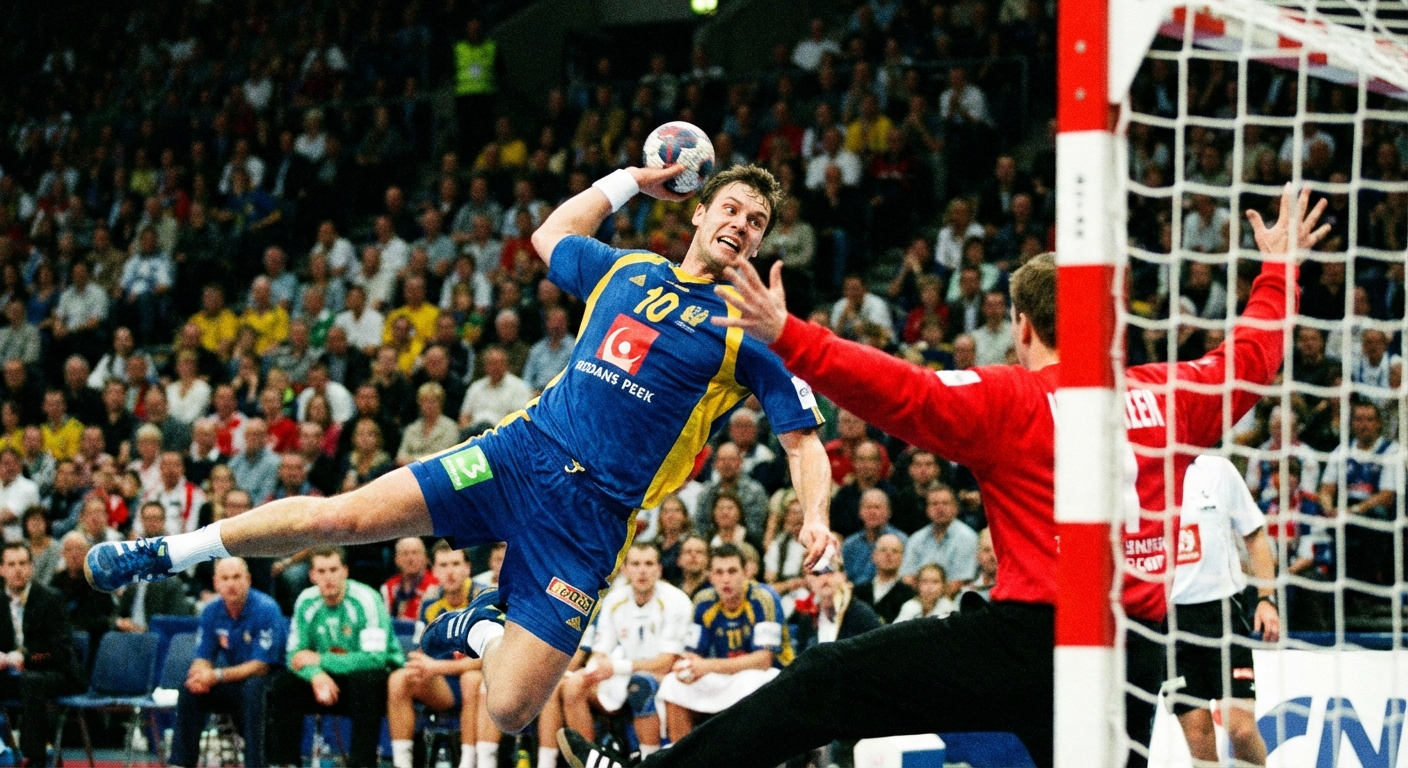
Wing players operate in the most demanding shooting position on a handball court, where acute angles and a close goalkeeper make finishing a specialist skill. This article breaks down the technique, decision-making, and training progressions that coaches need to develop elite wing finishing.
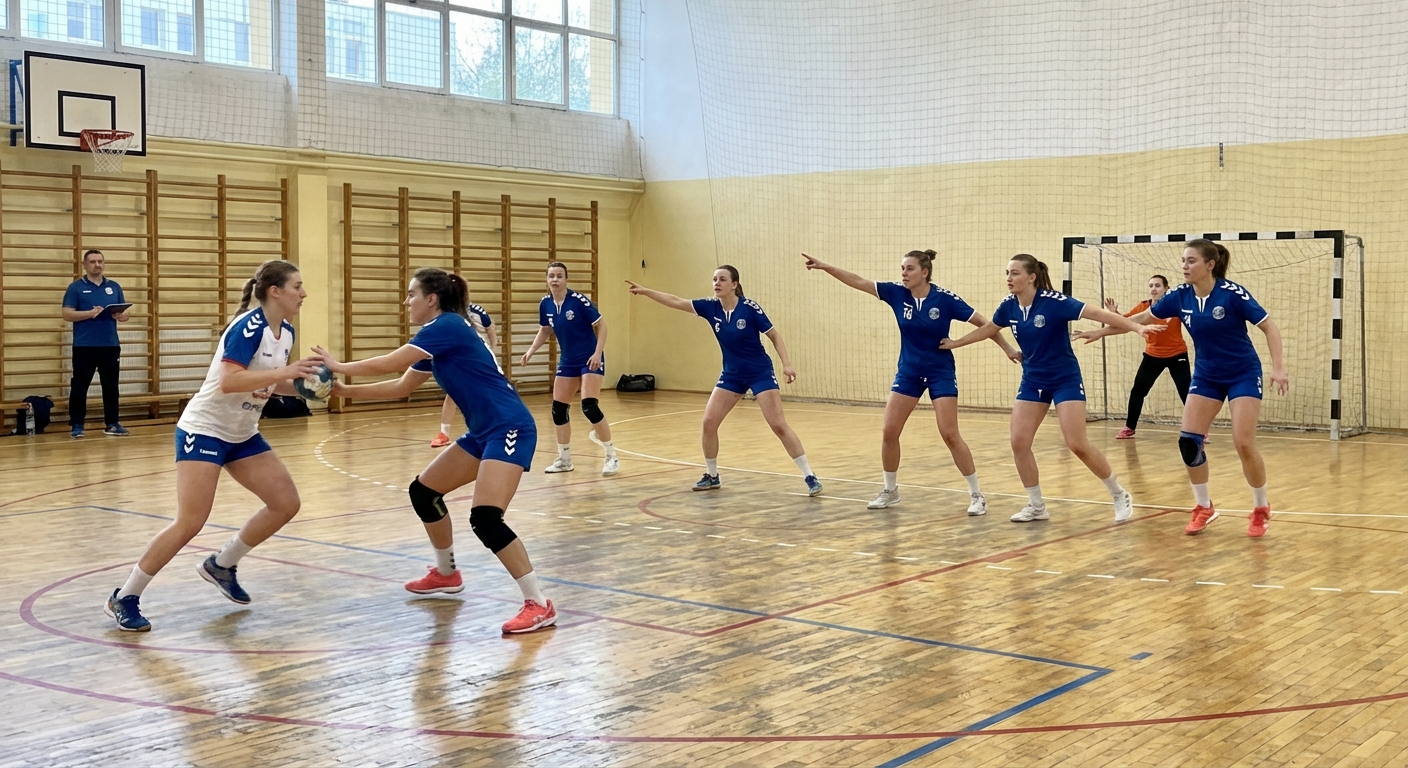
The transition from attack to defence is the most vulnerable moment in handball. This article examines the 3-second recovery principle, the specific roles players must adopt during transition, and the training scenarios that build a team's ability to recover defensive shape under pressure.
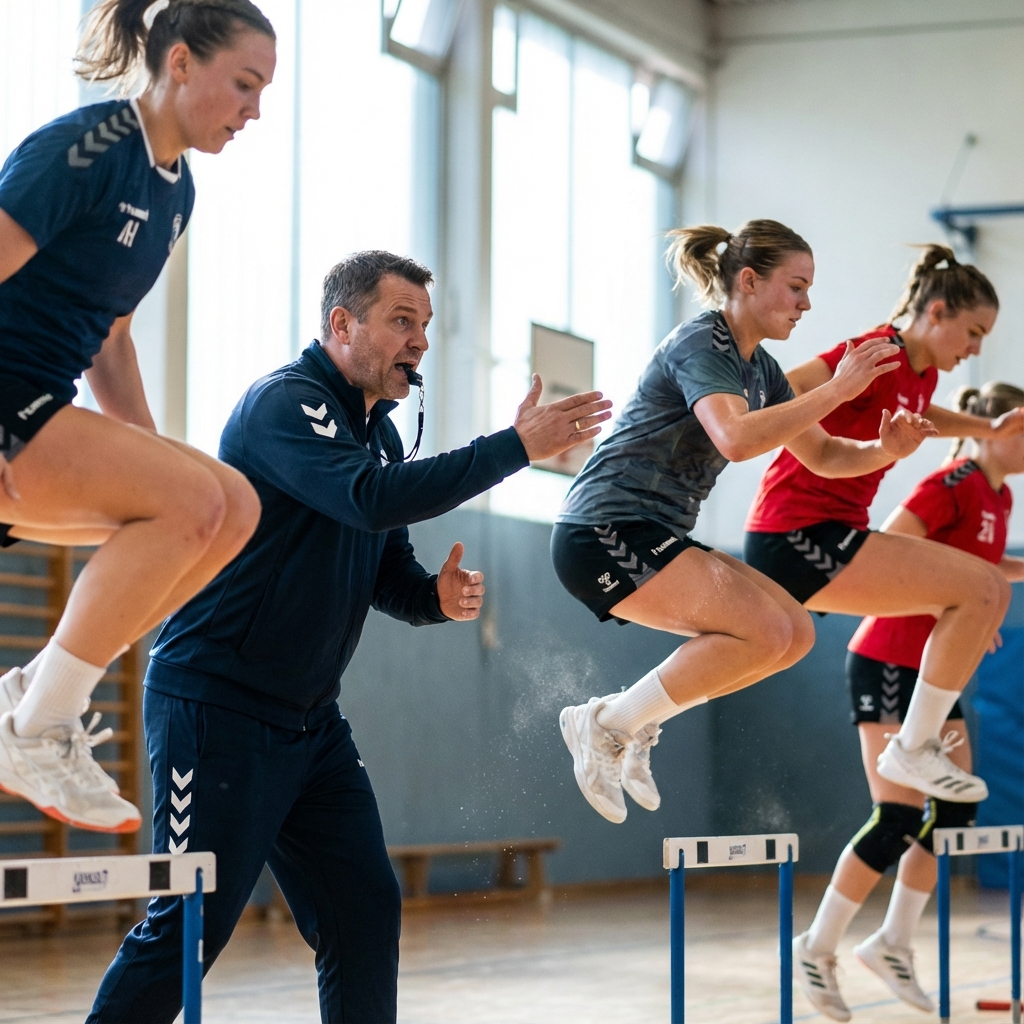
Handball demands explosive power, repeated sprint ability, and the strength to compete physically for 60 minutes. Sport-specific conditioning develops the athletic qualities that underpin elite performance.


Register for FREE and get coaching tips, top drills, session and more every week!