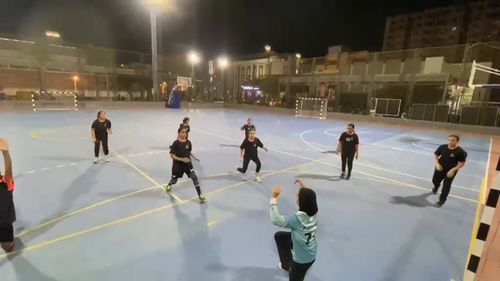
Alle aanvalsposities zijn bezet (behalve CS), alle ballen bij LH.1. LH start in en zet druk tot pylon, speelt dan pass naar in startende LO, gaat om de pylon heen en neemt achterwaarts plaats in van LO 2. LO start in en zet druk tot pylon, speelt dan pass naar in startende MO, gaat om de pylon heen en neemt achterwaarts plaats in van MO3. MO start in en zet druk tot pylon, speelt dan pass naar in startende RO, gaat om de pylon heen en neemt achterwaarts plaats in van RO4. RO start in en zet druk tot pylon, speelt dan pass naar in startende RH, gaat om de pylon heen en neemt achterwaarts plaats in van RH5. RH gaat om pylon en rondt af, haalt bal op en sluit aan bij LH-rij6. EnzovoortVariatie: In plaats van af te ronden kan RH pass spelen naar CS, die dan snel aansluit bij LH-rij.
This practice has no coaching points
This practice has no progressions
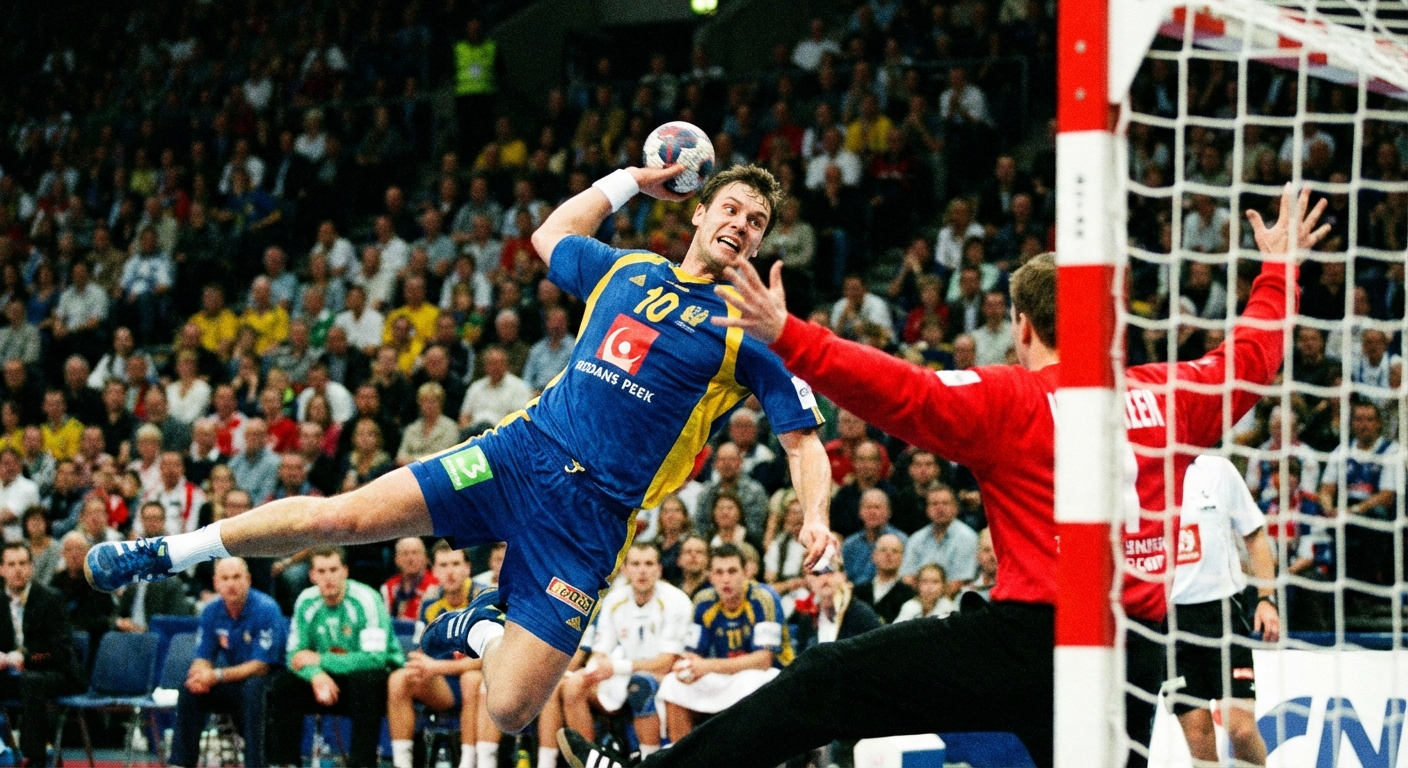
Wing players operate in the most demanding shooting position on a handball court, where acute angles and a close goalkeeper make finishing a specialist skill. This article breaks down the technique, decision-making, and training progressions that coaches need to develop elite wing finishing.
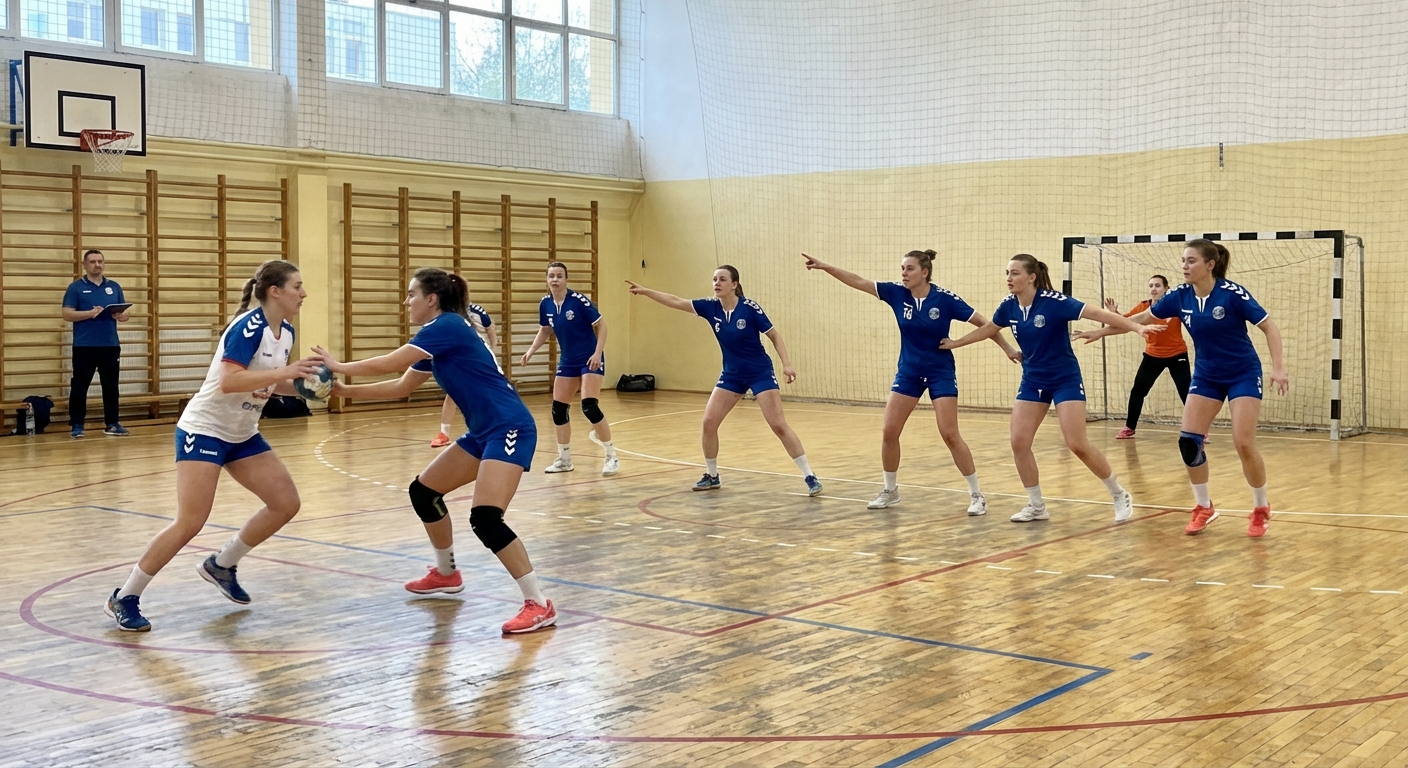
The transition from attack to defence is the most vulnerable moment in handball. This article examines the 3-second recovery principle, the specific roles players must adopt during transition, and the training scenarios that build a team's ability to recover defensive shape under pressure.
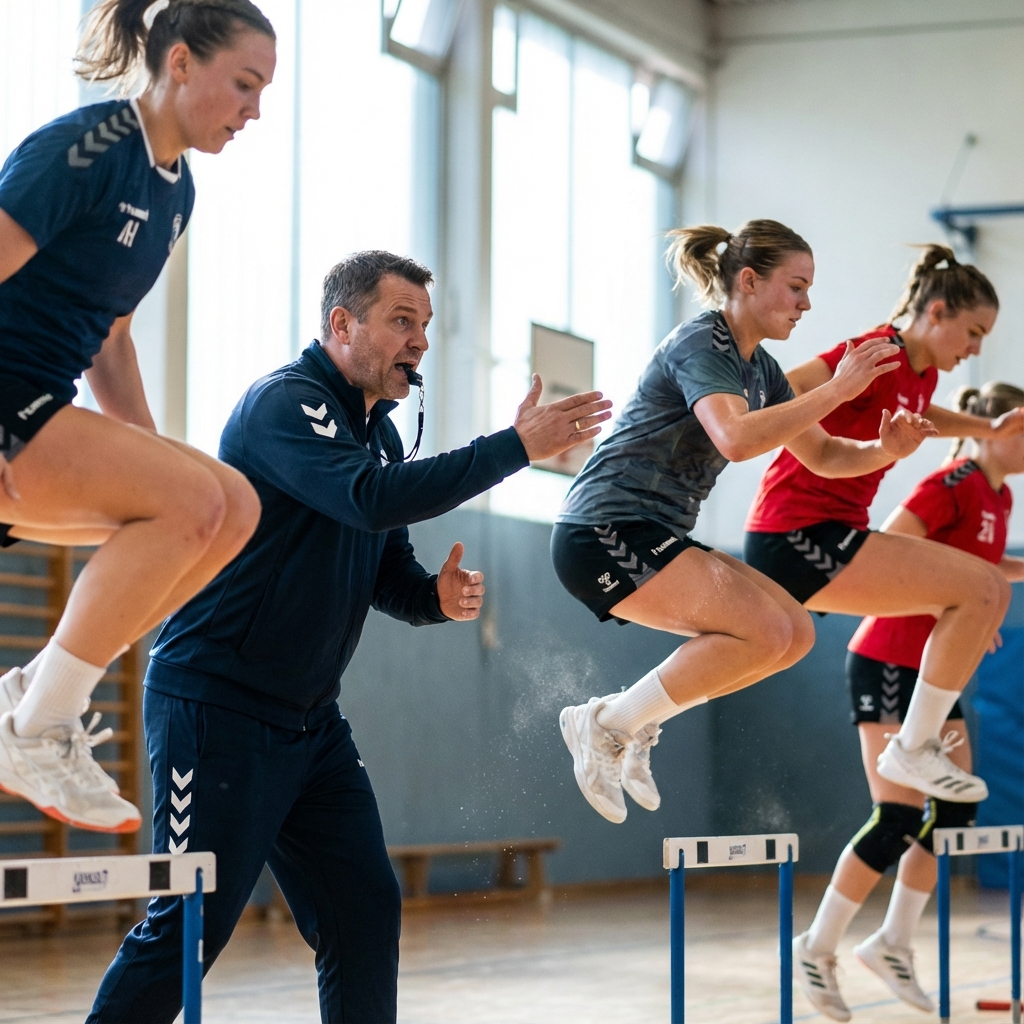
Handball demands explosive power, repeated sprint ability, and the strength to compete physically for 60 minutes. Sport-specific conditioning develops the athletic qualities that underpin elite performance.


Register for FREE and get coaching tips, top drills, session and more every week!