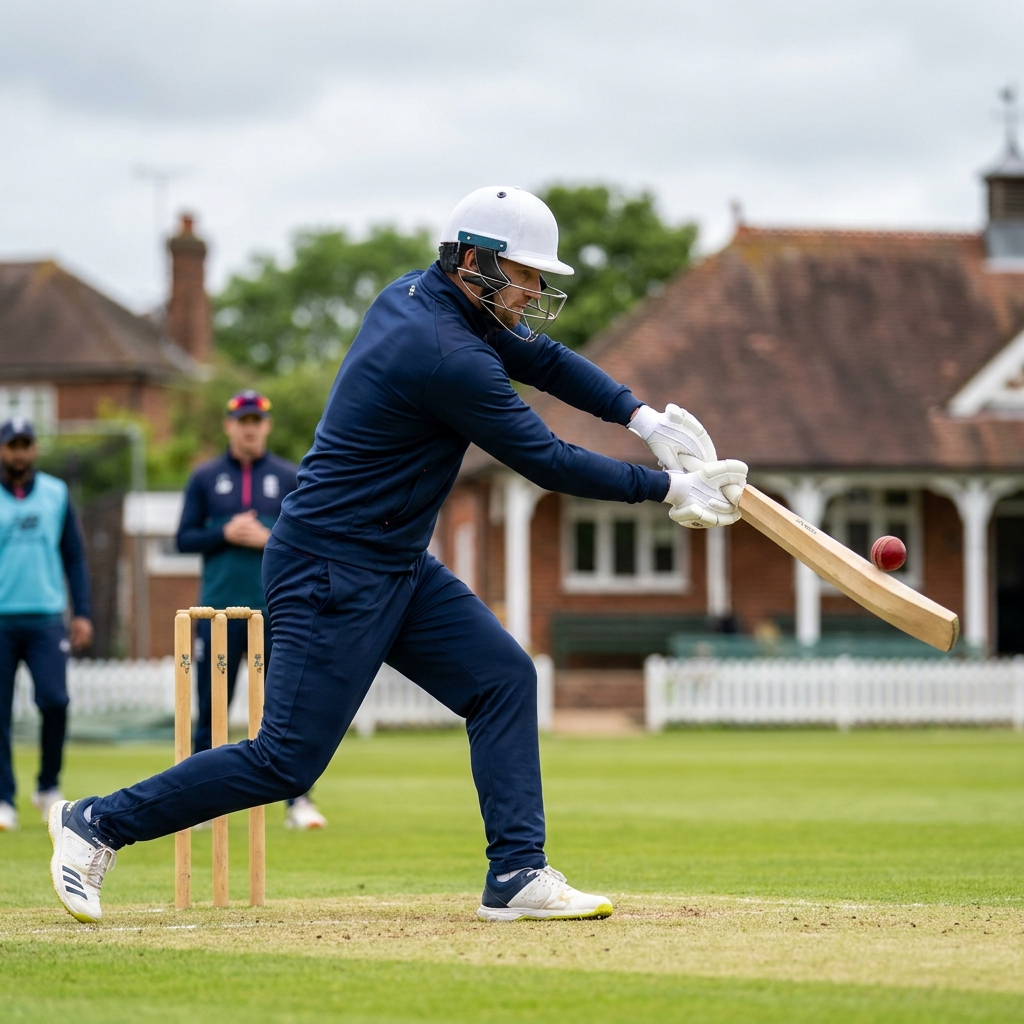


How do I stop my batsman frequently getting out caught behind?
One of my top batsman is getting out caught behind very often.What kind of drills do you suggest for him to work with .Is playing away from body is the only reason for this.


Hi Satheesh, it sounds like your player is trying to reach for the ball (pushing his hands toward the ball) rather than letting it come to him and is not playing it with 'soft' hands (a soft grip when hitting the ball).
Get him to wait for the ball and hit the ball with soft hands - that way the ball should not carry so far and will land short of the wicketkeeper and slips.
Maybe throw him some balls and get him to practise the forward defensive using the tips I mention above.
thanks.

Hi Satheesh,
We presume when you have written that your top order batsman getting out caught behind he is your openning or upper middle order batsman.
Normally opening & upper order batsman are exposed to new ball and they initially tend to play away from their body especially outside their offstump or trying to play square of the wicket & as the ball is swinging resulting in getting caught behind.
Initially when any batsman who comes to play must be told to play in the `V` i.e. as straight as possible to minimize the errors and in the process if told to play straight in `V` they tend to leave the balls automatically which are not in line of the stumps or outside the off stump.
(Please Note : Dont make the mistake of telling them to leave the ball instead tell them to play the ball in `V` i.e straight the area from covers to the midwicket as telling them to leave the ball they get confused and start leaving the balls which are in line of stumps.)
The Drill :
Before the batsman is given batting in the net session feed him with the balls and make him drive in the `V` i.e as straight as possible this drill also can be done by selecting the pairs of batsman who generally bat together in matches both of them feeding each other at least 50 balls each and hitting straight in "V" before coming to bat in nets.This really works