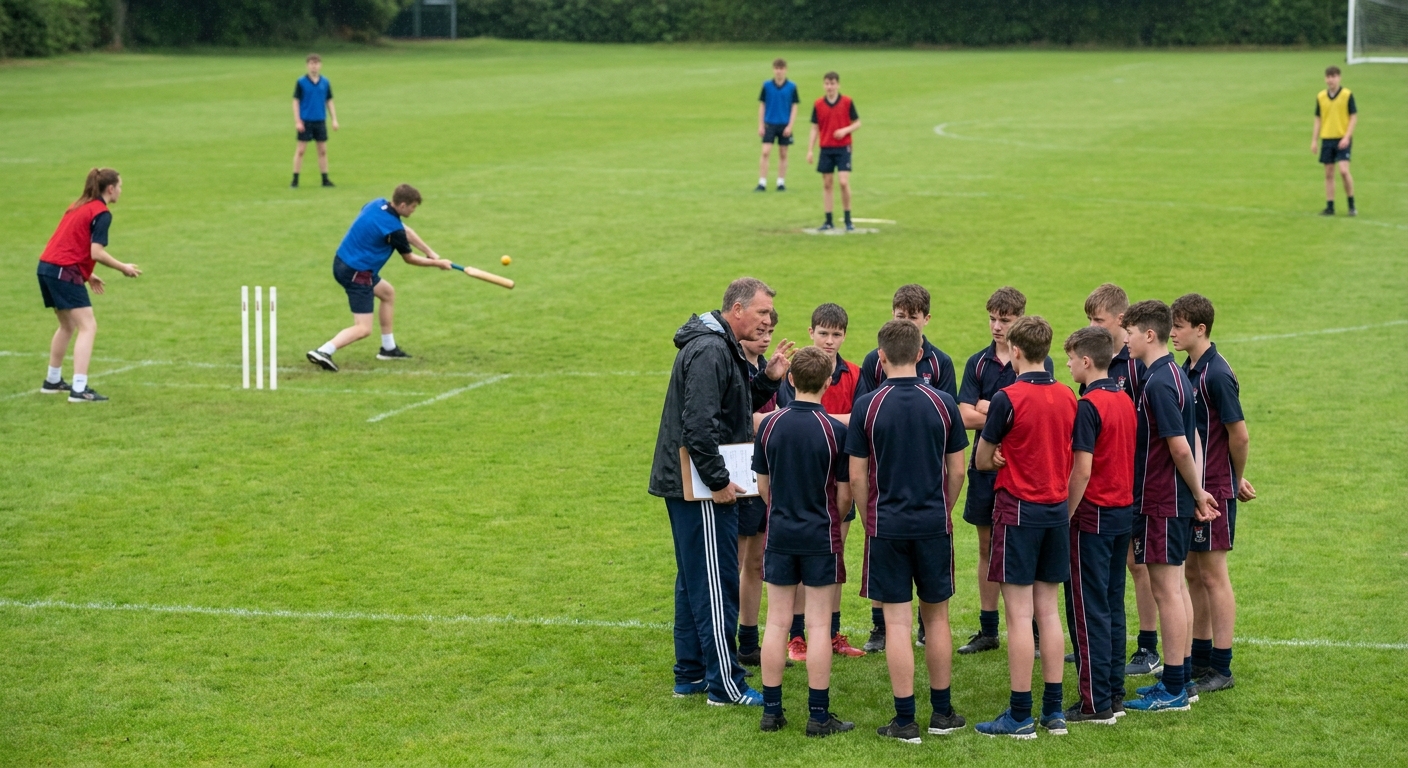
Nine Field, but the Squad Is Bigger
Rounders has a fairness problem built right into its numbers. A fielding side is nine players, but almost no squad is exactly nine. School groups, summer leagues and community clubs routinely turn up with twelve, fourteen, sometimes more - which means every game, somebody bats last, somebody fields in the least busy position, and somebody sits out. Games are short and high-rotation, so those small decisions repeat constantly, and players notice every one of them.
For competitive adult clubs, selection can lean towards performance. But the large majority of rounders is school PE, summer recreation and workplace leagues, where the point is participation, not the scoreline. In that world, fairness is not a nice-to-have - it is the job. A child who fields in deep backward right for an entire afternoon, never bowls, and bats ninth in a side that only gets through six batters has effectively been told they do not matter. Do that twice and they stop coming.
The good news is that fair rotation is mostly planning, not luck. With a batting order set in advance, a deliberate plan for who fields where, and a simple way to track who has done what, you can make a squad of fourteen feel genuinely shared - and prove it when a parent asks.
Plan the Rotation Before You Arrive
The single biggest cause of unfair-feeling rounders is improvising selection on the day. When you decide the batting order ball by ball and shout fielders into position as you go, you default - without meaning to - to putting your best players in the busy spots and the rest out of the way. Plan it in advance instead and the bias disappears.
Two things to settle before the first ball:
- The batting order. Write it down and let everyone see it. Players cope far better with batting eighth if they know in advance and know they will bat first next game. Rotate the order across fixtures so the same people are not forever at the bottom.
- The fielding map. Decide roughly who fields where for each innings, and plan to move people. Nobody should spend the whole game in deep field, and nobody should own the busy infield positions all afternoon either.
For school and large recreational groups, run players in and out across innings so the nine on the pitch changes regularly. A short game with frequent innings changes is actually a gift here - it gives you natural, frequent moments to swap people without disrupting anything.
Rotate the Key Positions, Not Just the Spare Ones
It is easy to rotate the low-pressure positions - shuffling who stands in deep field hardly feels like a decision. The fairness that matters is rotating the key positions: the bowler and the backstop above all. These are the most involved, most skill-building roles on the pitch, and if only one or two players ever get to bowl, everyone else is denied the most fun and developmental part of the game.
Give as many players as realistic a turn bowling underarm, even if their action is raw - it is how they learn, and a recreational game is exactly the place to try. The backstop is the busiest fielding position and a brilliant place to develop quick hands and reactions, so rotate that too rather than leaving it to your one reliable catcher. The deliberate effort to share the involved roles, not just the quiet ones, is what players and parents actually register as fair.


If you are unsure who is suited to what before you start rotating, our guide to rounders positions and rules breaks down what each spot demands, so you can match players to positions sensibly while still moving them around.
Balance the Side, Not Just the Minutes
Fair rotation does not mean nine names pulled from a hat. A side still needs to function - so balance is sharing involvement and keeping a workable shape. The practical compromise most recreational coaches reach is to anchor one or two trusted players in the spots where a complete novice would struggle (often the bowler at key moments, or a reliable pair of hands at a busy post), then rotate everyone else freely around them, and rotate those anchors too whenever the game is comfortable.
A few principles that keep it both fair and functional:
Fair-Rotation Principles
- Everyone bats every game. If innings are short, prioritise that those who batted last time bat higher this time.
- Nobody parked in deep field all day. Move your less confident fielders into the action across the game, not away from it.
- Share the bowler and backstop roles. These are the developmental positions - rotate them deliberately.
- Sit-outs are shared and short. If players must miss an innings, keep a list so the same ones never sit twice in a row.
- Anchor lightly, rotate around it. Steady one or two key spots if you must, but loosen even those when the game allows.
A Sample Fair-Rotation Plan for a 12-14 Squad
Here is how that looks in practice across a typical school or recreational fixture with a squad of twelve to fourteen. Adapt the numbers to your group, but the shape holds: a set batting order, fielders moving every innings, and the key roles passed around.
Worked Example: 13-Player Squad, Short Fixture
- Before the game: Write a batting order 1-13 and post it. Those who batted near the bottom last fixture go near the top today.
- Fielding, innings 1: Nine field, four rest. Anchor one steady bowler and one backstop; fill the other seven spots with a mix of abilities, putting less confident players at the busier posts, not in the corner.
- Fielding, innings 2: The four who rested come on; four others rotate off. New bowler and new backstop where the game allows. Everyone who was in deep field moves infield.
- Across the game: Aim for every player to bowl at least once, field at least two different positions, and sit out no more than one innings - and never two in a row.
- After the game: Note who bowled, who batted high or low, and who sat out, so next fixture can even up whatever this one could not.
None of this slows the game down. Because rounders innings are short and turn over quickly, you have a natural swap point every few minutes - the plan just tells you what to do with it instead of guessing.
Track Who Has Played - So Fairness Is Demonstrable
The hardest part of fair rotation is not one game; it is remembering across many. By the third fixture you will not recall who batted last, who has never bowled, and who sat out twice last week. Felt fairness is not enough - when a parent asks why their child always seems to be in the corner, you want to be able to show that, over the block, minutes and positions have been shared evenly.
For a single game, a tally on a clipboard or a note on your phone does the job: a column each for innings batted, positions fielded, overs bowled and innings sat out. Across a tournament day or a season, that is harder to hold in your head, and a shared record earns its keep.
This is the point where availability and game-time tracking start to matter together. You need to know your numbers before a fixture or festival - who is actually coming - because that determines how big your rotation has to stretch. And you want a running tally of who has played, batted and bowled across the block so the rotation stays demonstrably fair rather than just well-intentioned. A team app that handles both in one place takes the mental load off. Teamo (and a brief, honest aside: it is made by Sportplan, the same team behind this site) lets you collect availability so you know your numbers ahead of a fixture or festival, and log game time so you can see at a glance that batting, bowling and positions have been shared across the season. It is mobile-first, which suits a coach standing on a pitch with a phone rather than a laptop. For a casual single team that just wants a chat and a head-count, a free scheduler like Spond or even a WhatsApp group is perfectly fine - the case for something more comes when you are running a club, several teams or a full festival day. You can see how Teamo tracks availability and game time if that is your situation.
Communicate Selection Kindly
However fair your rotation, how you explain it decides whether it lands. Players and parents accept a great deal if they understand the plan and trust it is even-handed; they accept very little if decisions feel arbitrary or secretive.
A few habits that keep everyone onside:
- Tell them the principle up front. At the start of a block or a season, say plainly how you rotate: everyone bats, positions are shared, sit-outs go round. Stated once, it heads off most complaints.
- Be honest about why someone sits. "It's your innings to rest, you bowled last innings, you're up first next game" lands far better than silence.
- Keep parents in the loop. A short message about how selection works saves a dozen sideline conversations. Our guide to club and school communication covers getting that tone right.
- Never single a player out. Talk about the rotation, not about any individual's weakness - especially in front of the group.
Fair selection is one part of running a rounders team well; if you want the wider picture - sessions, fixtures, the whole job - see our guide on how to run a rounders team. And when you want practices to develop the players you are rotating, browse the full Rounders drills library for batting, bowling, backstop and fielding work sorted by skill.
Frequently Asked Questions
Should everyone get a fair go in rounders?
In school and recreational rounders, yes - fairness is usually the whole point. A fielding side is only nine players but squads are bigger, so someone always sits out. The fair approach is to plan rotation so that, across a game or a block of fixtures, every player bats a similar amount, fields in different positions and gets meaningful time on the pitch. Stronger competitive squads will weight selection towards performance, but even there a clear, communicated plan keeps the group together.
How do I rotate a rounders squad?
Decide your batting order before the game so everyone knows when they bat, and rotate fielders every innings or every few overs rather than leaving the same players in the same spots all day. Move players through the key positions - bowler and backstop especially - and do not park your weakest fielder in deep field for the whole match. Keep a simple record of who has batted, who has bowled and who has sat out, so the next game balances out what this one could not.
How do I track who has played?
For a single game a tally on a clipboard or your phone is enough - mark each player's innings batted, positions fielded and time sat out. Across a season or a tournament day it is easier with a shared register or a team app where you log availability and game time in one place, so you can show at a glance that minutes and positions have been shared fairly. The point is to make fairness demonstrable, not just felt.
How big should a rounders squad be?
A fielding side is nine, so a squad of nine is the bare minimum and leaves no cover for absences or injuries. For school and recreational rounders a squad of twelve to fourteen works well: it covers drop-outs, lets you rotate properly and means nobody is run into the ground, while still being small enough that everyone gets regular game time. Much larger than fourteen and players spend too long watching.