A Short Season, Two Big Jobs
Rounders has a rhythm unlike most sports. It is played mainly in the warmer months, so the whole season is packed into a few short summer weeks. That compression is what makes the organising side feel relentless: there is no long autumn-to-spring campaign to spread the load. Everything - fixtures, festivals, availability, kit - lands at once.
Whether you run a community club team, a school squad, a social side or a workplace summer league entry, the organising work really comes down to two jobs. The first is fixtures: the league games or friendlies you play across the season. The second is the one that defines rounders more than any other sport - festivals and tournament days, where a club or school hosts or attends a single event with several teams, rolling pools, multiple pitches and very tight timings. Get a handle on both and the summer stops feeling like firefighting.
Getting Fixtures or Entering a League
Before you can organise anything, you need games. There are two routes, and most teams use both across a summer.
The first is to join a league. Many areas run summer rounders leagues, often organised through Rounders England or a regional, county or local organiser. You enter as a team, pay any entry fee, and the organiser sets the fixtures, venues, rules and the table. The important thing to be clear about from day one: the league or Rounders England is the official source of the fixture list, the results and the standings. Whatever tools you use to organise your own team, that governing body or organiser remains the record. Your job is to take their fixture list and make it happen for your players.
The second route is friendlies. Rounders has a strong social and community streak, and plenty of teams simply arrange games directly with nearby clubs, schools and workplace sides. A few messages to neighbouring organisers will usually fill some weekends. Friendlies are also how new teams find their feet before committing to a league.
For festivals and tournament days, entry works differently again: you sign up as a team through the host or the event organiser, pay the entry, and turn up to a single day rather than a home-and-away season. We will come to the detail of those days shortly, because for rounders they are the main event.
Collect Availability Early - the Whole Block
Here is the single biggest difference between a smooth rounders summer and a stressful one: collect availability well ahead, and collect the whole block at once.
Because the season is short and falls squarely across the holidays, your players' diaries fill up fast - family weeks away, festivals, weddings, other sports. If you ask "who's free this Saturday?" the night before, you will spend every week scrambling. If instead you publish every fixture and festival date the moment you have the list and ask players to mark their availability for the lot, the person who is away for the back half of July will tell you in May. That early warning is gold: it lets you build squads, call in extra players and even pull out of a festival you cannot field a team for, all with time to spare.
Practically, that means three things. Send out the full list of dates as soon as you have it. Get a clear yes, no or maybe against each date. Then chase the gaps - the maybes and the silences - until you have a real picture. Knowing your numbers for every date weeks ahead is what turns festival entries and squad selection from a guess into a plan.
Building the Squad for Each Date
Once availability is in, squad selection follows naturally. For a league fixture you pick your best available side; for a festival you may need to enter two teams, or rotate a larger pool through a long day of short games. Rounders festivals in particular reward depth - rolling pools mean a lot of games in a short window, and fresh legs in the field matter. Plan who plays when before you arrive, not in the car park. Our guide to squad selection and rotation walks through keeping a big group fair and fresh across a busy day.
Organising and Hosting a Festival Day
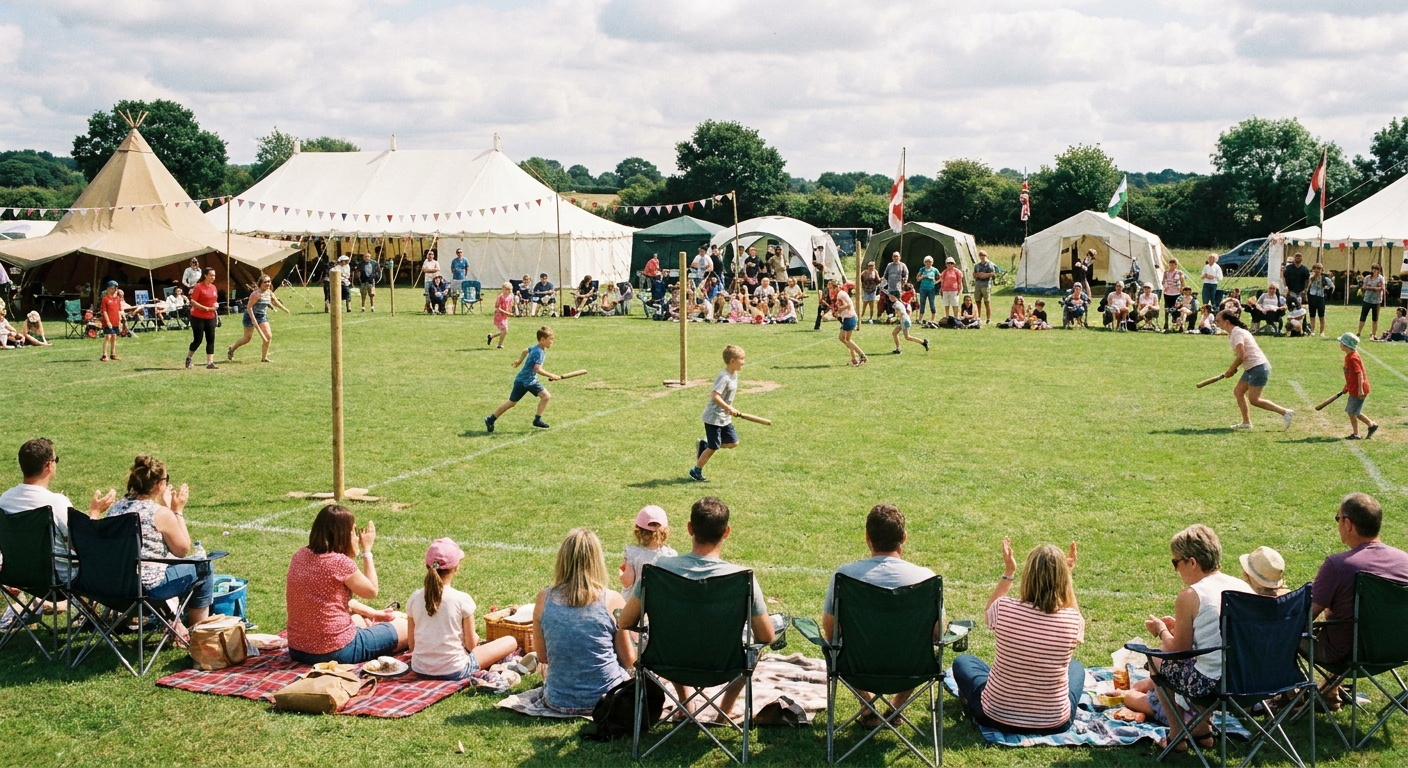
This is where rounders organising earns its reputation. A festival or tournament day is a genuine logistics exercise: several teams, often dozens of short games, multiple pitches all running at once, and a schedule that has to hold to time or the whole thing collapses into the evening. Whether you are hosting your own event or simply want to understand what a good one looks like, here is what has to be in place.

Your Festival-Day Checklist
- Pitch allocation: Mark out and number every pitch, and decide which posts, backstop areas and boundaries each one uses. Teams need to know "you are on Pitch 3" without ambiguity.
- Pool schedule: Group the teams into pools and build a master schedule of short timed games. Every team should be able to read off which pitch they are on and at what time, all day.
- Scorers and officials: Assign a scorer and an official to each pitch and brief them before the first game on timings, the rules in use and how to report results back.
- A timing marshal: Appoint one person whose only job is keeping pitches turning over on schedule. This single role saves more time than anything else.
- Parking and arrivals: Plan where teams and spectators park, mark a drop-off point, and send the address and a site map in advance so cars are not circling at 9am.
- Refreshments: Water, a tea-and-cake or burger-van plan, and somewhere shaded to sit. On a hot summer day this matters as much as the cricket score.
- Kit and equipment: Spare balls, posts, backstop gear, bibs, a first-aid kit and a clearly marked first-aid point. Bring more balls than you think you need.
- Timings and running order: A clear start time, a published order of play, break slots, and a finals or presentation slot at the end so everyone knows when the day wraps up.
- Wet-weather plan: Rounders is an outdoor summer game and rain happens. Decide in advance what triggers a delay, a shortened format or a call-off, and how you will tell everyone fast.
None of these jobs is hard on its own. The difficulty is that they all happen simultaneously, in a few hours, in front of dozens of families. The organisers who make it look easy are simply the ones who sorted entries, fees, schedules and site maps days in advance and kept one person free on the day to float and fix problems rather than being tied to a single pitch.
Communicating It All - So Everyone Ends Up in the Right Place
You can plan the perfect festival and still have it fall apart if the information does not reach people. Rounders squads are full of casual and occasional players, and parents ferrying juniors who have never been to the venue. The communication job is therefore as important as the schedule itself: every player and parent needs the date, the meeting time, the address, where to park, what to bring and when you actually start.
And it has to flex on the day. Pitches change. The rain comes. A pool over-runs and your 11am game slips to 11:40. The teams who cope are the ones whose organiser can fire a single clear message to the right players and parents - "we're now on Pitch 2, throw-up in 20 minutes" - and know it has landed. Doing that across a noisy group chat, mid-festival, is where things go wrong. Our guide to club and school communication goes deeper on keeping parents and players in the loop without losing your mind.
One Place for Fixtures, Availability and Reminders
If there is one tool that quietly takes the strain out of a rounders summer, it is a shared calendar that ties the three jobs above together: the fixtures and festival dates, the availability behind them, and the reminders that get everyone to the right pitch on time.
This is where an app like Teamo's shared calendar and availability fits. Put every fixture and festival date in one calendar the whole squad can see; let players mark their availability for the entire season in a tap, so you know your numbers for each date weeks ahead; pick your squad from who is actually available; and send instant notifications - meeting times, a rain-off, a pitch change - straight to the right team and parents rather than into a busy group chat. A brief, honest note, since it is fair you know: Teamo is made by the same team behind this Sportplan site. One important caveat to be straight about: your league or Rounders England remains the official source of the fixture list and results - a shared calendar like this does not sync with or replace them. It simply keeps your own team's dates, availability and reminders in one place, which on a packed festival weekend is exactly the part that usually goes wrong.
For a single casual side that only wants to chat and organise, a simple scheduler or even a WhatsApp group may be all you need - there is no shame in keeping it light. The shared calendar earns its place once you are running real fixtures, entering festivals and trying to get a dozen families to the same pitch at the same time.
Pulling It Together
Rounders rewards organisers who get ahead of the season rather than chasing it. Lock in your fixtures and festival entries early through your league or organiser, collect availability for the whole block the moment you have the dates, build your squads from real numbers, and treat each festival day as the logistics exercise it is - pitches, pools, scorers, parking, refreshments, kit, timings and a wet-weather plan, all communicated clearly and in good time.
For the bigger picture of running a side across a summer - subs, kit, volunteers and all - see our how to run a rounders team guide. And when you want to turn a training night or a quiet pitch into something useful, the full Rounders drills library has festival-friendly games and skills sorted by area.
Frequently Asked Questions
How do rounders fixtures and leagues work?
Rounders is mostly a summer sport, so fixtures cluster between May and August. Community teams either join a local league - often run through Rounders England or a regional or county organiser - or arrange friendlies directly with nearby clubs and schools. The league or organiser sets the dates, venues, rules and results, and that body remains the official source of the fixture list and the table. Your job as an organiser is to take that list, work out who is available for each date, and make sure your squad and your scorers turn up in the right place at the right time. For one-off festival days you enter as a team through the host or organiser rather than playing a home-and-away season.
How do I organise a rounders festival or tournament?
Start with the basics: a date, a venue with enough pitches, and how many teams you can fit. Decide the format - usually rolling pools of short timed games rather than long matches - and build a schedule that tells every team which pitch they are on and when. Then sort the supporting jobs: scorers and officials for each pitch, parking and a drop-off plan, refreshments, spare kit and balls, a first-aid point, and a clear running order with start times. Confirm entries and fees ahead of the day, send every team the schedule and a site map in advance, and have a wet-weather plan. The day runs on tight timings, so a marshal keeping pitches moving is worth more than any other single thing.
How do I collect availability for a rounders team?
Ask early and ask for the whole block, not one date at a time. Because the rounders season is short and busy, the players who are away for half of July will tell you in May if you ask then. Send out every fixture and festival date as soon as you have the list, get a yes, no or maybe against each one, and chase the gaps. A shared calendar that lets players tap their availability for the season is far quicker than re-asking a group chat every week, and it shows you at a glance where you are short so you can call in extra players before the day rather than on the morning.
How do I host a rounders tournament day?
Hosting means you own the whole site for the day. Mark out and number your pitches, allocate teams to pools, and print a master schedule plus a copy for every pitch. Brief your scorers and officials before the first game, station a marshal to keep pitches turning over on time, and set up refreshments, parking marshals and a first-aid point. Send every visiting team the timings, the address, a site map and where to park well in advance, then send a reminder the day before. On the day, keep one person free to float and fix problems rather than tying everyone to a pitch, and have a clear plan for rain so nobody is left guessing.