The Most Vulnerable Moment in Handball
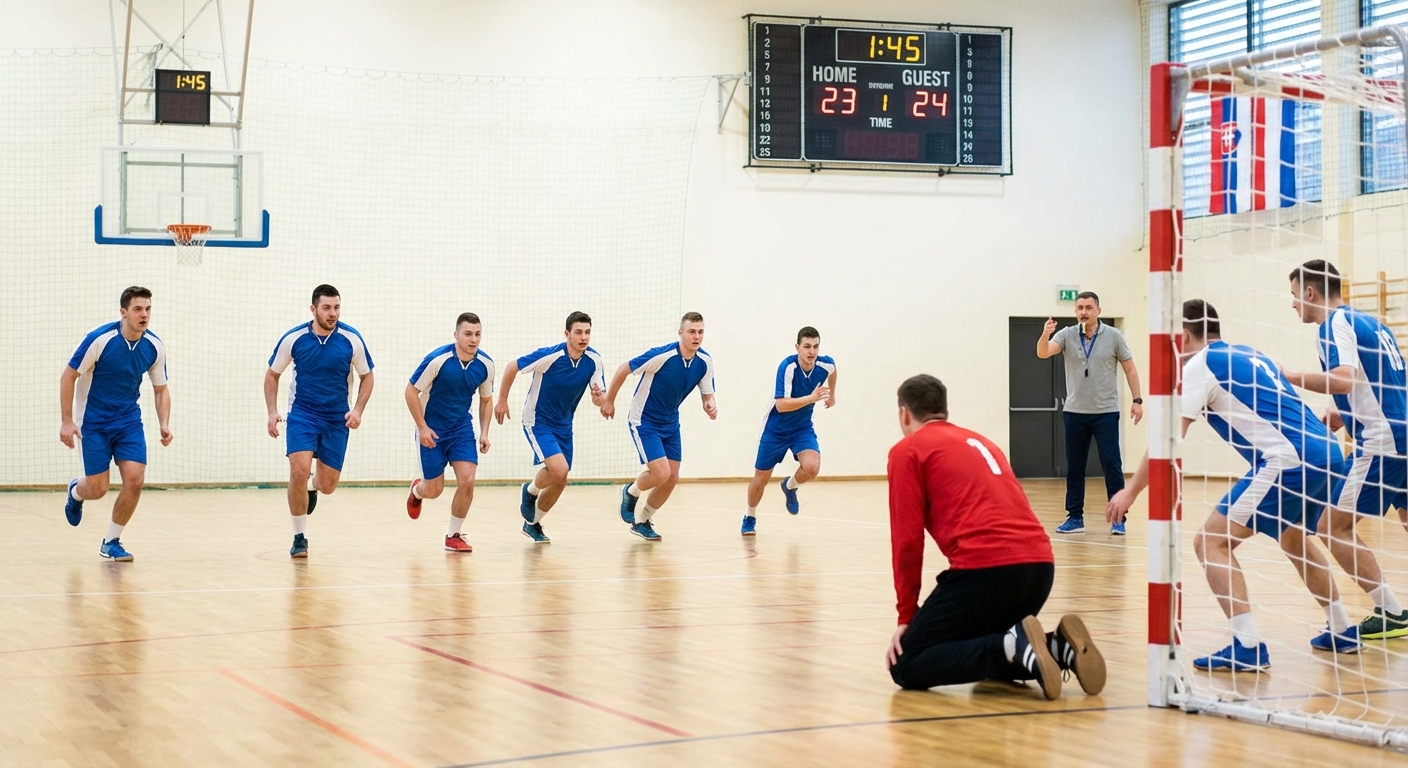
Analysis of goals scored at the highest level of handball consistently reveals that a disproportionate number come during transition. When a team loses possession, there is a period of between two and five seconds where the defensive structure does not exist. Players are spread across the attacking half, facing the wrong direction, mentally processing the turnover rather than reacting to the defensive emergency. It is in this window that fast breaks are launched, numerical advantages are created, and easy goals are scored.
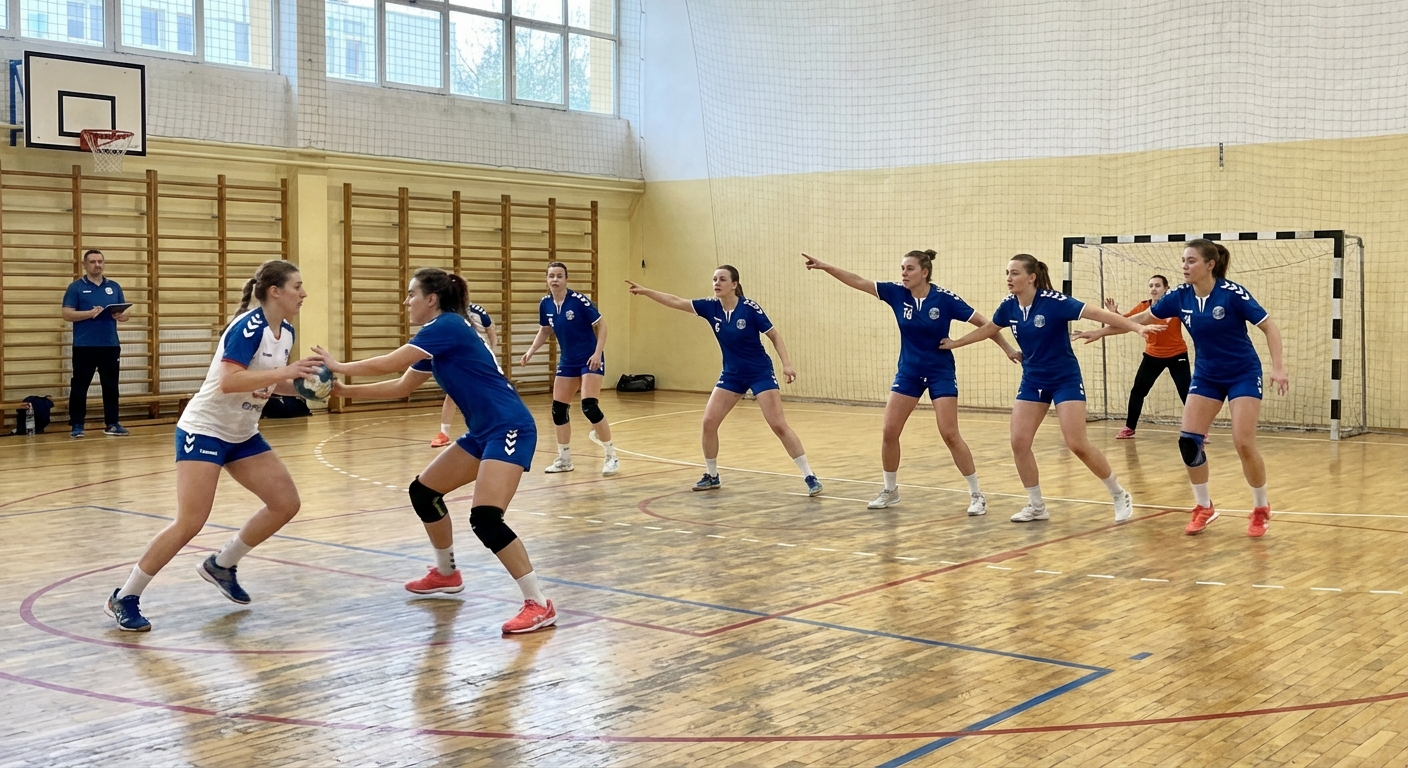
The best defensive teams in world handball are not just well-organised in their set defensive shape - they are exceptional at getting back into that shape quickly after losing the ball. This transition defence capability is trained, not innate. It requires clear role assignments, rehearsed communication patterns, and a team-wide mentality that treats every turnover as a defensive emergency to be solved within three seconds.
The 3-Second Recovery Principle
The 3-second recovery principle is a simple but powerful framework for transition defence. From the moment possession is lost, every player on the team has three seconds to achieve one of three things: slow down the ball carrier, recover to a position between the ball and the goal, or communicate the defensive assignment to a teammate. Three seconds is not a lot of time, but it is enough if the reaction is immediate and the priorities are clear.
Why Three Seconds?
Handball court dimensions dictate the timeline. A fast-breaking player running at full speed covers approximately 20 metres in three seconds. Since the typical turnover occurs in the attacking half, the opposition goalkeeper can launch a long pass that covers 20-25 metres in under two seconds. If the defensive recovery has not begun within three seconds of the turnover, the attacking team will have a numerical advantage - typically 2v1 or 3v2 - that is almost impossible to defend against.
The three-second window is also psychologically important. Research in team sports psychology shows that the first few seconds after a negative event (such as a turnover) are when the highest-risk decisions occur. Players who are still processing the disappointment of losing the ball are not thinking defensively. By setting a clear three-second target, coaches give players a concrete, immediate task that overrides the emotional response to the turnover.
Roles in Transition: First Defender, Organiser, and Runners
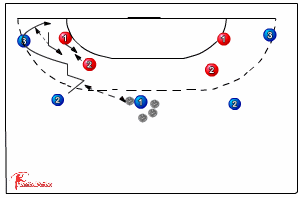
Effective transition defence requires three distinct roles to be filled immediately after the turnover. Every player on the team should understand all three roles and know which one they are responsible for based on their position at the moment of the turnover.
The First Defender
The first defender is the player closest to the ball at the moment of the turnover. Their job is not to win the ball back - it is to slow the attack down. They achieve this by getting between the ball carrier and the goal, forcing the attacker to slow down, change direction, or pass. Every second the first defender can delay the fast break is a second the rest of the team has to recover. The first defender does not need to make a tackle or steal the ball; they simply need to be a presence that prevents a direct, uncontested run at goal.
The Organiser
The organiser is typically the most experienced defender on the court, often the central defender in the team's set defensive system. During transition, the organiser sprints back toward the goal area and begins directing teammates into position through loud, clear verbal commands. They call out who should cover which lane, identify the most dangerous attacker, and establish the temporary defensive shape that will hold until the full defensive system is restored. The organiser is the brain of the transition defence.
The Runners
Everyone else is a runner. Their sole objective is to sprint back to a position between the ball and the goal as fast as possible. Runners should not look for the ball or try to intercept passes during their recovery run - this costs time and creates gaps. They should run in a straight line toward the six-metre line, find the nearest unoccupied defensive position, and then orient themselves to face the attack. The running back phase is about speed and positioning, not ball-watching.
Communication During Recovery
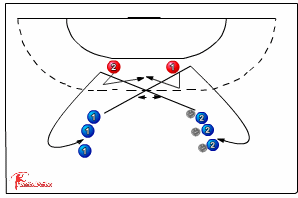
Communication is the glue that holds transition defence together. Without it, players recover to the wrong positions, leave gaps, and duplicate coverage while leaving attackers unmarked. The communication protocol during transition should be pre-agreed and practised until it is automatic.
The Trigger Call
The moment the ball is lost, any player who sees it should shout a predetermined trigger word - commonly "BACK" or "TRANSITION." This single word alerts every player on the team that the defensive recovery has begun. It is the starting gun for the three-second clock.
The Organiser's Commands
As the organiser reaches the defensive zone, they begin issuing position-specific commands: "I have middle," "Cover left," "Wing, wing!" These commands are short, loud, and directional. The organiser should use player names when possible to eliminate any ambiguity about who is being directed.
Confirmation Calls
Players arriving in their recovery positions should confirm verbally: "Left covered" or "I have the wing." This confirmation loop allows the organiser to identify any uncovered positions and redirect resources accordingly. Without confirmation calls, the organiser has no way of knowing whether their instructions have been received and acted upon.
Training Scenarios That Force Fast Recovery
Scenario 1: The Forced Turnover
Six attackers play against a passive defence with the instruction to deliberately turn the ball over after the coach's whistle. The moment the whistle sounds, the ball is given to the defending team's goalkeeper, who immediately launches a fast break. The original attacking team must recover into defensive shape before the counter-attack reaches the shooting zone. The coach times the recovery and sets targets for improvement.
Scenario 2: The Numerical Disadvantage Drill
Start with 6v6 in one half. On the coach's signal, three attackers must sprint to touch the back wall before returning to defend, creating a temporary 6v3 fast break. The three remaining defenders must slow the attack and survive until their teammates recover. This drill builds both the first defender's delaying skills and the runners' recovery speed.
Scenario 3: The Communication Blackout
Run a standard transition drill but with no verbal communication allowed. Players must rely entirely on visual cues and positioning instinct. After three minutes, restore communication and repeat the drill. The contrast highlights how much transition defence depends on talking, and motivates players to communicate more actively in future sessions.
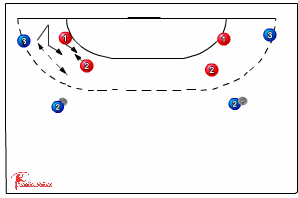
The Link Between Attack Mentality and Defensive Transition
One of the most overlooked aspects of transition defence is that it begins during the attack. Teams that attack with reckless abandon - overcommitting to attacking positions, taking low-percentage shots, or failing to maintain defensive balance during the attacking phase - create their own transition problems. A shot from nine metres that misses the goal entirely gives the opposition a free fast break from their goalkeeper. A risky pass through the defence that is intercepted gives the opposition the ball at the six-metre line with all defenders out of position.
Smart coaches build defensive awareness into their attacking philosophy. This means designating one or two players to maintain slightly deeper positions during the attack, ready to be the first defenders if possession is lost. It means teaching shot selection that considers the consequence of a miss, not just the possibility of a goal. And it means building a team culture where the decision not to shoot - because the transition risk is too high - is valued as much as the decision to score.
Session Structure: Transition Defence Training
Sample Session Plan (60 minutes)
Activation: Sprint and Recover (10 min)
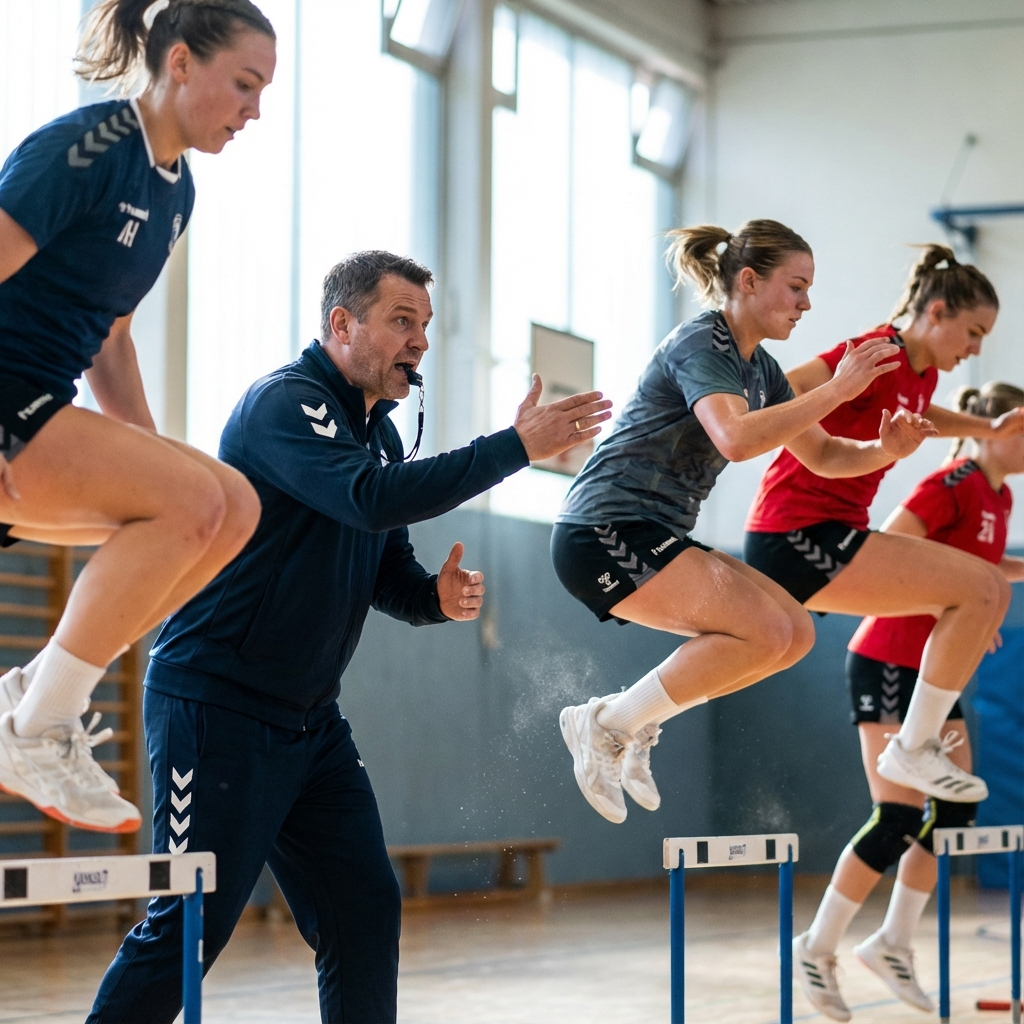
Players line up on the six-metre line, sprint to half-court on the coach's first whistle, then sprint back to the six-metre line on the second whistle and adopt their defensive position. The time between whistles varies, simulating different turnover scenarios. Focus on the speed of the direction change and the quality of the final defensive position.
Role Training: First Defender Delay (15 min)
In pairs, one player acts as a fast-breaking attacker, the other as the first defender. The first defender starts 5 metres behind the attacker and must catch up and position themselves to delay the attack without fouling. Rotate roles every 5 repetitions. Coach provides feedback on body position, angle of approach, and delay technique.
Communication Drill (15 min)
6v6 transition exercise where the coach awards a bonus point for every audible trigger call, organiser command, and confirmation call. This creates a tangible incentive for communication and allows the coach to assess whether the verbal protocols are being followed. Record the number of communication events per transition and set targets for improvement.
Game Scenario: Attack-to-Defence (20 min)
Full 6v6 match play where the coach randomly blows the whistle during attacking possessions, signalling a forced turnover. The ball is given to the defending team's goalkeeper for an immediate counter-attack. The team's transition recovery time is measured and recorded. Teams compete to achieve the fastest average recovery time across the session.
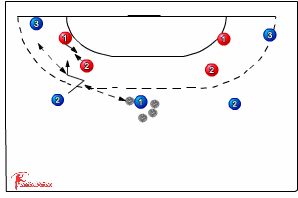
Common Mistakes and Corrections
Mistake 1: Ball-Watching During Recovery
Players who watch the ball instead of running back create a slow, passive recovery. The fix is to drill the response: on turnover, turn and sprint first, then locate the ball. Getting goalside is always the priority. You can face up and find the ball once you are between the opponent and your goal.
Mistake 2: No Designated First Defender
When nobody takes responsibility for delaying the fast break, the opposition has a free run at goal. Establish a clear rule: the nearest player to the ball at the moment of turnover becomes the first defender automatically. Practise this rule in training until it is instinctive.
Mistake 3: Recovering to Set Positions Too Rigidly
During transition, the priority is coverage, not positional perfection. A player who runs past an unmarked attacker to get to their "correct" defensive position has made a critical error. Teach players to fill the nearest gap first and sort out exact positions once the immediate threat is contained.
Frequently Asked Questions
How do I train transition defence without exhausting my players?
Transition drills are physically demanding because of the repeated sprinting. Structure your session so transition work comes early, when players are fresh, and limit it to 15-20 minutes of active work with adequate rest periods. Use lower-intensity communication and tactical drills between the high-intensity running elements. Also, keep repetition counts reasonable - four or five high-quality transitions are more valuable than fifteen fatigued ones.
Should I prioritise transition defence or set defence in my training plan?
Both are important, but if your team is conceding a disproportionate number of goals from fast breaks and counter-attacks, transition defence should take priority. Analyse your match statistics: if more than 20% of goals conceded come from transition situations, you have a transition defence problem that needs immediate attention. Once transition recovery improves, the set defensive system has more time to organise and becomes more effective as well.
What should the goalkeeper do during transition defence?
The goalkeeper is often the most important player in transition defence. Their first job is to position themselves to narrow the angle for any early shot. Their second job is communication - the goalkeeper has the best view of the entire court and should be calling out the most dangerous attacker, directing recovering defenders, and alerting the team to unmarked runners. A vocal, well-positioned goalkeeper can compensate for slow outfield recovery.
How do I build the mental resilience to recover after a turnover?
Mental resilience in transition comes from repeated exposure and normalisation. In training, create situations where turnovers happen frequently - this teaches players that losing the ball is not a catastrophe, it is a trigger for action. Reward the quality of the defensive recovery rather than punishing the turnover itself. Over time, players develop the automatic response of sprinting back rather than dwelling on the mistake, because the team culture values recovery above blame.