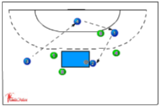
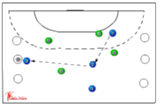
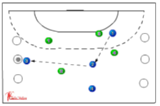
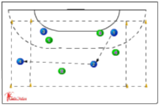
Two equal teams play with one ball in half the court.
Two players who are on neither team hold an elastic cord (or a spare bib/piece of material) to form a moving goal. These two players must run around the pitch, keeping the goal open (stretched out).
The aim of the game for the other players is to score a goal into this moving goal through use of a bounce pass.
Players need to think ahead and plan in this game if they want to stand any chance of scoring!
Possession changes after a goal is scored.
Progression:
The goal only counts if a player on the bounce pass is caught by a member of your own team.
Variations:
Include more moving goals.
After a goal is scored there is no change of possession.
Only one player per team can score.
Goals can only be scored by rolling the ball.
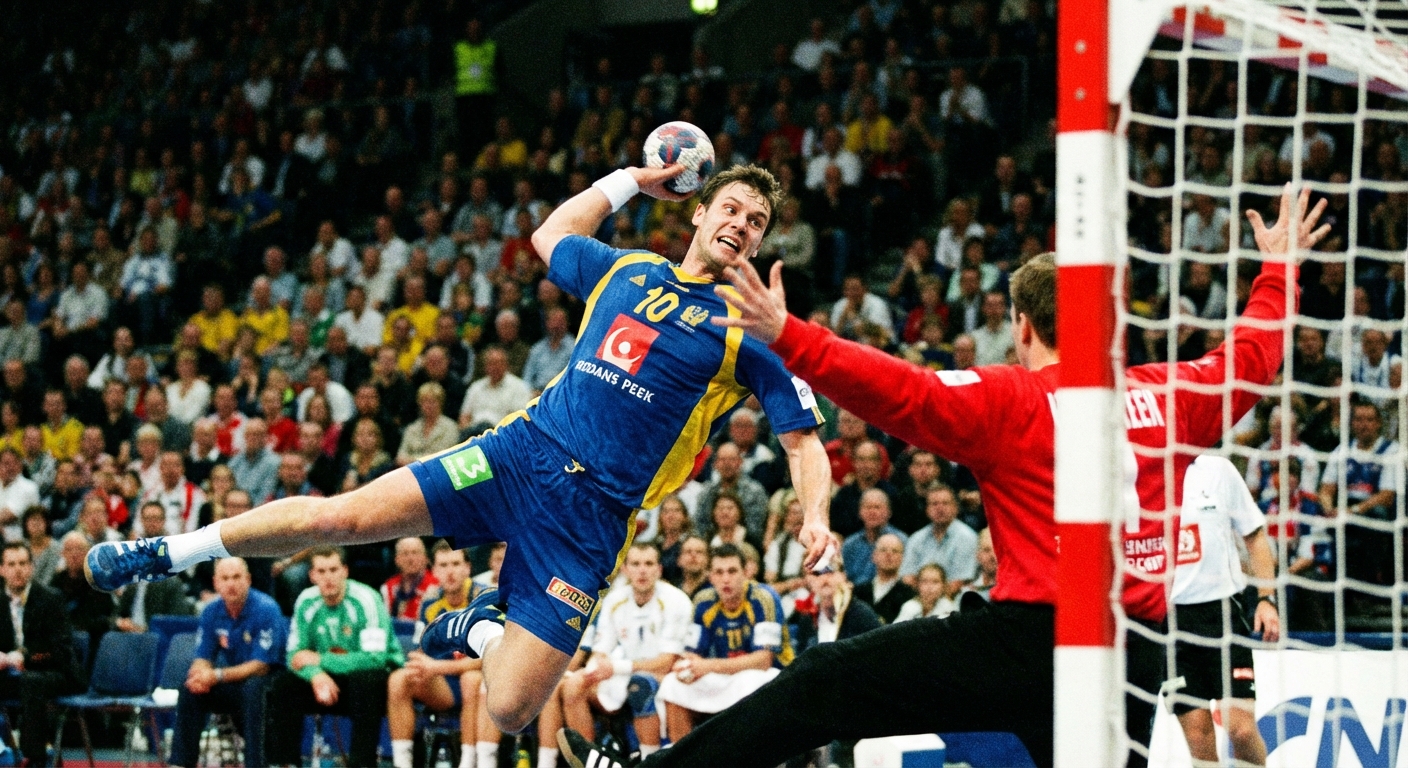
Wing players operate in the most demanding shooting position on a handball court, where acute angles and a close goalkeeper make finishing a specialist skill. This article breaks down the technique, decision-making, and training progressions that coaches need to develop elite wing finishing.
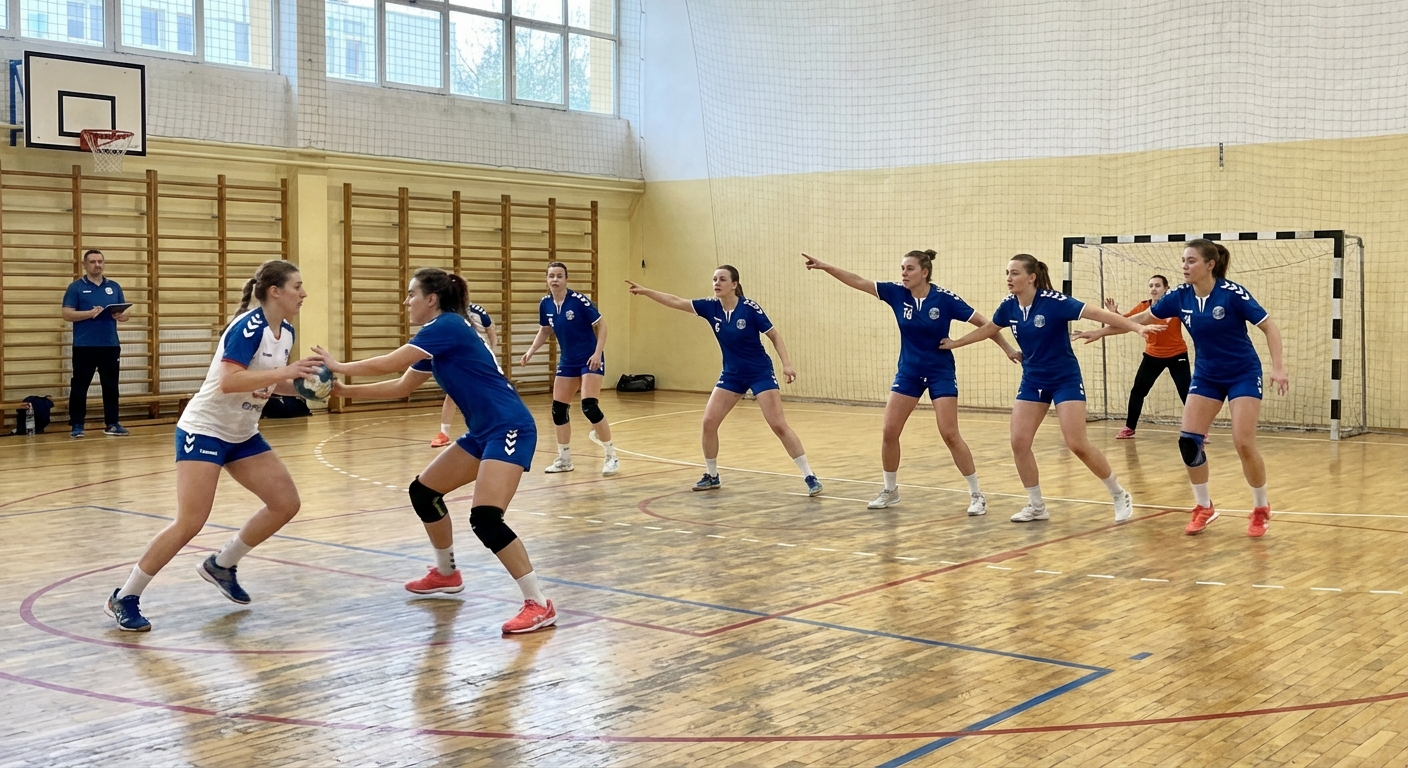
The transition from attack to defence is the most vulnerable moment in handball. This article examines the 3-second recovery principle, the specific roles players must adopt during transition, and the training scenarios that build a team's ability to recover defensive shape under pressure.
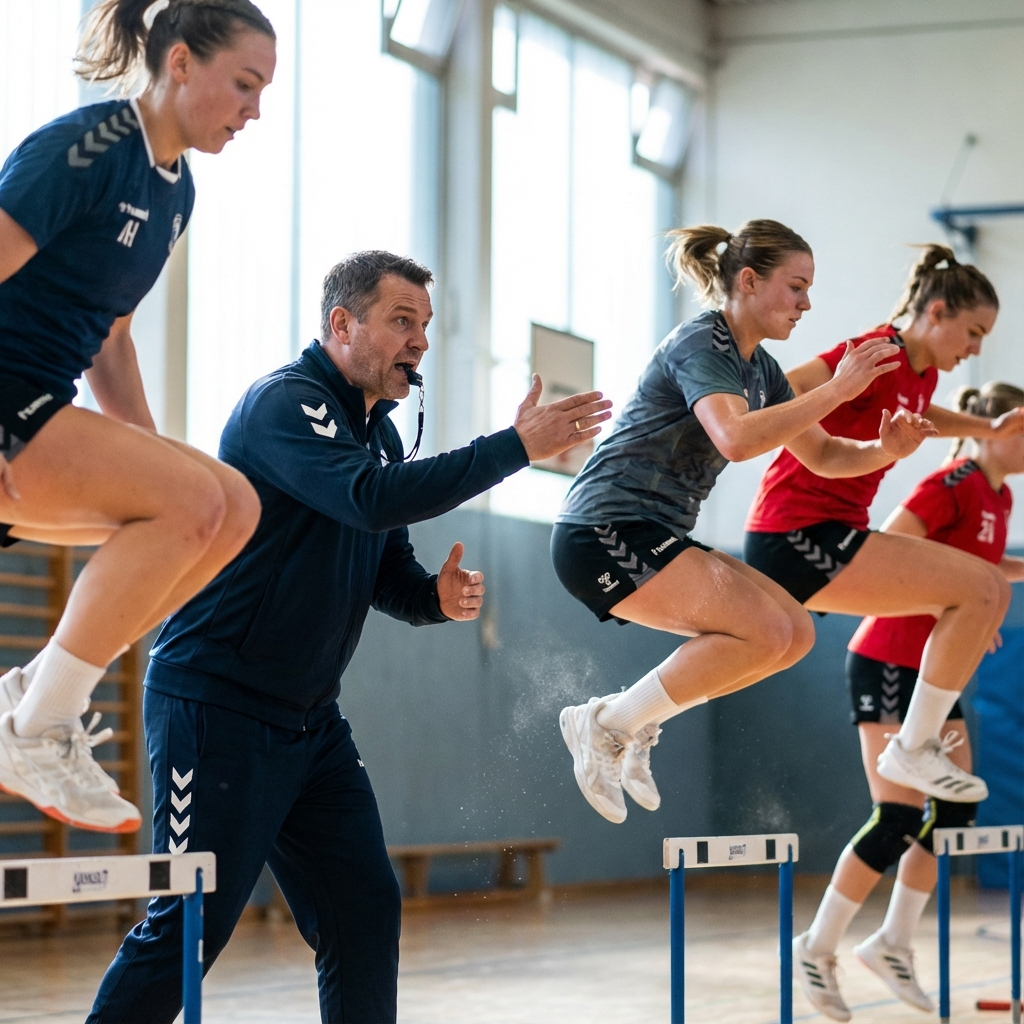
Handball demands explosive power, repeated sprint ability, and the strength to compete physically for 60 minutes. Sport-specific conditioning develops the athletic qualities that underpin elite performance.


Register for FREE and get coaching tips, top drills, session and more every week!