The Coaching Problem
You've told your players to "press high" a hundred times. They charge in with enthusiasm, get beaten by a simple pass, and suddenly you're exposed at the back. Sound familiar?
The issue isn't effort or fitness. It's that your players don't know when to press. They're guessing, reacting to the ball rather than reading the game. And in 2025, with teams changing formation 2-3 times per match, guessing isn't good enough.
Why Random Pressing Fails
Watch any Premier League side and you'll notice something crucial: they don't press constantly. They wait. They observe. Then, on a specific cue, the entire unit springs forward as one.
Random, individual pressing creates gaps. Coordinated pressing based on triggers creates turnovers. The difference? Elite coaches train their players to recognise four key moments.
The 4 Pressing Triggers Every Coach Must Teach
1. The Backwards Pass
When the opposition plays backwards, they're admitting they can't go forward. This is your green light. The receiver has limited options and their body shape is often closed off. Train your front players to recognise this and hunt immediately.
2. The Heavy First Touch
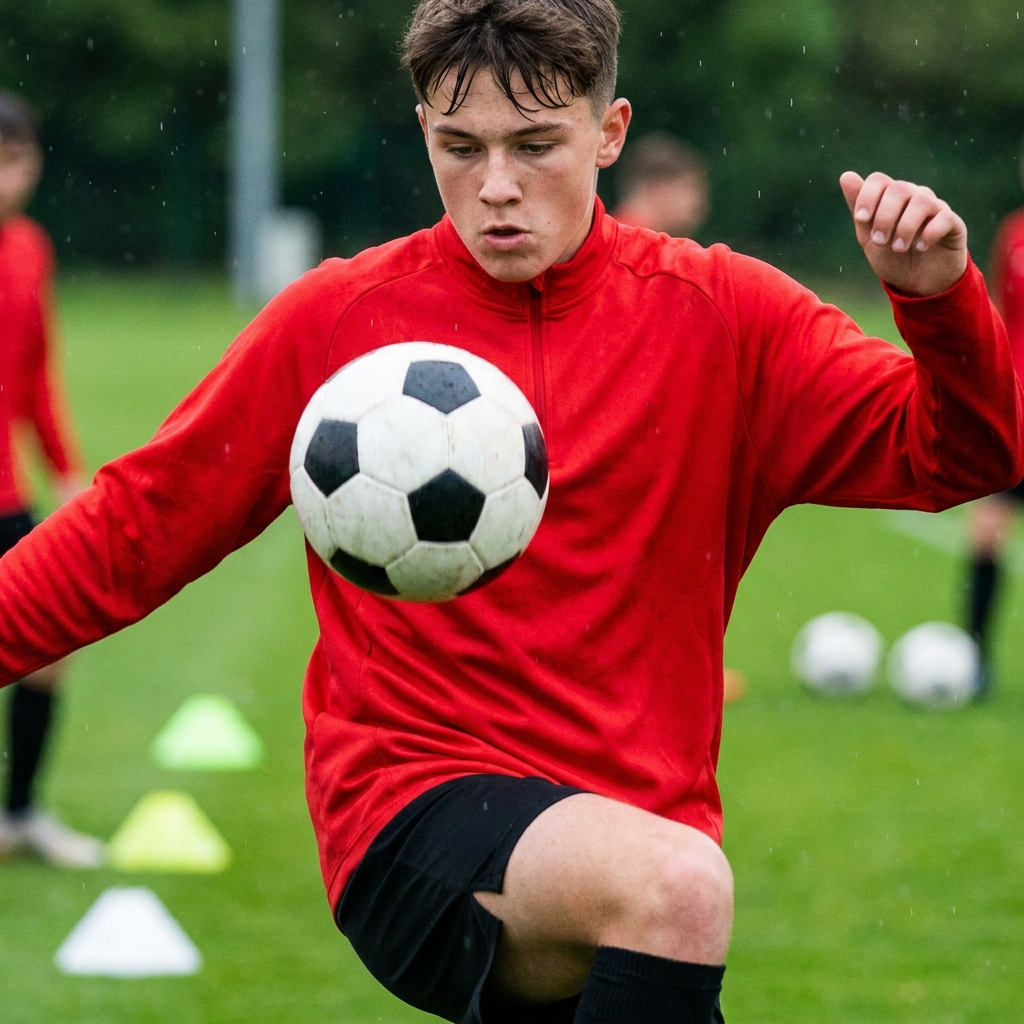
A poor touch means the player needs an extra second to control the ball. That second is your window. Drill your players to spot heavy touches and close the space before they recover.
3. Body Shape Facing Own Goal
If a player receives with their back to goal, they can't see what's behind them. This is when your pressing unit should squeeze - the receiver's options are limited to what's in front of them.
4. The Lateral Pass Under Pressure
A sideways pass to a player who's already being closed down creates panic. Train your wide players to recognise this and cut off the easy escape route.
How to Train Pressing Triggers
You can't just explain triggers and expect players to apply them. They need repetition in realistic scenarios. Here's a progressive framework:
Stage 1: Small-Sided Recognition (15 mins)
Use 4v4 or 5v5 games where the defending team can only press on specific triggers. Call out "PRESS!" when you see a trigger - players must react within 2 seconds. This builds recognition.
Stage 2: Unit Coordination (20 mins)
Progress to 6v6 or 7v7. Now the press must involve at least 3 players moving together. One player pressing alone = turnover to the opposition. This forces collective movement.
Stage 3: Full Phase Play (25 mins)
Build to 9v9 or 11v11. The pressing team earns bonus points for turnovers won in the attacking third from recognised triggers. This rewards smart pressing over random chasing.
Recommended Drills
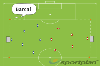
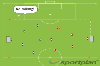
These drills will help you implement pressing triggers with your team:
Sample Session Plan: Pressing Triggers
Here's a 60-minute session you can run this week:
- Warm-up (10 mins): Rondos with pressing rotation - 4v2 where defenders swap on regain
- Technical (15 mins): Shadow pressing - players move through trigger scenarios without opposition
- Game-Related (20 mins): 6v6 with trigger rules - press only on backwards pass or heavy touch
- Game (15 mins): 9v9 with bonus points for high turnovers
Common Mistakes to Avoid
- Pressing too early: Wait for the trigger, don't anticipate it
- Individual pressing: One player pressing alone creates space - move as a unit
- Pressing when tired: A half-hearted press is worse than no press - recognise when to drop
- Ignoring cover: If the press fails, someone must be behind to sweep up
Frequently Asked Questions
What age should I start teaching pressing triggers?
From U12 onwards, players can understand and apply basic triggers. Start with just one trigger (backwards pass) and add complexity as they develop. Younger ages should focus on individual defending first.
How do I get players to press as a unit, not individually?
Use constraints in training. Award possession to the opposition if only one player presses. This forces collective movement and communication. The "3 players or nothing" rule works brilliantly.
What if my players aren't fit enough to press for 90 minutes?
They don't need to be. Smart pressing based on triggers is less demanding than constant pressing. Focus on pressing in short, coordinated bursts after clear triggers rather than non-stop chasing.
How do top teams like Liverpool and Man City train pressing?
They use position-specific pressing circuits, shadow play against tactical boards, and extensive video analysis. But the fundamentals remain the same: recognise triggers, move together, recover if beaten.
 sportplan_football