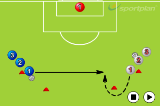
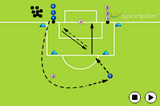
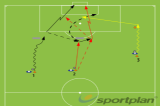
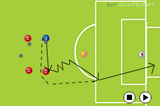
Set up a second goal as shown in the diagram.
Player 1 starts standing behind a mannequin, positioned outside of the penalty box left hand corner.
Player 2 is about 10m further down the pitch in line with Player 1. Player 2 passes the ball to player 1 and runs to the inside side of the mannequin for the lay off.
Player 2 takes a shot at the left goal.
At the same time as this Player 1, loops behind their run and enters the penalty box to receive a cross from Player 3, at the far right side.
Play in both directions to practice crossing and shooting from each side.
The first strike should be hard and low
Player 2:
When finishing a cross: sometimes the players don't need to try to produce power, they can just use pace from cross and guide the ball.
The goalkeeper should come and claim any balls they can.
Rationale:
The purpose of the second goal is to offer another type of finish.
in more ways than one
 sportplan_netball


in more ways than one
sportplan_football
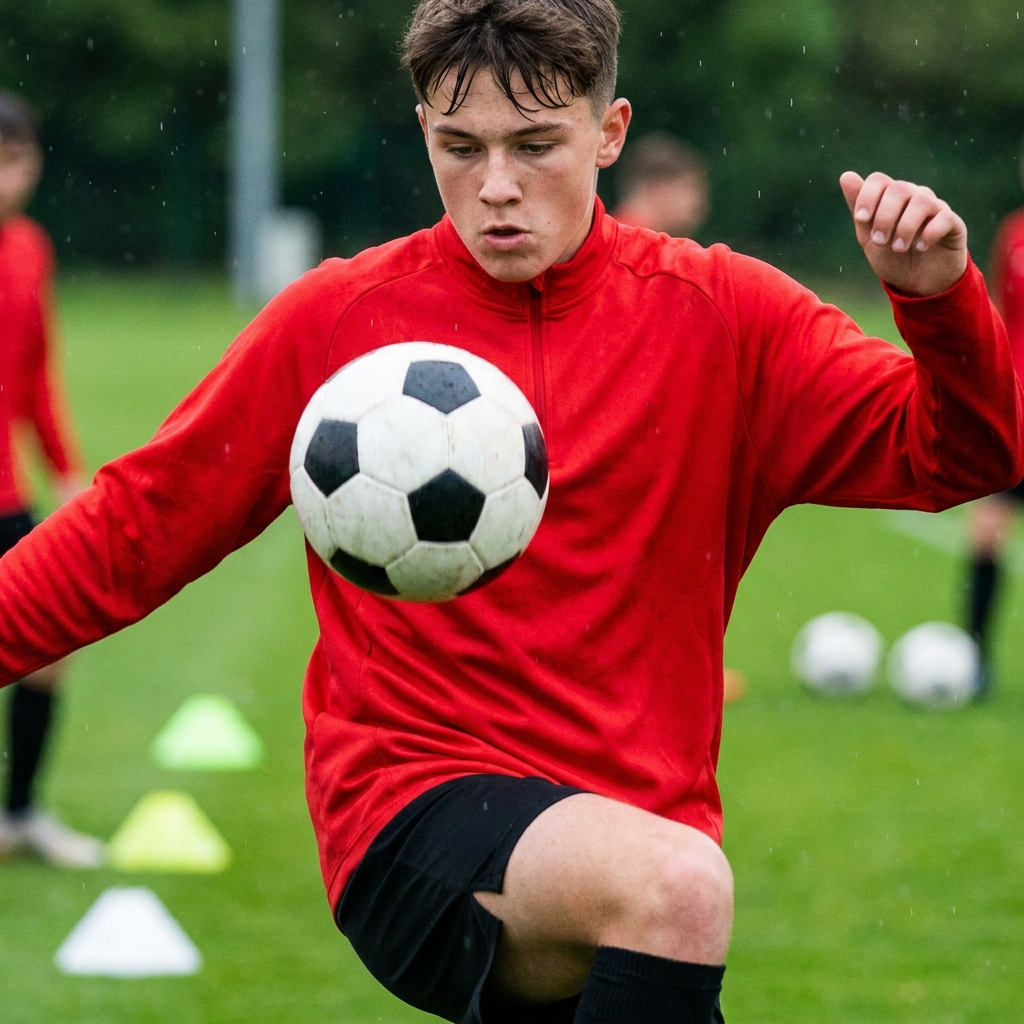
Deliberate heading is now out of U11 grassroots matches. Here is how to coach chest, thigh and foot control so your players still win the ball in the air.
Long-range goals doubled at the 2026 World Cup as teams sat deep. Here is how to coach when to shoot from distance, the technique, and the follow-up.
Under FutureFit, your Under-9s stay at 5v5, your Under-11s stay at 7v7 and your Under-13s stay at 9v9. Same pitch, same numbers, one more year. Here is how to make sure that year feels like a step forward rather than a repeat.