One Template, Two Jobs: PE Lessons and Club Sessions
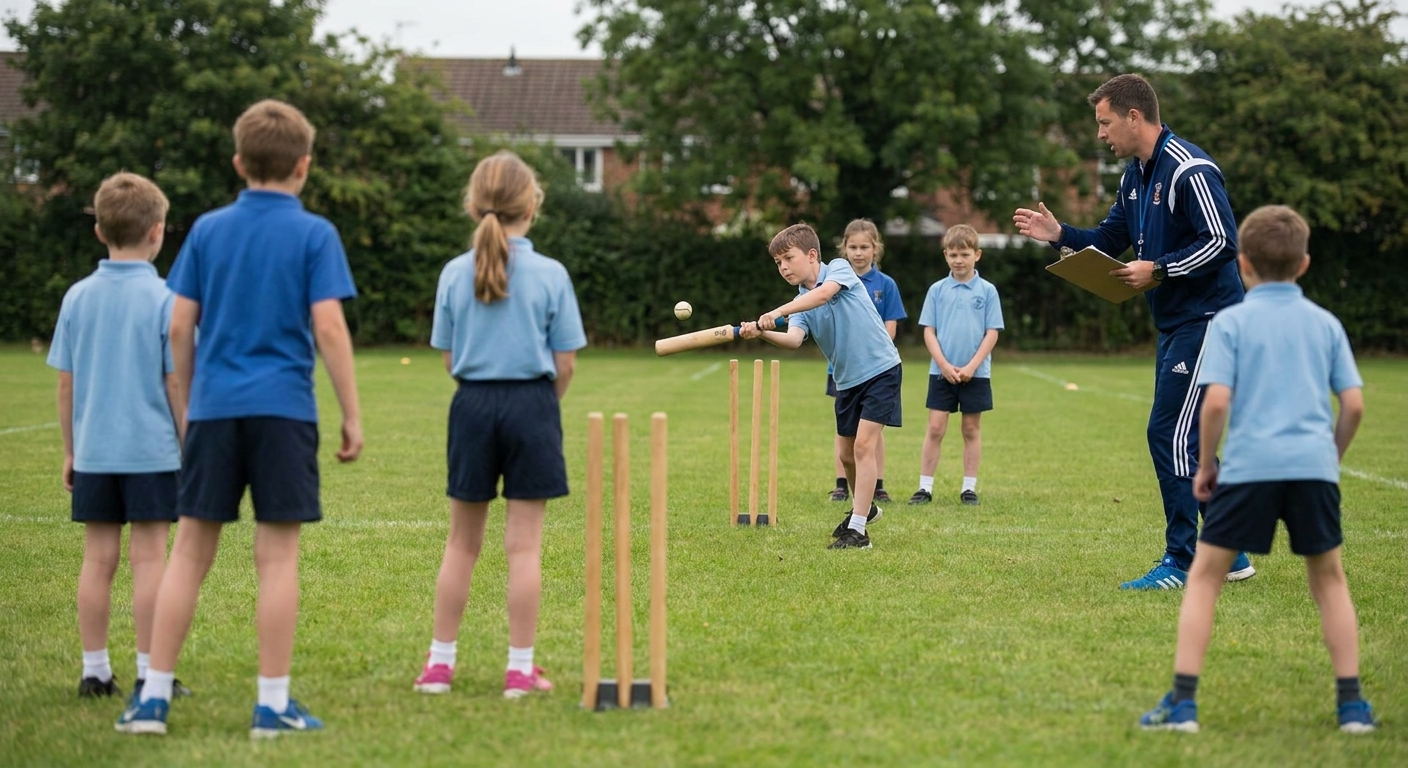
A rounders session lives or dies on organisation. Get it right and thirty children are batting, bowling, fielding and laughing for an hour. Get it wrong and you have a long queue of bored players watching one person bat while the rest pull up the grass. The difference is rarely the drills you choose - it is how you structure the time and the space.
This guide gives you one reusable template that works for both a school PE lesson and a club training session. The same five phases apply whether you are teaching a mixed-ability Year 5 class their first proper game or sharpening a county-standard summer squad. You simply turn the difficulty dial up or down. Below we walk through the skeleton, explain why each phase earns its place, show you how to keep a big group active, and finish with a complete worked example you can run this week.
The Session Skeleton: 50-60 Minutes
Here is the shape of a typical session for a big-ish group in a 50 to 60 minute slot. Read down the list and you will see a deliberate arc: switch the body on, teach one thing, let players try it under a little pressure, then turn them loose to play, and finally bring them down and lock in what they learned.
The 50-60 Minute Rounders Session
- 1. Warm-up game (10 min): Raise the heart rate, mobilise shoulders and hips, and get a ball into every pair of hands. A game beats jogging laps - players are warm and switched on without realising they have started.
- 2. Skill focus (15 min): Pick one theme for the day - batting, bowling, fielding or backstop work - and coach it in a clear drill. This is the only block where you stop and teach technique, so keep it tight.
- 3. Skill in a small game (15 min): Drop the new skill into a small-sided or conditioned game so players use it under light pressure. Practice that never reaches a game rarely sticks.
- 4. Match-play / conditioned game (15 min): A proper game - full or conditioned - where the day's skill matters but the focus is competing, decision-making and fun.
- 5. Cool-down & review (5 min): Gentle movement, a few stretches, and three or four questions to pull out what players learned. The review is where the lesson becomes memory.
That is roughly 60 minutes. For a tighter 45-minute slot, trim the skill focus and match-play to 12 minutes each rather than cutting a phase - every session should still warm up, teach something and finish with a game.
Why Each Phase Earns Its Place
1. Warm-up game - switch on the body and the ball skills
The warm-up does two jobs. Physically, it raises the heart rate and mobilises the shoulders and hips that batting and overarm throwing demand, which cuts the risk of strains. Just as importantly, it gets a ball into hands early so players arrive at the skill block already moving and catching. A throwing-and-catching or batting warm-up game does this far better than static stretching, which can wait until the cool-down. Keep it busy and keep everyone touching a ball.
2. Skill focus - teach one thing well
This is the only block where you stop the action to coach technique, so resist the urge to teach five things. Choose a single theme - a batting grip and swing, an underarm bowling action, a fielding pick-up and throw, or backstop positioning - and drill it with two or three clear coaching points. A class that leaves understanding one skill a little better has had a good lesson; a class that was shown six skills and mastered none has not.
3. Skill in a small game - apply it under light pressure
A skill rehearsed in isolation often vanishes the moment a game starts, because the game adds decisions, movement and a little pressure. This block bridges the gap: a small-sided or conditioned game that forces players to use the skill they just practised. If the focus was fielding, play a game that rewards quick fielding and throwing to a post; if it was batting, play one where placement scores points. The skill now has a reason to exist.
4. Match-play - let them compete and decide
Now they play. This is what players turn up for, and it is where decision-making, reading the game and sheer enjoyment live. A full game works if numbers allow, but a conditioned game - a smaller pitch, a scoring twist, fewer players per side - usually keeps far more people active. The day's skill should still matter, but step back and let them play; resist over-coaching here.
5. Cool-down & review - lock in the learning
Five minutes of gentle movement and stretching brings heart rates down, and a short review turns activity into learning. Ask three or four open questions - "When did fielding to the post win you a rounder?" or "What made batting placement easier?" - and you turn an hour of running about into something players actually remember. Do not skip it; the review is where the session sticks.
Keeping a Big Mixed Group Active
The single biggest challenge in school and club rounders is numbers. One pitch and thirty players means twenty-odd children stand around while one bats. The fix is always the same: more space, more balls, more games. Here is how to organise a large mixed-ability group so nobody is queuing.
The "No Big Lines" Rules
- Split into stations: Run two or three skill stations at once with a coach or confident pupil at each. Groups of five to eight rotate round, so everyone is busy and the ratio of players to ball is low.
- Small-sided games, not one big one: Two or three mini pitches with 5-a-side beats one full game with thirty. Everyone bats sooner and fields more.
- Use lots of balls: In warm-ups and drills, one ball per pair or per small group. A single ball for thirty children is a queue waiting to happen.
- Everyone bats, everyone fields: Rotate batters quickly - one or two hits each then swap - so the batting side is not sitting out. Give every fielder a clear job.
- Keep waiting under ten seconds: If a player is idle longer than that, the activity is too small for the group. Add a pitch, a ball or a station.
- Pair up by ability for drills, mix for games: Drills work best in similar-ability pairs so everyone is challenged; games are more fun and fairer with mixed teams.
Adapting for PE Class vs Club Squad
The five-phase skeleton does not change between a Year-group PE class and a keen club squad - you simply set the difficulty dial differently. Knowing where to set it is what separates a session that engages everyone from one that loses half the group.
For a mixed-ability PE class, keep the rules simple and the success rate high. Use bigger, softer balls, shorter bowling distances and bats that suit smaller hands. Allow more attempts, reward effort and placement over power, and make sure the least confident child bats and fields as much as the most able. The aim is that everyone leaves having hit a ball, fielded a ball and scored at least once. Differentiate by outcome - let stronger players self-challenge - rather than by sitting anyone out.
For a keen club squad, raise the challenge. Use proper bowling distances and a regulation ball, add scoring pressure and consequences, tighten the conditioned games, and coach finer technical points - the snap of the wrist in batting, a deceptive change of pace in bowling, the backstop's footwork to the post. The structure is identical; the standard expected within each phase is higher. The same plan that introduces the game to a Year 5 class can stretch a county player by turning every dial up.
Worked Example: "Sharpening Batting and Running"
Here is the template filled in for a real, ready-to-run session. The theme is batting and running between the posts - a great early-season focus that suits a PE class or a club squad alike. Each phase below drops a verified Sportplan drill straight into the skeleton above; click any drill to see the full setup, diagram and coaching points.
Phase 1: Warm-up game (10 min)
Start with a batting-flavoured warm-up so hands and eyes are working from the first minute. Hoop Hit Warm-Up gets everyone swinging and striking a ball into a target area, raising the heart rate while rehearsing the very skill we will coach next - no static lines, no waiting.
Phase 2: Skill focus (15 min)
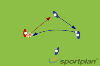
Now coach the technique. Batting Technique breaks down the grip, stance and swing with clear teaching points, so players understand how to make solid contact and place the ball rather than just swing for the fence. Work in similar-ability pairs with one ball each so nobody queues.
Phase 3: Skill in a small game (15 min)
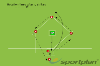
Put the new batting into a busy, rotating practice. Batting Four-Player Rotation keeps small groups constantly cycling through batting, bowling, backstop and fielding, so the skill we just coached is used immediately under a little pressure - and everyone bats often.
Phase 4: Match-play / conditioned game (15 min)
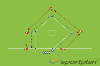
Now they compete. Beat the Ball is a conditioned game that rewards batting placement and quick running between the posts - exactly the day's theme - while keeping small sides busy. Run two pitches side by side if numbers are large so nobody sits out.
Phase 5: Cool-down & review (5 min)
Finish with gentle jogging and shoulder and leg stretches, then gather the group for three quick questions: "What made a ball easy to hit cleanly?", "When did running hard between posts earn you a rounder?", and "What will you try next time you bat?" Two minutes of reflection turns the hour into something players remember.
Make It Your Own
That worked example focuses on batting and running, but the template takes any theme. Swap in a bowling skill - say the underarm action and grip - with a bowling game to apply it, or a fielding theme with a backstop drill and a quick-throwing game. The five phases stay the same; only the drills change to match your focus for the day.
For the verified drills that slot into each phase, our best rounders drills for schools and clubs guide is sorted by skill and ready to drop in. If you are still teaching the basics, the rounders positions and rules explained guide covers the posts, the backstop and how scoring works - useful background before any game. And when you want fresh practices for a new theme, browse the full Rounders drills library for hundreds of warm-ups, skill drills and conditioned games sorted by area.
Frequently Asked Questions
How long is a rounders lesson or session?
A typical school PE lesson or club rounders session runs 50 to 60 minutes. A useful split is a 10-minute warm-up game, 15 minutes on a single skill focus, 15 minutes putting that skill into a small game, 15 minutes of match-play or a conditioned game, then a 5-minute cool-down and review. If you only have 45 minutes, trim the skill focus and match-play to 12 minutes each rather than dropping a phase, so players still warm up, learn something and play.
How do I keep a big group active in rounders?
The golden rule is no big lines. A single rounders pitch with thirty children means most of them stand still, so split into stations or small-sided games of five to eight players each. Use several balls, give everyone a bat or a fielding job at once, and run two or three mini pitches side by side instead of one full game. Rotate batters quickly and keep waiting time under ten seconds. A large group is fine if you organise space and equipment so nobody is queuing.
What should a rounders warm-up include?
A good rounders warm-up raises the heart rate, mobilises shoulders and hips for throwing and batting, and rehearses a core skill in a fun, game-like way. Five minutes of moving and dynamic stretches followed by five minutes of a throwing-and-catching or batting warm-up game works well. Avoid long static stretching at the start. The aim is warm, switched-on players who have already touched a ball before the main session begins.
How many drills should I use in one rounders session?
Two to four is plenty for a 50 to 60 minute session. One warm-up game, one or two drills on the skill focus, and one game to apply it. More than four and you spend the lesson explaining and reorganising rather than letting players practise and play. Pick a single theme - batting, bowling, fielding or backstop work - and let every activity build towards it, finishing with a game where that skill matters.
Can I use the same plan for a PE class and a club session?
Yes - the five-phase structure works for both, you simply adjust the level. For a mixed-ability Year-group PE class, keep rules simple, use bigger softer balls, allow more attempts and emphasise everyone batting and fielding. For a keen club squad, raise the challenge with proper bowling distances, scoring pressure, tighter conditioned games and more technical coaching points. Same skeleton, different dial settings.