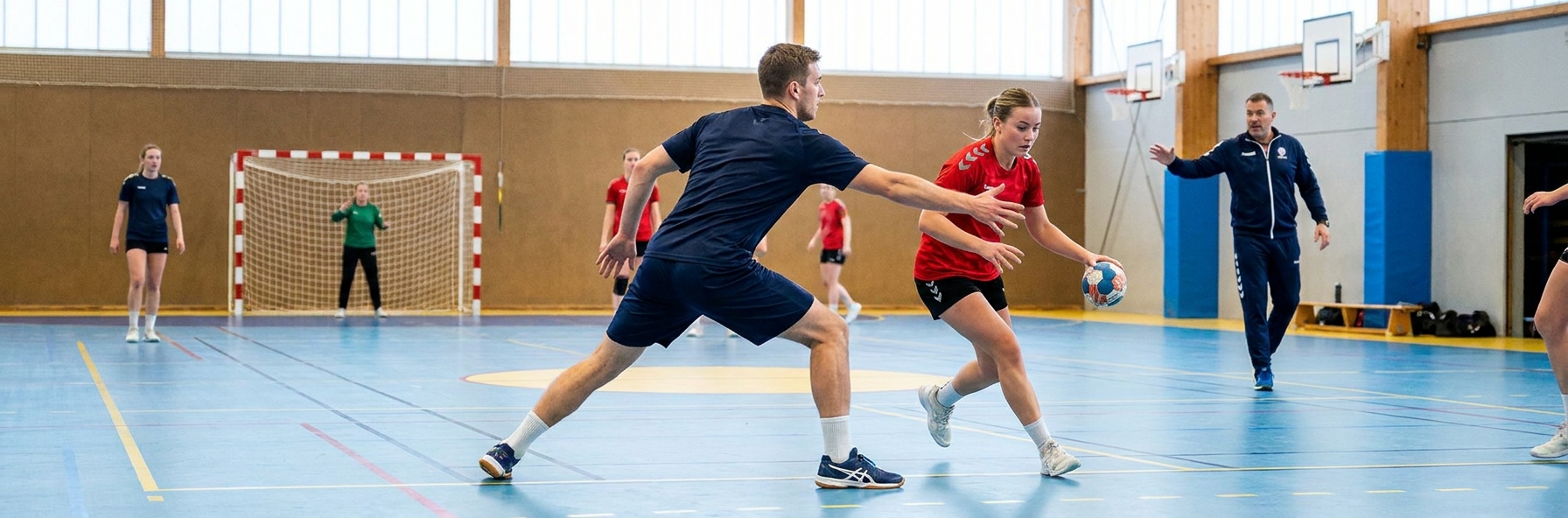
With the indoor season now in full swing, your defenders are facing more attackers in space than at any other point in the year. Watch a weaker 1v1 defender and the pattern repeats: they dive in early, square up instead of angling their body, and reach with an arm instead of moving their feet. The attacker barely has to work for the half-step that beats them.
Good individual defending is not about being the biggest or quickest player on court. It is a sequence of small decisions, stance, distance, footwork and timing, that any player can learn. Get those right and a defender can contain attackers who are faster and more skilful than they are.
Why Defenders Get Beaten 1v1
Three faults show up again and again. The defender closes the gap too fast and commits before the attacker has shown their hand. They stand square on, which means the attacker can go either side with equal ease. And they watch the ball or the feet rather than the hips, so the first clue they get that the attacker is moving is when it is already too late.
Underneath all three is the same impatience. The attacker needs the defender to commit to a direction, a lunge, or a reach. Every moment the defender stays balanced and side-on, the attacker is the one under pressure to make the next move.
A Framework for Closing the Attacker Down
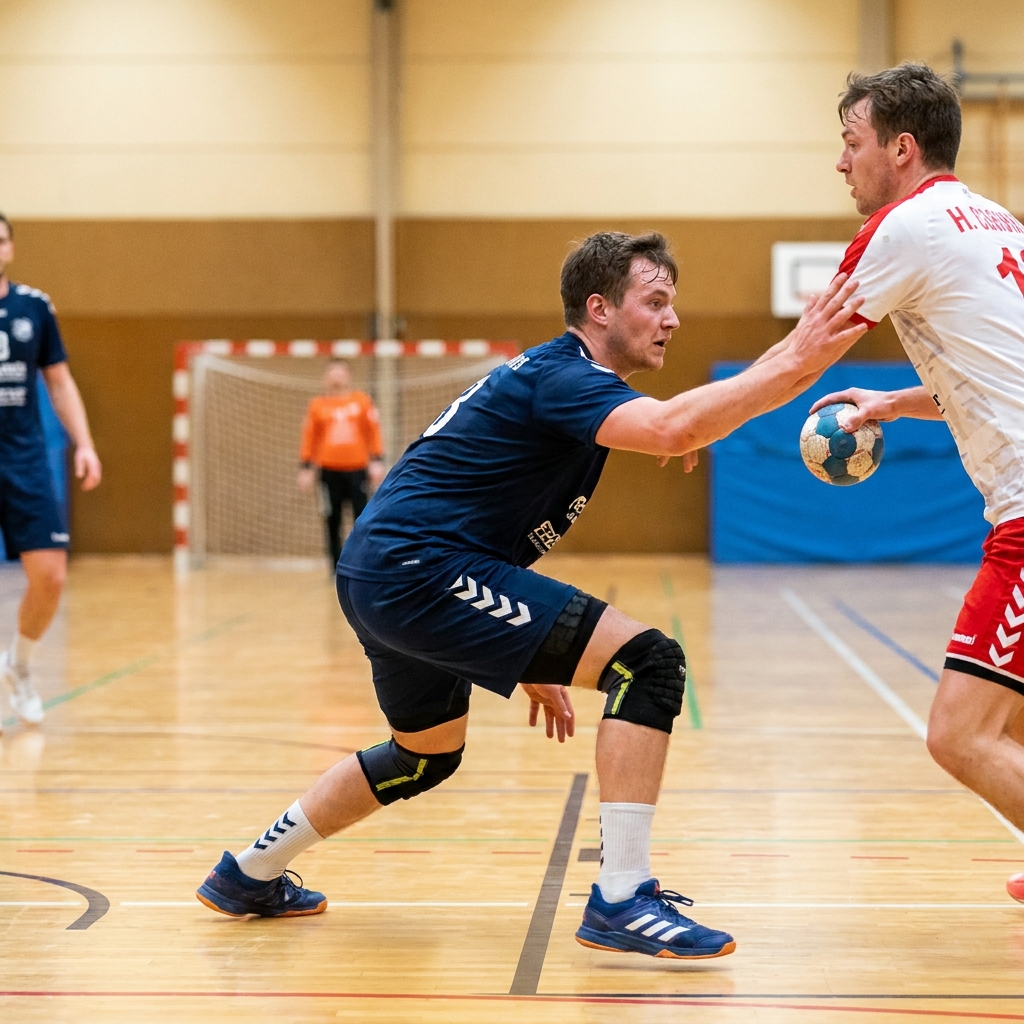
Step One: Set the stance. Low centre of gravity, knees bent, feet shoulder-width apart, with one foot and one hand slightly forward. The lead arm sits in front of the attacker's shooting side, ready to disrupt a pass or shot without needing to lunge.
Step Two: Control the distance. Get close enough that the attacker has to put their head down to protect the ball, but not so close that a single step or feint gets you beaten. As a rule of thumb, stay roughly an arm's length away until the attacker commits.
Step Three: Shadow with small steps. Move sideways to stay goal-side using short, quick shuffle steps. Keep both feet in contact with the floor as much as possible; a defender who jumps or crosses their feet is a defender who can be beaten on the next touch.
Step Four: Read the hips, not the feet. Almost every 1v1 skill move starts with the hips and chest turning before the feet follow. Watch that area and you buy an extra half-second to react, rather than being the last to move.
Step Five: Commit only when it counts. Stay patient until the attacker is close to goal and about to shoot, or has clearly lost control of the ball. That is the moment to close the final gap, block the shooting arm or compete for the ball, within the rules on contact.
How to Train It
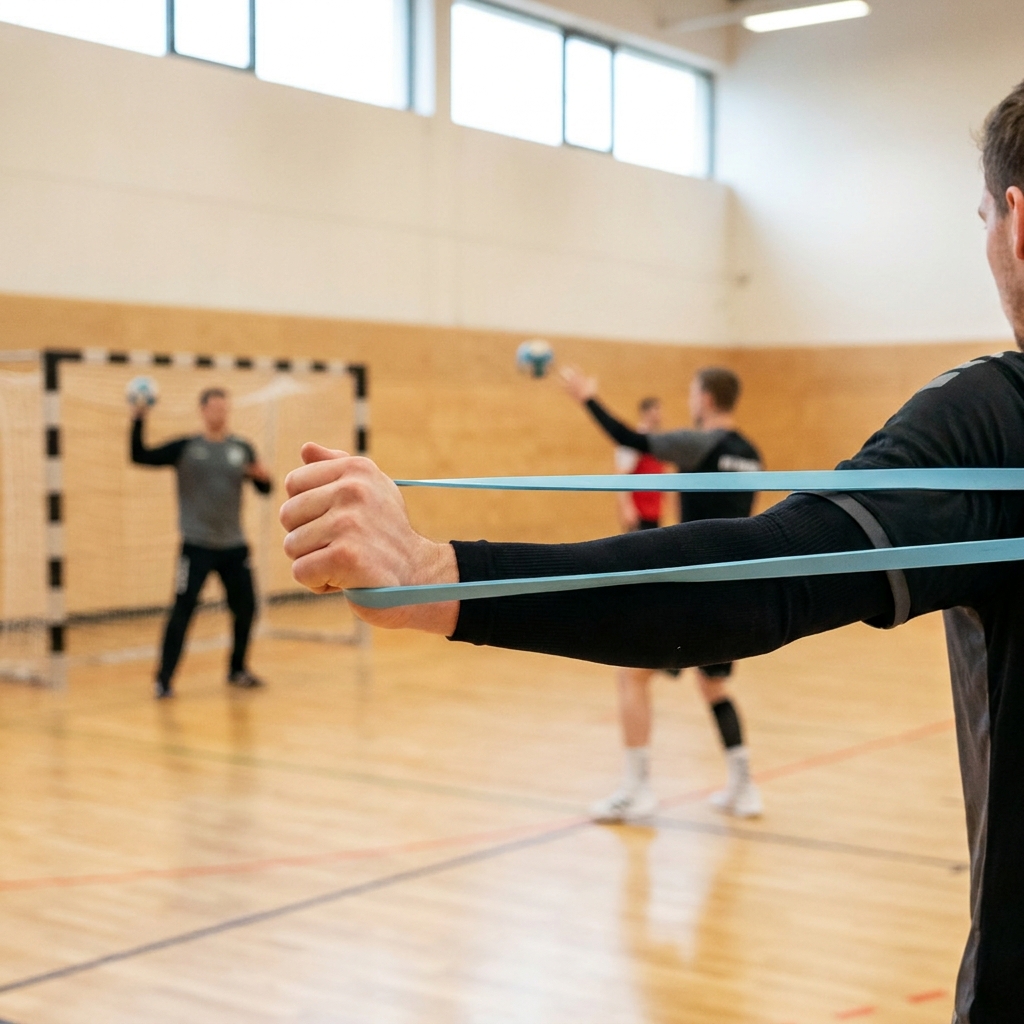
Warm up with footwork only, no ball: defenders shuffle to mirror a partner moving side to side and forwards and back, focusing on stance and small steps. Move into technical work with a passive attacker holding the ball, where the defender practises getting into position and reading hip movement without making contact.
Add decision-making with a 1v1 in a narrow channel, where the defender's only job is to force the attacker one way and stay patient rather than diving in. Finish with small-sided games where a clean 1v1 stop is rewarded and an early dive-in that gives away a free throw costs the team a turn in possession, so good habits carry into the full game.
Key Coaching Points
- Stay low, side-on and balanced rather than square to the attacker.
- Hold a consistent distance; close enough to pressure, far enough to react.
- Move with small shuffle steps and avoid jumping or crossing the feet.
- Watch the attacker's hips and chest, not the ball or the feet, for the first sign of movement.
- Save the committed challenge for when the attacker is near goal or has lost control.
- Reward patience in training so it carries over into matches.
Recommended Drills


Frequently Asked Questions
How close should a defender stand in a 1v1?
Close enough that the attacker has to drop their head to protect the ball, but not so close that one step or feint beats you outright. Roughly an arm's length away is a good starting point, adjusting as the attacker commits.
Why do my defenders keep getting beaten by feints?
Usually because they are watching the ball or the attacker's feet. Most feints begin with the hips and chest turning first, so coach your players to focus there. It gives an earlier read and more time to react.
Is it ever right to dive in for the ball?
Only when the attacker is close to goal and about to shoot, or has clearly lost control. Outside those moments, a committed challenge is more likely to be beaten or give away a free throw than to win the ball back.