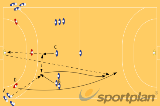
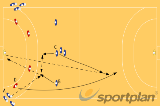
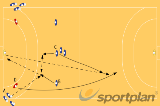
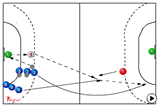
Pass from A to B, from B to C, from C to E - either B-C or E throws at the goal.
When one of the backcourt players shoots that is the signal for defender D1 and D2 to go for the fast break.
Backcourt players who did not throw at the goal, turn around and sprints back to intercept the long pass.
Goalkeeper throws long pass every time the same way and trains in this way B-C-E to go for the interception.
Variations:
- goalshot into the goal and goalkeeper has to pick up the ball first and throw the long pass.
First train the interception only and add then more matchlike items such as real goalshot.
To get to the right timing and train the interception of the long pass every time:
- have B throw into the hands of the goalkeeper
- have another goalkeeper/player/trainer to throw the long pass
- have another goalkeeper next to the goal to hand the goalkeeper another ball
A goes into the position of D and D returns after his fast break.
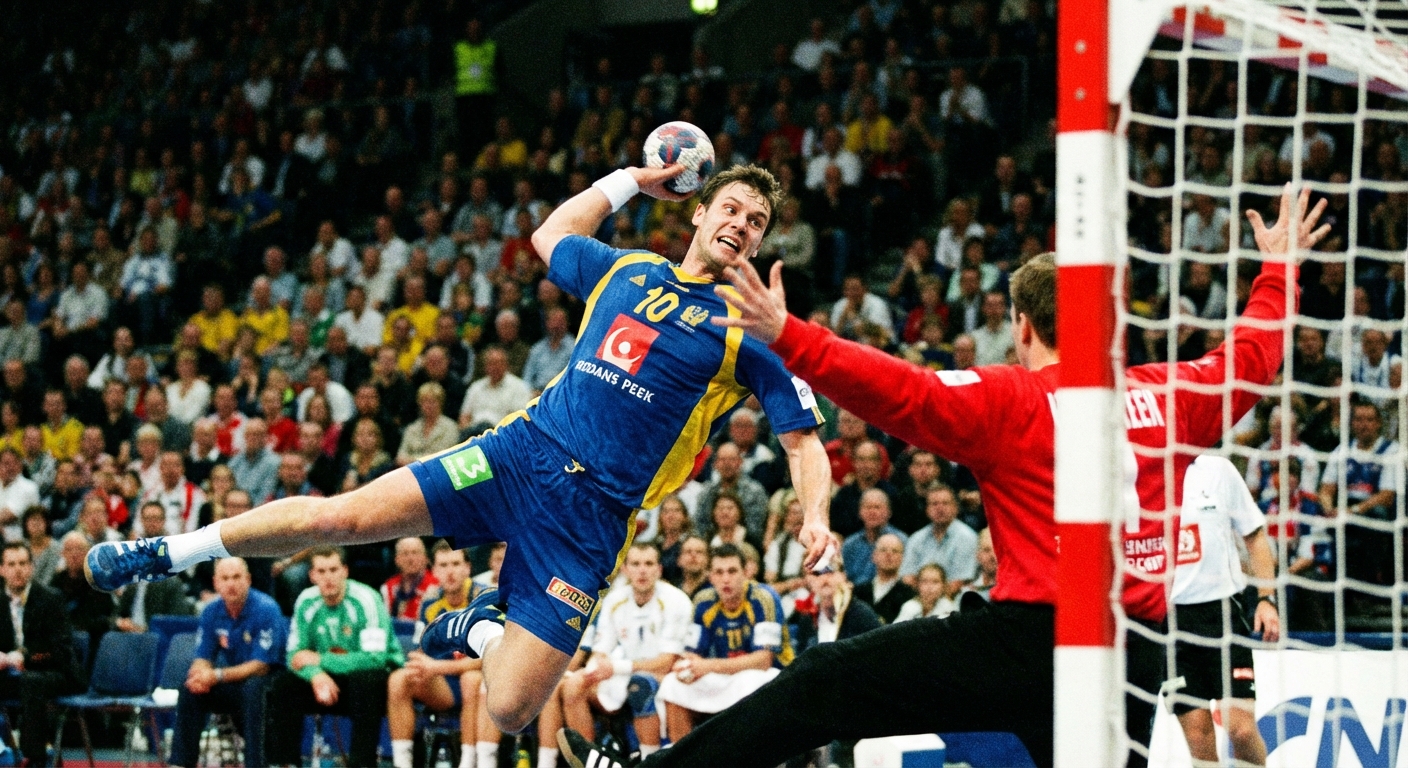
Wing players operate in the most demanding shooting position on a handball court, where acute angles and a close goalkeeper make finishing a specialist skill. This article breaks down the technique, decision-making, and training progressions that coaches need to develop elite wing finishing.
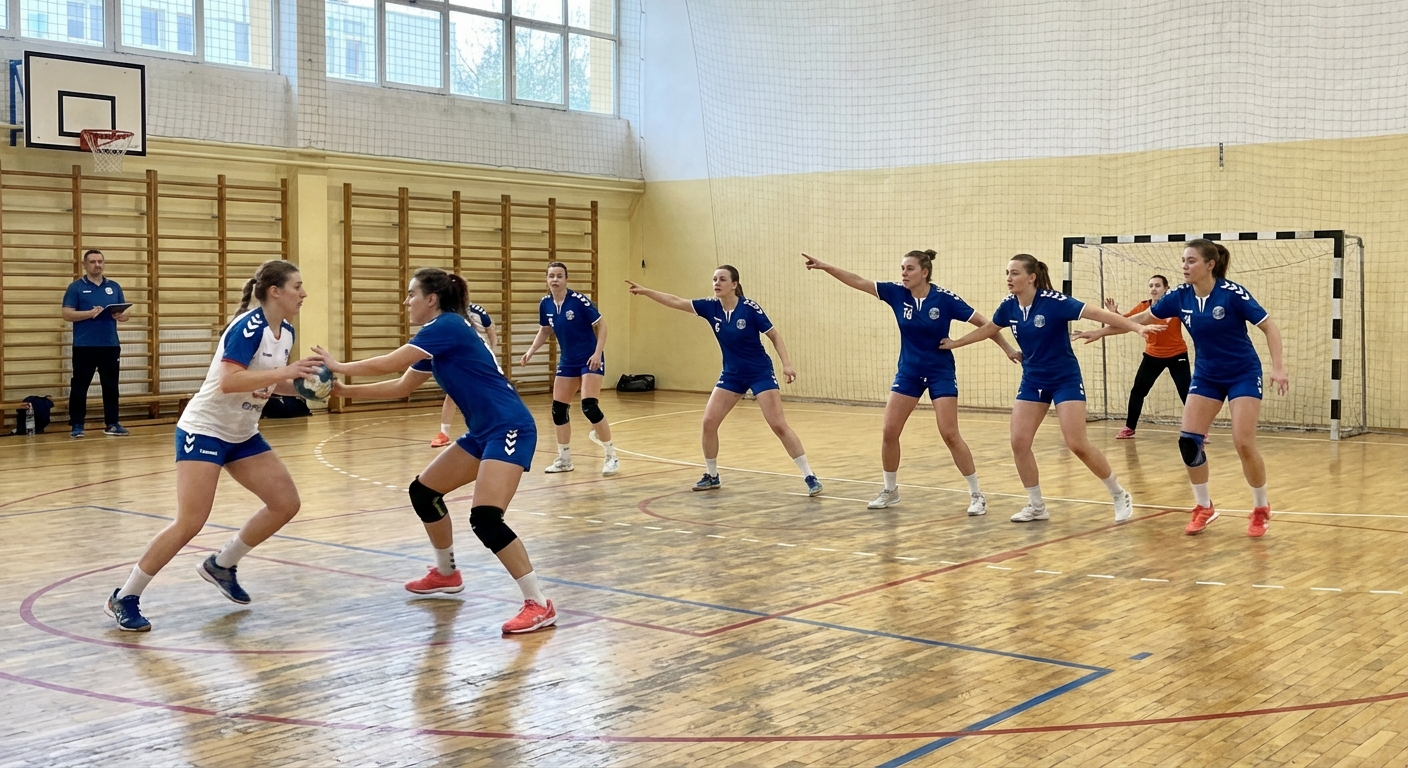
The transition from attack to defence is the most vulnerable moment in handball. This article examines the 3-second recovery principle, the specific roles players must adopt during transition, and the training scenarios that build a team's ability to recover defensive shape under pressure.
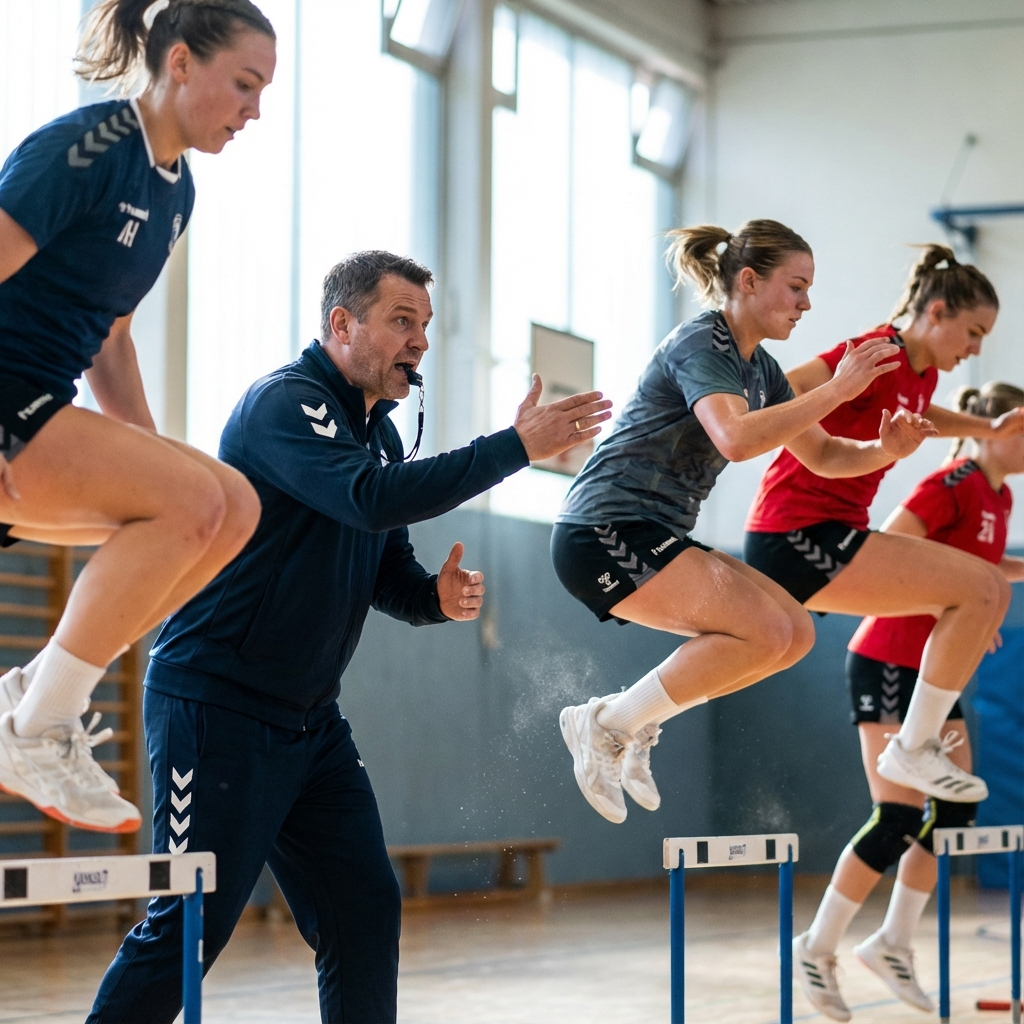
Handball demands explosive power, repeated sprint ability, and the strength to compete physically for 60 minutes. Sport-specific conditioning develops the athletic qualities that underpin elite performance.


Register for FREE and get coaching tips, top drills, session and more every week!