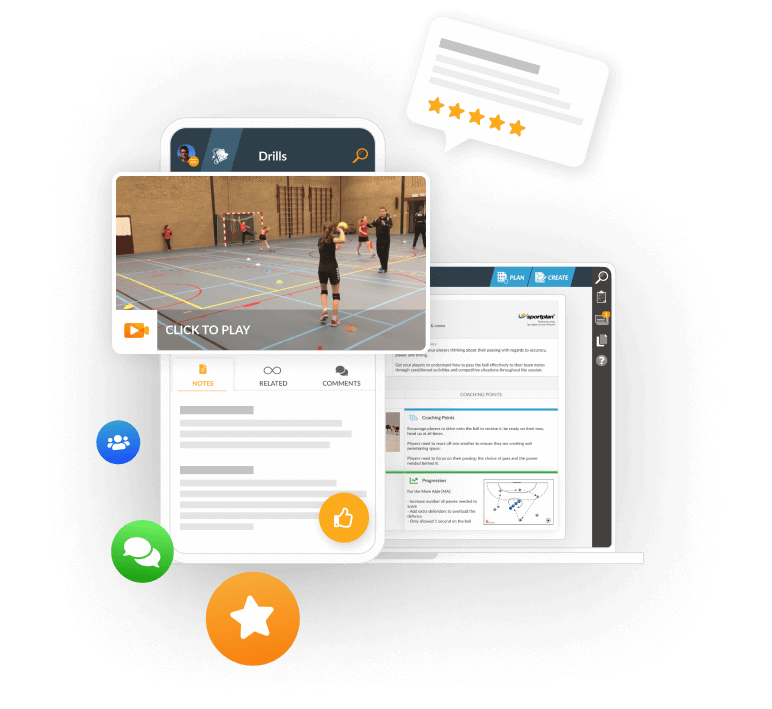
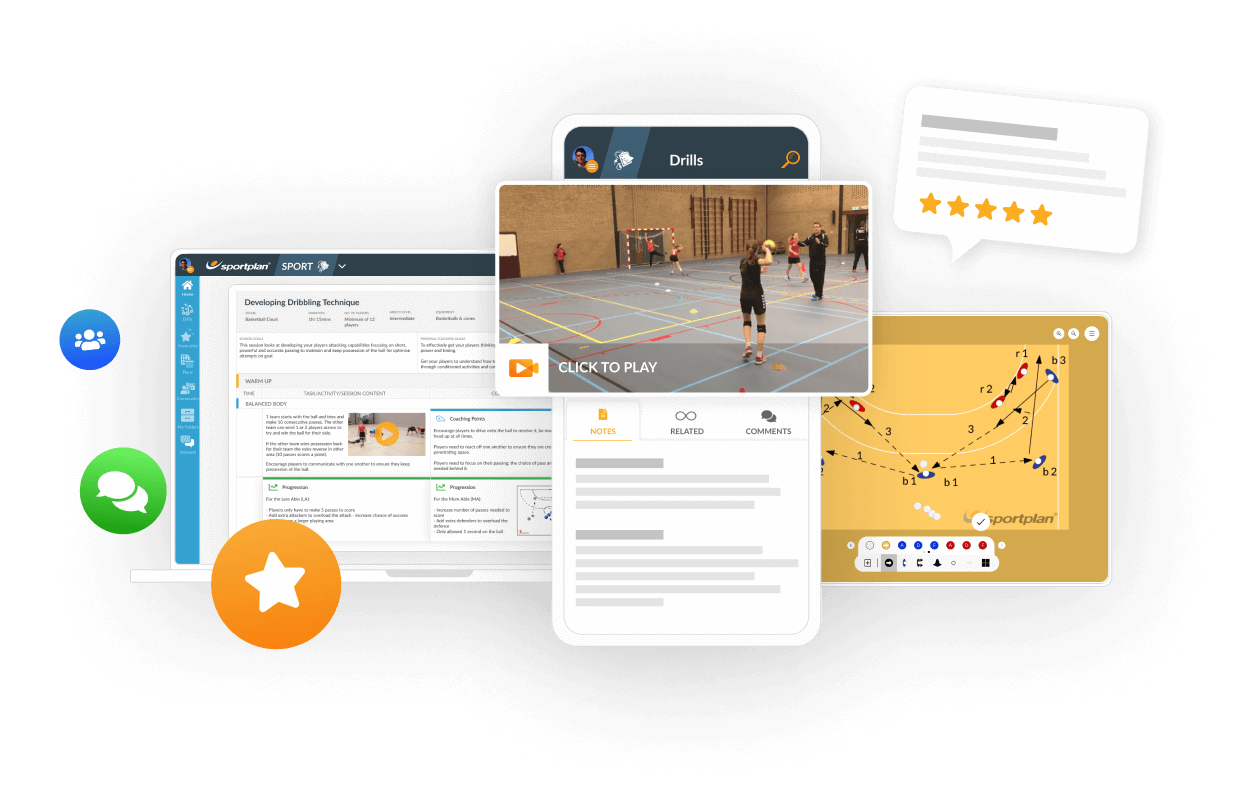
Pass from A to B, from B to C, from C to B back again and B throws at the goal.
When B shoots that is the signal for defender D to go for the fast break.
C turns around and sprints back to intercept the long pass.
Goalkeeper throws long pass every time the same way and trains in this way C to go for the interception.
Variations:
- goalshot into the goal and goalkeeper has to pick up the ball first and throw the long pass.
First train the interception only and add then more matchlike items, such as real goalshot.
To get to the right timing and train the interception of the long pass every time:
- have B throw into the hands of the goalkeeper
- have another goalkeeper/player/trainer to throw the long pass
- have another goalkeeper next to the goal to hand the goalkeeper another ball
A goes into the position of D and D returns after his fast break.
Green July pitches and a shiny Dukes mean the ball is talking. Here is how to coach your batters to survive the moving ball, trust their defence, and cash in once the shine has gone.
A bowling change can dismantle a partnership, halt a run surge, or hand the match back to the batting side. This article explores how modern captains use match phases, matchup data, and rhythm signals to time their changes, with a practical framework coaches can use to develop tactical thinking in young captains at club and age-group level.
T20 data shows that teams bowling 40 or more dot balls win more than 65 per cent of matches. Strike rotation is now the most undervalued skill in batting. This article breaks down why singles matter more than sixes, the soft-hands and crease-depth techniques behind elite rotators, and a coaching framework to train relentless ones and twos under pressure.